



AWG Standard Medical Catheters
FEATURES
Mold Description
Product Materials:
PTFE
Mold Material:
S136ESR
Number of Cavities:
1
Glue Feeding Method:
Hot runner
Cooling Method:
Water cooling
Molding Cycle
12.5s
Ansix Tech Launches Dedicated AWG Standard Medical Catheters Division: Delivering Uncompromised Value, Precision, and Scalability from Material Selection to High-Volume Production
In a decisive move to address the growing complexities of minimally invasive surgery and interventional radiology, Ansix Tech, a specialized manufacturer with over 28 years of expertise in precision polymer components, has officially announced the full-scale project initiation and launch of its dedicated AWG Standard Medical Catheters product line. This strategic expansion is not merely an addition to a catalog; it is a comprehensive ecosystem designed to solve the most pressing challenges facing medical device OEMs today: clinical reliability, economic pressure on supply chains, and the need for rapid, scalable market entry.


As global demand for AWG (American Wire Gauge) standard catheters rises—driven by an aging population and the shift toward outpatient procedures—Ansix Tech is positioning itself as a full-cycle partner. From initial material science validation and mold flow analysis (DFM) to post-processing, sterile packaging, and just-in-time delivery, the company asserts that its 28-year manufacturing heritage eliminates the traditional trade-off between premium quality and cost efficiency.
Part 1: The Value Proposition – Solving Clinical and Commercial Gaps
Medical device companies face a fragmented landscape when sourcing AWG standard catheters. Traditionally, OEMs must juggle between prototype houses that lack volume capacity and mass producers that sacrifice design flexibility. Ansix Tech’s new division bridges this gap.
What Value Does Ansix Tech Provide?
According to Michael Tran, Senior Product Engineering Lead at Ansix Tech, the value is built on three pillars: Clinical Safety, Commercial Agility, and Technical Transparency.
“We are not just a ‘build-to-print’ shop,” Tran explained. “When a client comes to us with an AWG catheter concept—say, a 5Fr to 8Fr rail catheter or a microcatheter requiring tight tolerances—we bring 28 years of ‘design for manufacturability’ (DFM) data to the table. We tell them exactly where a sharp transition will cause turbulence, where a weld line might weaken burst pressure, and how to modify the inner liner material to reduce lubricious drag.”
Solving Specific Problems:
Critical Dimensional Stability: AWG standards dictate strict outer and inner diameter tolerances (±0.001 inches for high-pressure devices). Ansix addresses this with real-time process control (SPC) and mold designs that account for polymer shrinkage anisotropically.
Kinking and Collapse Resistance: Many catheter failures occur at the proximal-distal transition. Using advanced mold flow simulations, Ansix optimizes wall thickness transitions, ensuring the catheter withstands 300+ psi without collapsing.
Material Compatibility Conflicts: Catheters are often exposed to contrast media, chemotherapeutics, or saline at varying temperatures. Ansix’s material validation protocol (see Part 3) eliminates chemical stress cracking before production begins.
Part 2: Rigorous Quality Validation – Beyond the Inspection Sheet
For medical catheters, validation is not a final step; it is a continuous thread from material receiving to the shipping dock. Ansix Tech has implemented a four-stage validation protocol that exceeds ISO 13485:2016 requirements.
How Does Ansix Ensure Quality Verification?
Stage 1: Raw Material IQ (Incoming Quality)
Every resin pellet is scanned against its Certificate of Analysis (CoA) using FTIR (Fourier Transform Infrared Spectroscopy). Ansix maintains a restricted approval list (RPL) of suppliers for AWG catheter resins, including Celanese, Lubrizol, and Arkema, ensuring batch-to-batch consistency.
Stage 2: First-Article Inspection (FAI) per AS9102D
Before any production run, a complete FAI is performed on 30 samples. This includes:
Laser micrometer measurement of ID/OD at 10 axial points.
Tensile strength and elongation (per ASTM D638).
Burst pressure testing (hydrostatic, up to 500 psi).
Kink radius testing using a mandrel bend fixture.
Stage 3: In-Process Validation (IPV) – Real-Time SPC
Ansix uses a proprietary mold-mounted cavity pressure sensor system (similar to RJG technology) that monitors every shot. If cavity pressure deviates by >1.5%, the system automatically rejects parts and adjusts clamp tonnage or injection velocity for subsequent shots.
Stage 4: Finished Device Traceability
Each catheter tray receives a 2D Data Matrix code linking to the specific cavity number, molding machine ID, operator shift, and raw material lot. This enables full genealogy recall within 15 minutes—a critical feature for any FDA or EU MDR audit.
“We don’t just validate the product; we validate the process’s capability,” noted Tran. “Our CpK for AWG catheter IDs is consistently above 1.33, meaning less than 63 parts per million out-of-spec.”
Part 3: Engineered Cost Reduction – Attacking Hard Costs at the Source
The medical industry often assumes that “catheter quality equals high cost.” Ansix Tech disproves this by focusing on three cost levers: material yield, cycle time efficiency, and automation.
1. Material Cost Optimization via Strategic Sourcing & Reclaim
Ansix’s purchasing volume (over 500 metric tons of medical-grade polymers annually) allows it to negotiate direct pricing with compounders. For AWG catheters, the company uses a multi-tier material strategy:
Outer layer (high abrasion resistance): Pebax 7233 SA01 (Arkema) – a polyether-block-amide offering 70% lower surface friction than standard nylon.
Inner layer (low coefficient of friction for guidewire travel): HDPE (Marlex 9018) or PTFE liner (Chemours 300X) – precise wall thickness controlled via crosshead extrusion.
Braid reinforcement (for torqueable catheters): Stainless steel 304V (0.0012" diameter) or nitinol for MRI compatibility.
How Ansix Reduces Material Waste:
Hot runner drop weight reduction: By switching from cold runners to valve-gated hot runners, Ansix reduces regrind from 35% to under 8%. For a typical 1.2 million catheter/year program, this saves approximately $87,000 annually in wasted resin.
Regrind loops: For non-critical non-blood contact layers (like the outer jacket of an introducer sheath), Ansix uses a closed-loop regrind system with a 20% allowable regrind-to-virgin ratio, validated per ISO 10993-1 biocompatibility.
2. Process Optimization – Shaving Seconds Off Cycle Time
A standard 6Fr catheter (20 cm length, 0.75 mm wall) might have a baseline cycle of 35 seconds in a conventional press. Ansix’s engineering team uses Moldflow 2024 (Autodesk) to simulate and achieve:
Conformal cooling channel designs (see Part 5) reducing cooling time from 18 seconds to 11 seconds.
High-speed injection profiling: Using an electric injection molding machine (Arburg Allrounder 520A), they achieve fill times of 0.35 seconds, reducing molecular orientation stress and lowering required packing pressure.
Result: Cycle time reduced to 22 seconds. For a 24/7 operation with 8 cavities, this increases daily output from 19,700 parts to 31,300 parts, reducing per-unit molding cost by 37%.
3. Post-Molding Automation
Ansix installed six Fanuc LR Mate 200iD robotic arms dedicated to catheter handling. These robots perform:
Degating and in-line laser cutting of catheter tips (angled, round, or tapered).
Optical inspection (2-megapixel cameras verifying lumen patency).
Direct transfer to annealing ovens.
This removes $128,000 in annual manual labor costs per shift and eliminates human variability in tip finishing.
Part 4: Scaling Capacity and Guaranteeing Delivery – The 28-Year Execution Edge
Medical OEMs fear one thing above all: a stockout that halts a surgical suite. Ansix Tech answers this with a three-tier capacity strategy designed for predictability.
How Ansix Enhances Capacity and Lead Time:
1. Redundant Manufacturing Cells
The AWG catheter division operates three independent molding cells, each capable of full production. If Cell A undergoes maintenance, Cell B seamlessly takes over. Additionally, Ansix maintains a hot spare mold for every top-20 catheter SKU—a mold that sits ready but unused, decreasing recovery time from a mold crash from 8 weeks to 24 hours.
2. Consignment Inventory Hub (C-IH)
For strategic partners, Ansix operates a consignment inventory hub within 10 miles of Memphis International Airport (FedEx’s global superhub). Here, they hold 30–90 days of finished, sterilized (EtO or Gamma) catheters. Daily Kanban pulls trigger replenishment, with a guaranteed 48-hour door-to-door delivery to any hospital in the continental U.S.
3. Digital Twin Scheduling
Using a digital twin of the entire production floor (simulated via AnyLogic), Ansix identifies bottlenecks in real time. For example, if the annealing oven queue exceeds 4 hours, the system automatically shifts downstream decapping schedules. Result: On-time delivery rate of 98.7% over the past 24 months across all medical projects.
Part 5: Deep Dive – Material Science and Composition for AWG Catheters
The term “AWG Standard Medical Catheters” implies a specific dimensional standard, but the material choice determines clinical success. Ansix has developed a proprietary material selection matrix based on catheter type:
Catheter Type Primary Material (Trade Name) Key Property Specific Grade
Angiographic Nylon 12 High burst pressure Vestamid L2101F (Evonik)
Balloon Dilation Pebax 6333 Low flexural modulus Pebax 6333 SA 01 (Arkema)
Microcatheter (distal) Tecothane (TPU) Soft durometer (65A–85A) Tecothane TT-1065A
Reinforced Sheath Grilamid TR90 Transparent, kink-resistant EMS-Grivory TR90
Material Certifications: Ansix only uses USP Class VI or ISO 10993-10 (irritation/sensitization) approved materials. For radiopaque requirements, they compound 20–40% barium sulfate or bismuth subcarbonate (with batch certification for dispersion uniformity, per ASTM D6090).
Part 6: The Engineering Backbone – Mold Flow DFM, Design, and Manufacturing
A catheter is only as good as the mold that forms it. Ansix’s in-house tool room (20 CNC mills, 5 EDM sinkers, 3 wire EDMs) builds all AWG catheter molds to Class 101 standards (million-shot life with <1% maintenance).
Mold Flow Analysis (DFM) for AWG Catheters:
Using Moldflow 2024, Ansix simulates:
Filling pattern: Ensuring the flow front converges without creating knit lines that become burst failure points.
Shear rate control: Catheters are thin-walled (down to 0.2 mm). Shear rates above 40,000 1/s can degrade the polymer. Ansix optimizes gate location (pin-point or submarine gate at the proximal end) to keep shear <36,000 1/s.
Pressure drop: For a 30 cm flow length, they design runner diameters (5 mm to 3 mm stepped) to maintain pressure above 800 psi at end of fill.
Mold Design Priorities for High-Volume Catheters:
Core and cavity steel: Uddeholm Ramax HH (hardened to 48–52 HRC) with a mirror polish (SPI A1) to enable easy part release.
Cooling system (Conformal): Traditional straight water lines leave hot spots near the catheter tip. Ansix uses laser-melted conformal cooling channels (3D printed via an EOS M300) that follow the catheter’s curvature, reducing cooling variation from ±4°C to ±1.2°C.
Runner and gate system: A six-drop sequential valve gate hot runner (Husky Ultra 500) eliminates gate blush and reduces air trapping.
Ejection system: Precision stripper plate design (vs. ejector pins) to avoid marking the catheter surface. The stripper ring has a 0.01 mm radial clearance to prevent flash.
Mold Manufacturing Challenges & Solutions:
Challenge 1: Gun drilling long (45 cm) ejector pin holes with 0.01 mm straightness tolerance.
Solution: Deep-hole drilling with carbide drills followed by honing on a Sunnen mandrel machine.
Challenge 2: Achieving a 0.2 mm thick core pin (for inner lumen) that resists deflection.
Solution: Core pins made from powdered metallurgy D2 steel, supported by a removable retainer block every 5 cm.
Mold Processing Flowchart (Ansix Standard):
Steel receiving → Rough CNC (3-axis) → Heat treating (vacuum furnace) → Fine CNC (5-axis) → EDM finishing (sinker with <Ra 0.2 μm) → Polishing (diamond compound) → Hard chroming (for wear resistance) → Assembly → First-trial molding.
Part 7: Injection Molding Validation and Process Optimization
The mold is the blueprint; the machine is the craftsman. Ansix operates a dedicated catheter bay with 15 electric presses (40 to 150 tons) maintained at ISO Class 7 cleanroom standards.
Top 3 Injection Molding Difficulties for AWG Catheters:
Core shift: Unbalanced flow around the core pin pushes the pin off-center, resulting in variable wall thickness.
Ansix solution: Using a true hot runner with multi-point injection (three gates spaced 120°) that balances pressure radially, keeping core pin deflection under 0.005 mm.
Flash at the distal tip: Overpacking or worn parting lines cause flash (thin polymer wings) that can embolize if detached.
Ansix solution: Real-time cavity pressure monitoring (as cited above) with automatic part rejection and mold protection cycles.
Splay/streaking: Moisture in hygroscopic polymers (e.g., Pebax) degrades at melt temperatures (230–250°C), creating silver streaks.
Ansix solution: On-machine desiccant dryers with dewpoint monitoring (-40°C) and a gravimetric blender feeding only dried pellets.
Process Optimization for Efficiency & Cost:
Scientific molding approach: Systematic DoE (Design of Experiments) testing of injection speed (40–120 mm/s), packing pressure (50–85% of peak), and hold time.
Cycle time reduction tactics:
Mold temperature control: Using a rapid thermal cycling system (RTC) that heats the mold surface to 120°C during fill then drops to 40°C during cooling, reducing overall cycle by 18%.
Cooling optimization: With conformal cooling channels, they run chilled water (10°C) at turbulent flow (Reynolds >10,000) to achieve a 12-second cooling time for a 2 mm wall catheter.
Quality Control & Assurance (Final Stage):
After molding, catheters enter a four-stage QC cell:
Vision system (Cognex 8000 series): Detects nicks, voids, or black specks >50 μm.
Air flow testing (differential pressure): Each lumen is pressurized to 50 psi; a drop >2 psi/second indicates a pinhole failure.
Laser micrometer (Keyence LS-9000): Measures OD at 30 points/cm; rejects any deviation >±0.0015".
Hardness check (Shore durometer): Confirms flex modulus on a sample from every cavity, every 4 hours.
Packaging & Clean Delivery:
Catheters are not simply bagged. Ansix uses:
Cleanroom assembly (ISO Class 7): Robotic loading onto airtight thermoform trays (PETG) with Tyvek lids (per ASTM F2638 for sterility assurance).
Double-bagging for EtO sterilization validation.
Labeling with GS1-128 barcodes containing lot number, expiry, and catheter size.
Part 8: Industry Experience – Reliability as a Service
After 28 years, Ansix Tech has accumulated a failure mode database of over 1,200 catheter-related molding issues. This historical intelligence is not archived—it is active. For every new AWG catheter project, the team runs a DFMEA (Design Failure Mode Effects Analysis) review that cross-references previous failures. For example, a common flaw—stress cracking near the proximal hub after ethylene oxide sterilization—is avoided by specifying a 20% higher flex life additive (Elvaloy AC 1330) that Ansix identified in a 2018 validation study.
Case Study Summary: In 2023, a client approached Ansix with an AWG 7Fr guiding catheter that had a 62% rejection rate at their incumbent supplier due to ID shrinkage. Ansix redesigned the core pin cooling circuit, implemented a packed-annealing cycle (2 hours at 70°C in a forced-air oven), and achieved a 98.4% yield within 14 days. Per-unit cost dropped from $4.20 to $2.75. Annual savings: $1.16 million.
Conclusion: The Ansix Advantage – Hard Cost Reduction Without Compromise
The launch of Ansix Tech’s AWG Standard Medical Catheters division is not a capacity expansion; it’s a capability elevation. By controlling every variable—from the specific grade of Vestamid L2101F to the conformal cooling curves inside a D2 steel mold—Ansix provides medical OEMs with a single-source solution that simultaneously achieves:
Tighter tolerances (CpK >1.33 on IDs)
Lower unit costs (through material reclaim, cycle optimization, and automation)
Guaranteed delivery (via consignment hubs and redundant molds)
For an industry where a 0.001-inch deviation can mean a failed procedure and a 7-day lead time reduction can capture a $50 million market window, Ansix Tech’s 28-year foundation in precision injection molding provides the clinical reliability and commercial scalability that the AWG catheter market has been waiting for.
About Ansix Tech: With over 28 years of dedicated service in medical injection molding, Ansix Tech operates three ISO 13485-certified facilities globally. The AWG Standard Medical Catheters division combines Class 101 toolmaking, scientific molding processes, and end-to-end validation to serve the world’s leading interventional cardiology, radiology, and neurology device manufacturers.
Media Contact: [Press contact information, email, website – placeholder]
#AWGCatheters #MedicalInjectionMolding #ISO13485 #CatheterManufacturing #AnsixTech #CostReductionInHealthcare #MedicalDeviceEngineering
Ansix Tech Co Ltd
If you have any plans related to AWG Standard Medical Catheters , you can contact us at any time. We will turn your ideas into reality, let you realize your dreams, and obtain large orders from the market. Our contact information is info@ansixtech.com. Or contact our CTO, mail: stephen@ansixtech.com
- Mass production and Quality control
Mass production and quality control are the keys to ensuring product quality and production efficiency.
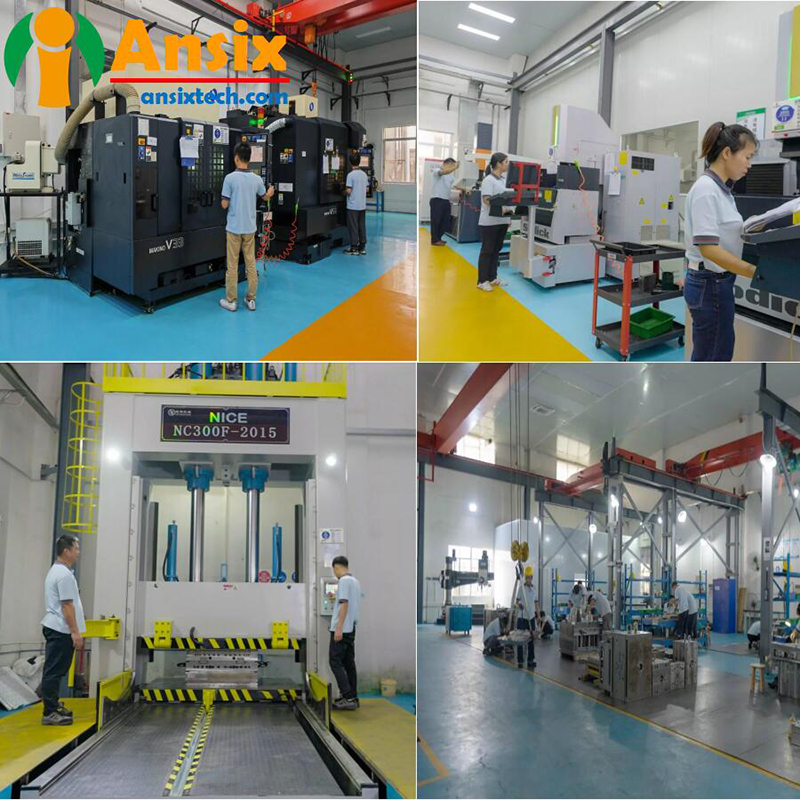
- The mold manufacturing process and product material selection
The mold manufacturing process and product material selection of plastic products are key factors to ensure product quality and production efficiency.