


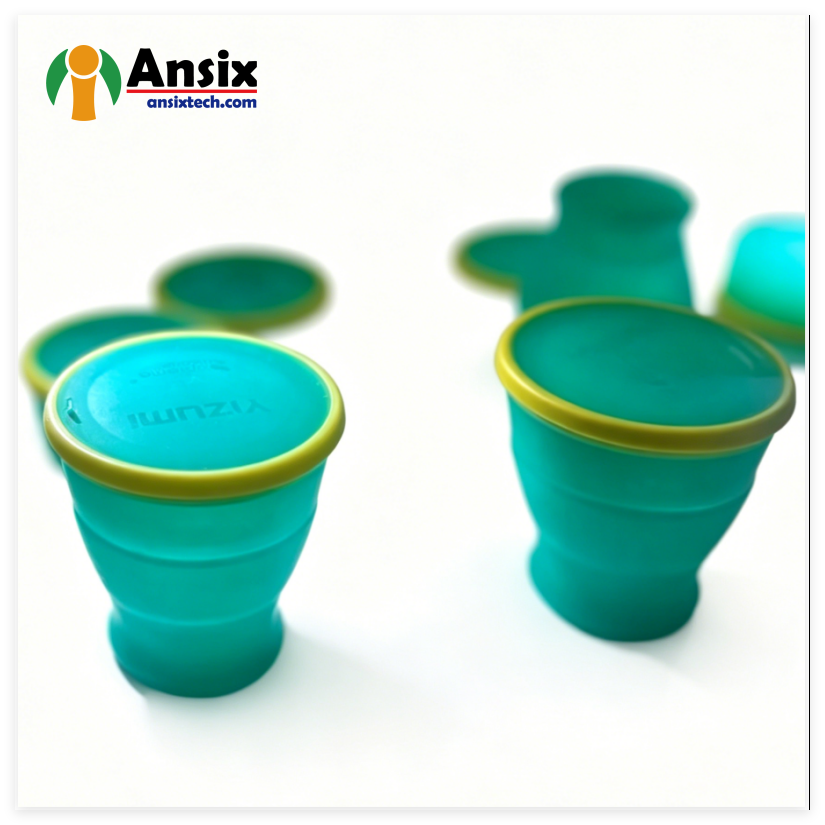


LDPE
LDPE


Ansix Tech Launches Custom LDPE Material Formulation Project: Redefining Cost Efficiency and Quality Assurance in Injection Molding
——A Comprehensive Industry Report on Low-Density Polyethylene Material Innovation and Manufacturing Excellence
Executive Summary
In a strategic move that underscores its commitment to material science innovation, Ansix Tech—a premier plastic injection molding manufacturer with over 29 years of industry experience—has officially launched a custom Low-Density Polyethylene (LDPE) material formulation project. This initiative represents a significant milestone in the company's ongoing efforts to deliver tailored material solutions that address the most pressing challenges facing manufacturers today: rising material costs, inconsistent quality, lengthy production cycles, and supply chain vulnerabilities. By leveraging its vertically integrated manufacturing capabilities, including 260 injection molding machines across four production bases in China and Vietnam, Ansix Tech is poised to transform how LDPE products are developed, validated, and delivered to market.
Part I: Understanding Low-Density Polyethylene (LDPE) – A Comprehensive Overview
Definition and Historical Background
Low-Density Polyethylene, universally abbreviated as LDPE, is a thermoplastic polymer derived from the monomer ethylene. It holds the distinction of being the very first grade of polyethylene ever produced, first synthesized in 1933 by Imperial Chemical Industries (ICI) through a high-pressure free radical polymerization process—a methodology that remains fundamentally in use today. Known alternatively as high-pressure polyethylene, LDPE is classified as the lightest variety among polyethylene resins.
The molecular architecture of LDPE is characterized by a substantial number of long-chain branches—typically 20 to 30 branches per 1,000 carbon chain atoms. This extensive branching distinguishes LDPE from its linear counterparts such as High-Density Polyethylene (HDPE) and Linear Low-Density Polyethylene (LLDPE), and is directly responsible for many of its unique physical and mechanical properties. The branching structure results in a less dense three-dimensional arrangement, with crystallinity typically ranging between 40% and 65%.
Physical and Chemical Properties
LDPE presents as a milky white, translucent, wax-like granular material that is odorless, tasteless, and non-toxic. Its density typically falls within the range of 0.910 to 0.930 g/cm³, making it lighter than water. The material exhibits a relatively low melting point, with melt temperatures generally around 85°C and melting points in the range of 108°C to 122°C.
Key Mechanical Properties:
For a representative LDPE grade such as ExxonMobil™ LD136.MN, technical data sheets reveal a melt flow rate of 2 g/10min (at 190°C/2.16kg) and a density of 0.921 g/cm³. Tensile strength in the machine direction at yield measures approximately 10.2 MPa, with elongation at break reaching 540% in the transverse direction. The material demonstrates excellent impact resistance, with dart drop impact values around 110g.
Thermal and Chemical Resistance:
LDPE can withstand continuous service temperatures up to approximately 65°C to 80°C, with a heat deflection temperature (HDT) around 45°C and a brittleness temperature as low as -76°C. Chemically, LDPE is remarkably inert—it has no solvent at room temperature and exhibits excellent resistance to dilute acids, alcohols, and alkalis. However, strong oxidizing agents will eventually cause oxidation and embrittlement, and the material can be damaged by prolonged UV exposure. Aggressive solvents may cause softening or swelling, though these effects are typically reversible.
Manufacturing Processes
LDPE is produced through two primary reactor technologies: the tubular process and the autoclave (kettle) process. The tubular process, employed by major producers including Basell, ExxonMobil, and BASF, features simpler reactor construction and lower capital investment, yielding products with superior optical properties well-suited for film applications. The autoclave process, utilized by Eni and ExxonMobil among others, offers greater flexibility in grade switching and produces polymers with more long-chain branching, making them ideal for coating resin applications.
Part II: LDPE Technical Data Sheet (TDS) – Comprehensive Material Specifications

Physical Properties
Property Test Method Typical Value Unit
Density ASTM D1505 / D792 0.910 – 0.930 g/cm³
Melt Flow Rate (190°C/2.16kg) ASTM D1238 0.8 – 2.0 g/10min
Crystallinity — 40 – 65 %
Mechanical Properties
Property Test Method Typical Value Unit
Tensile Strength (Yield, MD) ASTM D882 10.2 MPa
Tensile Strength (Break, MD) ASTM D882 25.5 MPa
Tensile Strength (Break, TD) ASTM D882 19.2 MPa
Elongation at Break (MD) ASTM D882 130 %
Elongation at Break (TD) ASTM D882 540 %
Dart Drop Impact (F50) ASTM D1709A 110 g
Tear Strength (MD) ASTM D1922 460 g
Tear Strength (TD) ASTM D1922 100 g
Secant Modulus (MD, 1% strain) ASTM D882 198 MPa
Secant Modulus (TD, 1% strain) ASTM D882 245 MPa
Thermal Properties
Property Test Method Typical Value Unit
Melting Temperature — 108 – 122 °C
Maximum Continuous Use Temperature — 65 – 80 °C
Heat Deflection Temperature — ~45 °C
Brittleness Temperature — -76 °C
Coefficient of Thermal Expansion — 100 – 220 × 10⁻⁶ /°C
Chemical Resistance Ratings (at 20°C)
Chemical Class Rating
Dilute/Weak Acids Excellent (E)
Strong Concentrated Acids Good (G)
Aliphatic Alcohols Excellent (E)
Bases/Alkalis Excellent (E)
Aldehydes Good (G)
Esters Good (G)
Aliphatic Hydrocarbons Fair (F)
Aromatic Hydrocarbons Not Recommended (N)
Halogenated Hydrocarbons Not Recommended (N)
Rating Scale: E = Excellent (30+ days exposure no damage); G = Good (30 days minimal effect); F = Fair (7 days some effect); N = Not Recommended for continuous use
Key Processing Characteristics
LDPE is a crystalline material with extremely low moisture absorption—typically less than 0.01%—eliminating the need for pre-drying before processing. The polymer exhibits excellent melt fluidity due to its flexible molecular chains and low intermolecular forces, enabling the molding of thin-walled, long-flow-path products without requiring excessively high injection pressures. Shrinkage rates for LDPE are approximately 1.22%, with significant directional variation that demands careful mold design to mitigate warpage and distortion.
Part III: LDPE Applications – Diverse Industries and End-Uses
LDPE's unique combination of flexibility, chemical resistance, low cost, and ease of processing has established it as one of the most versatile thermoplastics in the global market. Film packaging represents the single largest application, accounting for over 55% of domestic LDPE consumption in many markets.
Packaging Industry: LDPE dominates the flexible packaging sector, serving as the material of choice for carrier bags, heavy-duty sacks, shrink films, stretch films, and保鲜膜 (cling film). Its excellent heat-sealing properties, optical clarity, and moisture barrier characteristics make it ideal for food packaging applications ranging from糖果 (confectionery) and蔬菜 (vegetables) to冷冻食品 (frozen foods). The material is also widely used in liquid packaging applications including milk, soy sauce, juice, and tofu packaging.
Agricultural Applications: LDPE films serve critical functions in modern agriculture as greenhouse films, ground cover mulch films, silage bags, and irrigation tubing. The material's UV resistance (when appropriately stabilized) and durability under outdoor conditions make it indispensable for crop protection and water conservation.
Medical and Healthcare: LDPE's non-toxic, non-contaminating nature has made it a preferred material for medical applications including blood bags, intravenous (IV) fluid bags, medical tubing, and various laboratory containers. Nalgene LDPE resins, with their exceptionally low trace metal content, are particularly valued in trace metals analysis laboratories.
Automotive and Industrial: The material finds application in under-the-hood components, gaskets, seals, and various interior parts where flexibility and chemical resistance are required. In electrical applications, LDPE's excellent dielectric properties make it ideal for wire and cable insulation, telecommunications cable sheathing, and high-frequency insulation.
Building and Construction: LDPE is utilized in roofing membranes, pipe insulation, gas and water pipes, and chemical tank linings. Its chemical resistance and weatherability make it suitable for demanding construction environments.
Other Applications: The material is also used in blow-molded containers for food, beverages, and industrial chemicals; injection-molded toys, squeeze bottles, and general-purpose containers; and as coatings for various substrates.
Part IV: Ansix Tech's Custom LDPE Material Formulation Project – Project Initiation and Strategic Vision
The Genesis of the Project
Ansix Tech's decision to launch a dedicated custom LDPE material formulation project stems from a fundamental recognition: generic, off-the-shelf LDPE grades often fail to meet the specific performance requirements of modern, demanding applications. For over 29 years, Ansix Tech has served as a strategic manufacturing partner to global brands across automotive, medical, consumer goods, and industrial sectors. The company's project initiation phase is distinctly different from standard injection molding engagements—it typically begins not with a purchase order, but with a problem.
When a client approaches Ansix Tech with a new LDPE product requirement, the engineering team immediately conducts a comprehensive application mapping. Questions that guide this initial assessment include: What is the expected service life under continuous vibration? What chemicals will the part encounter? What are the aesthetic requirements for Class A surfaces versus hidden structural ribs? This thorough understanding of the end-use environment enables Ansix Tech to develop a clear roadmap for cost reduction through precision engineering rather than through shortcuts.
The Value Proposition: What Custom LDPE Formulation Delivers to Customers
- Tailored Material Properties: By developing custom LDPE formulations, Ansix Tech can precisely match material characteristics to application requirements. Whether the need is for enhanced impact resistance, improved flow characteristics for thin-wall molding, specific color matching, or optimized thermal stability, custom formulation enables performance that generic grades cannot provide.
- Cost Optimization: One of the most significant values Ansix Tech delivers lies in cost reduction through intelligent optimization at every stage—from the initial molecular composition of the plastic pellets to final packaging and delivery. Custom formulation allows the company to eliminate unnecessary additives, optimize filler content, and select the most cost-effective raw material combinations without compromising performance. In one project, Ansix Tech achieved up to 60-70% material waste reduction through sophisticated hot runner systems.
- Supply Chain Security: By developing and qualifying custom LDPE formulations, Ansix Tech reduces dependency on single-source suppliers and creates a more resilient supply chain. The company's established relationships with reliable suppliers, combined with its vertical integration, ensure consistent raw material availability.
- Quality Assurance and Consistency: Custom formulations are developed with rigorous quality control protocols, ensuring batch-to-batch consistency that is often unattainable with standard commercial grades. Ansix Tech's quality certifications—including ISO9001, IATF16949, ISO13485, ISO14001, and BSCI—ensure compliance across automotive, medical, and general industrial sectors.
Part V: Material Selection and Custom Formulation Development
The Material Selection Process
Ansix Tech's material selection strategy is guided by performance metrics and cost optimization. The process begins with a thorough analysis of the part's functional requirements, operating environment, and manufacturing constraints. For LDPE components, key considerations include:
Mechanical requirements: Tensile strength, impact resistance, tear strength, and flexibility
Thermal requirements: Continuous service temperature, heat deflection temperature, and low-temperature performance
Chemical requirements: Resistance to specific chemicals, solvents, and environmental exposure
Processing requirements: Melt flow characteristics, shrinkage behavior, and moldability
Regulatory requirements: Food contact compliance (FDA 21 CFR 177.1520), medical device standards, or automotive specifications
Custom Formulation Development
Ansix Tech's custom LDPE formulation capabilities encompass several modification strategies:
- Property Enhancement: Through the incorporation of specific additives and modifiers, the company can enhance LDPE's inherent properties. For example, the addition of丙烯酸 (acrylic acid) and苯乙烯 (styrene) through melt grafting can improve adhesion and compatibility with other polymers. Phosphorus-silicon synergistic flame retardants can be incorporated to reduce heat release and smoke emission while maintaining mechanical properties.
- Crosslinking Modification: Peroxide crosslinking and silane crosslinking are two widely used methods to enhance LDPE's thermal stability, creep resistance, and mechanical strength at elevated temperatures. These modifications are particularly valuable for applications requiring improved dimensional stability under load.
- Blending Strategies: LDPE exhibits excellent compatibility with other polyethylenes, enabling property optimization through blending. Ansix Tech leverages this capability to develop formulations that balance performance characteristics from multiple resin grades.
- Melt Flow Index Modification: The company can adjust the melt flow index of LDPE through targeted process modifications, enabling the material to perform optimally in specific molding or extrusion applications.
Material Verification and Quality Validation
Ansix Tech employs a rigorous material verification protocol to ensure every custom LDPE formulation meets specifications:
Raw Material Incoming Inspection: All incoming LDPE resins undergo comprehensive testing including density measurement (ASTM D1505), melt flow rate determination (ASTM D1238 at 190°C/2.16kg), and visual inspection.
Performance Testing: Mechanical properties are verified through tensile testing (ASTM D638 or ASTM D882), impact testing, and tear strength evaluation. Thermal properties are confirmed through differential scanning calorimetry (DSC) and thermogravimetric analysis (TGA).
Process Validation: Trial molding runs are conducted on production-scale equipment to validate processing parameters and part quality. Ansix Tech's ISO Class 8 cleanroom and GMP-certified facilities enable testing under controlled conditions.
Statistical Process Control: Throughout production, key quality parameters are monitored using statistical process control (SPC) methodologies. Data tracking and analysis enable real-time identification and correction of potential quality issues.
Part VI: Mold Flow Analysis and Design for Manufacturability (DFM)
Comprehensive DFM Review
Before any metal is cut, Ansix Tech conducts an exhaustive Design for Manufacturability (DFM) review that extends beyond traditional considerations into what the company terms "Design for Performance". This approach ensures that the part can not only be ejected from the mold but can survive its intended service life—whether that means 1,000 hours of runtime in a lawn mower motor fan or years of daily use in a consumer product.
The DFM process integrates design, manufacturing, and validation under one strategic roof, eliminating the "translation errors" that commonly plague outsourced projects. When design and manufacturing occur in close collaboration, the feedback loop is instantaneous—a mold designer can walk to the machining floor to inspect an electrode burn, and a process engineer can adjust cooling lines based on real-time warp data from the trial press.
Mold Flow Analysis for LDPE
Given LDPE's unique flow characteristics—excellent fluidity, low melt viscosity, and sensitivity to pressure—mold flow analysis is critical for successful part production. Ansix Tech utilizes advanced simulation software to:
Predict fill patterns: Ensuring complete cavity filling without short shots or flow marks
Optimize gate location: Preventing sink marks and minimizing weld lines
Balance flow: Achieving uniform filling across multi-cavity molds
Analyze pressure distribution: Preventing excessive pressure drop that could compromise part quality
Simulate cooling: Optimizing cycle time while minimizing warpage and shrinkage
Mold Design Priorities for LDPE
LDPE's significant shrinkage rate (approximately 1.22%) and directional variation demand careful mold design considerations:
Gate Design: Direct gates should be avoided to prevent uneven shrinkage and excessive internal stress. Gate position must be carefully selected to prevent shrinkage cavities and deformation. Ansix Tech's engineers leverage decades of experience to specify optimal gate configurations for each unique part geometry.
Runner System: The runner system must be designed to minimize pressure drop while ensuring balanced cavity filling. Hot runner systems are frequently employed to reduce material waste and improve cycle efficiency.
Cooling System Design: Cooling is perhaps the most critical factor in successful LDPE molding. The cooling system must ensure uniform cooling rates across the part geometry to prevent warpage and distortion. Recommended cooling channel diameter is at least 8mm, with the distance from cooling channels to the mold surface not exceeding 1.5 times the channel diameter. Ansix Tech's sophisticated cooling circuits are designed to achieve precisely this uniform cooling. In LDPE injection molding, optimized cooling systems have been shown to reduce cooling time by approximately 15.51%.
Ejection System: The ejection system must be designed to accommodate LDPE's relatively low modulus and tendency to deform. Uniform ejection forces and adequate ejection surface area are essential to prevent part damage during demolding.
Part VII: Mold Manufacturing – Processes, Materials, and Challenges
Mold Material Selection
The choice of mold steel is critical for achieving the required part quality and mold longevity in high-volume LDPE production. Ansix Tech selects mold materials based on:
Wear resistance: To maintain dimensional accuracy over millions of cycles
Thermal conductivity: To enable efficient, uniform cooling
Corrosion resistance: Particularly important when molding LDPE with corrosive additives
Machinability: To achieve the required surface finish and dimensional precision
Common mold materials employed include P20, H13, S136, and various stainless steel grades, with selection tailored to the specific application requirements.
Mold Manufacturing Process Flow
Ansix Tech's mold manufacturing process follows a systematic workflow:
- Design Confirmation: The mold design is reviewed and confirmed based on the part geometry and production requirements.
- Rough Machining: The mold base and cavity blocks are rough machined from selected steel stock.
- Precision Machining: High-precision operations including CNC milling, EDM (electrical discharge machining), and wire EDM are employed to achieve required tolerances. The company utilizes advanced machining equipment including optical curve grinders and coordinate grinders to ensure dimensional accuracy and surface finish.
- Heat Treatment: Where required, mold components undergo heat treatment to achieve optimal hardness and wear resistance.
- Finishing: Surface finishing including polishing, texturing, and coating application is performed to achieve the required part aesthetics and release characteristics.
- Assembly: All mold components are assembled and inspected for proper fit and function.
- Trial and Validation: The completed mold is installed in an injection molding machine for trial runs. Molding parameters are optimized, and parts are inspected for quality compliance.
Manufacturing Challenges for LDPE Molds
Warpage Control: LDPE's tendency to warp and distort due to its significant shrinkage and directional variation is perhaps the most significant challenge. Ansix Tech addresses this through sophisticated cooling circuit design that ensures uniform cooling rates across the part geometry.
Surface Finish Requirements: Mold surface finish directly impacts part aesthetics and release characteristics. Steel defects are replicated on every molded part, requiring exceptional care in mold finishing.
High-Volume Production Demands: Molds for high-volume LDPE production must withstand 24/7 manufacturing environments. This demands robust design, appropriate material selection, and comprehensive maintenance planning.
Part VIII: LDPE Injection Molding – Process Optimization and Quality Control
Injection Molding Process Parameters
LDPE injection molding requires careful control of several key parameters:
Temperature Control:
Nozzle temperature: 140-190°C
Front zone: 140-200°C
Middle zone: 135-195°C
Rear zone: 130-180°C
Melt temperature: 193-232°C
Mold Temperature:
Recommended range: 20-40°C
Higher mold temperatures slow cooling, increase shrinkage, and exacerbate warpage
Lower mold temperatures cause rapid surface solidification, resulting in uneven gloss and increased internal stress
Injection Pressure:
Maximum: up to 1500 bar
Optimized pressure: approximately 25 MPa with 30% injection speed
Holding Pressure:
Approximately 15 MPa with 30% holding speed
Cooling Time:
Approximately 15 seconds for typical parts
Process Optimization for Efficiency and Cost Control
Cycle Time Reduction: Ansix Tech has demonstrated the ability to reduce production cycles by 28% through integrated mold design and manufacturing solutions. This directly translates to increased daily output—in one case, over 350 additional units per day.
Scrap Rate Reduction: With a production volume of one million parts daily, a 1% scrap reduction alone can save over $100,000 USD annually in material costs. Ansix Tech's rigorous process control and quality systems minimize scrap generation.
Energy Efficiency: Optimized processing parameters reduce energy consumption per part, contributing both to cost reduction and environmental sustainability.
Automation: Ansix Tech employs advanced automation equipment including robotic part handling, automated material feeding, and automated quality inspection. These systems reduce labor costs, improve consistency, and enable 24/7 production.
Quality Control and Assurance
In-Process Monitoring: Real-time monitoring of key process parameters enables immediate detection and correction of deviations.
Dimensional Inspection: Parts are inspected using precision measurement equipment to verify conformance to specifications.
Visual Inspection: Automated and manual visual inspection identifies surface defects, flow marks, sink marks, and other cosmetic issues.
Functional Testing: Where required, parts undergo functional testing to verify performance under simulated service conditions.
Documentation and Traceability: Comprehensive documentation ensures complete traceability from raw material to finished part.
Part IX: Packaging, Logistics, and Rapid Delivery
Packaging Solutions
Ansix Tech's packaging solutions are designed to protect parts during transit while optimizing shipping efficiency. Custom packaging designs accommodate part geometry, prevent damage, and facilitate automated handling at the customer's facility.
Logistics and Supply Chain Management
Ansix Tech's four production bases in China and Vietnam provide geographic flexibility and redundancy. Key logistics capabilities include:
Agile Production Processes: The company employs agile manufacturing methodologies that enable rapid response to customer demands and flexible production schedule adjustments.
Strong Supply Chain Management: Long-term relationships with reliable suppliers ensure timely raw material availability.
Advanced Equipment and Technology: Investment in advanced production equipment and automation enables efficient, high-quality production.
Optimized Logistics: Partnerships with reliable logistics providers ensure on-time delivery. Real-time tracking and proactive issue resolution minimize delivery delays.
Emergency Shipping Protocols: Established emergency shipping protocols enable rapid response to urgent customer requirements.
Continuous Improvement: Ansix Tech continuously evaluates and optimizes its delivery processes, incorporating customer feedback to enhance service quality.
Part X: Ansix Tech's Industry Experience and Commitment to Customer Value
Decades of Manufacturing Excellence
Founded in Hong Kong in 1998, Ansix Tech has operated for over 28 years, evolving into a leading one-stop plastic injection molding solution provider. The company's four production bases span more than 200,000 square meters and employ over 1,200 personnel, generating annual revenue exceeding one billion RMB.
With 260 injection molding machines ranging from 30 tons to 2,800 tons, including premium brands such as Japan's Fanuc, Sumitomo, Toshiba, Nissei, Engel, Germany's Arburg (specializing in liquid silicone injection molding), and domestic machines from Haitian and Victor Taichung Machinery, Ansix Tech possesses the comprehensive infrastructure required for mass production.
Vertical Integration as a Strategic Advantage
Ansix Tech's vertically integrated approach—encompassing prototyping, mold manufacturing, injection molding, and final assembly validation—provides a blueprint for resilience in an industry characterized by seasonal demand pressures and volatile material costs. The integrated in-house mold manufacturing and injection molding operations eliminate the common industry pain point of mold transfer delays between separate workshops.
Proven Results Across Industries
Automotive: In one project, Ansix Tech's integrated mold design and manufacturing solution enabled a leading panel manufacturer to reduce production cycles by 28% and increase daily output by over 350 units. The company has also achieved up to 60-70% material waste reduction through sophisticated hot runner systems while cutting 10% from production cycles.
Medical: Ansix Tech's ISO13485 certification and ISO Class 8 cleanroom facilities enable the production of medical-grade components with the required quality and regulatory compliance.
Consumer Products: The company's precision injection molding capabilities have been applied to a wide range of consumer products, from lawn mower components to household appliances.
Commitment to Cost Reduction
Ansix Tech's approach to cost reduction is not about cutting corners—it is about intelligent optimization at every stage. Key strategies include:
Material Optimization: Custom LDPE formulations eliminate unnecessary additives and optimize raw material selection for the specific application, reducing material costs without compromising performance.
Process Efficiency: Cycle time reduction, scrap minimization, and energy efficiency improvements directly reduce per-part production costs.
Mold Design Optimization: DFM principles ensure molds are designed for efficient, high-volume production, minimizing downtime and maintenance costs.
Supply Chain Integration: Vertical integration eliminates markup from intermediaries and reduces logistics costs.
Quality Assurance: Rigorous quality control reduces scrap, rework, and warranty costs.
Conclusion: A New Chapter in LDPE Manufacturing Excellence
Ansix Tech's custom LDPE material formulation project represents a significant advancement in the company's ongoing mission to deliver superior value to its customers. By combining deep material science expertise with decades of manufacturing experience, state-of-the-art facilities, and a vertically integrated operational model, Ansix Tech is uniquely positioned to address the most pressing challenges facing LDPE product manufacturers today.
The company's comprehensive approach—from material selection and custom formulation through mold design, manufacturing, and validation to final production and delivery—ensures that customers receive not just a component, but a complete solution optimized for performance, quality, and cost.
As global demand for LDPE products continues to grow across packaging, medical, agricultural, automotive, and industrial applications, Ansix Tech's commitment to innovation and excellence positions the company as a trusted partner for manufacturers seeking to leverage the full potential of this versatile material. Through its custom LDPE formulation project, Ansix Tech is not merely manufacturing parts—it is engineering solutions that drive customer success in an increasingly competitive global marketplace.
Ansix Tech Co Ltd
If you have any plans related to LDPE , you can contact us at any time. We will turn your ideas into reality, let you realize your dreams, and obtain large orders from the market. Our contact information is info@ansixtech.com. Or contact our CTO, mail: stephen@ansixtech.com
#www.ansixtech.com #ansixtech.com #LDPE #LDPE Material #LDPE Canopy Mold injection mold companies #Ansix #Ansix moulds #Ansix china #Ansix tech china #Ansix tech company #Ansix facotry #LDPEinjection molding #LDPEinjection tools #LDPEinjection moulds #LDPEplastic mould #LDPEplastic tools #Ansix Tech #Ansix molds #Ansix injection molding #Ansix mold factory #injection molding Customized stainless steel float switch for water level, oil level, high liquid level alarm#Ansix mold factory #LDPEchina #LDPEmolds #injection factory #LDPEinjection molding #LDPEinjection molding factory #injection molding company #LDPEinjection mold companies #LDPETooling #LDPEmold limited #Ansix mold china #Ansix companies #Ansix company China #LDPEfacotry #Ansix Tech #Ansix Tech mould #LDPEinjection moulding #injection moulding company #Ansix LDPEparts injection mold companies #medical injection molding companieschina #LDPEchina factory #Ansix moulding companies #Ansix molding company #LDPEinjection moulding facotry #Ansix Tech mold #LDPEmould #LDPEplastic injection molding #ansix plastic mold #Mold manufacturing #LDPEparts manufacturing #LDPEplastic parts factory #LDPEinjection parts mold #LDPEPRECISION MANUFACTURING #LDPE#China mold #LDPEinjection moulding china #LDPEmould china #china precision mold #mold in china #LDPEmold china #Precision molds #High-precision molds #LDPE#Injection molds #LDPEFactory #LDPECompany #Super Large Injection Mold Factory #Large Tonnage Injection Molding Factory #LDPECompany #LDPEFactory #2800T Injection Molding Factory #3000 Ton Injection Molding #4500 Ton Injection Molding Factory #Large Mold Injection Molding #Large Plastic Mold Injection Molding Factory #Large Injection Mold Manufacturer #Plastic Mold Factory #Injection Mold #Plastic Mold