


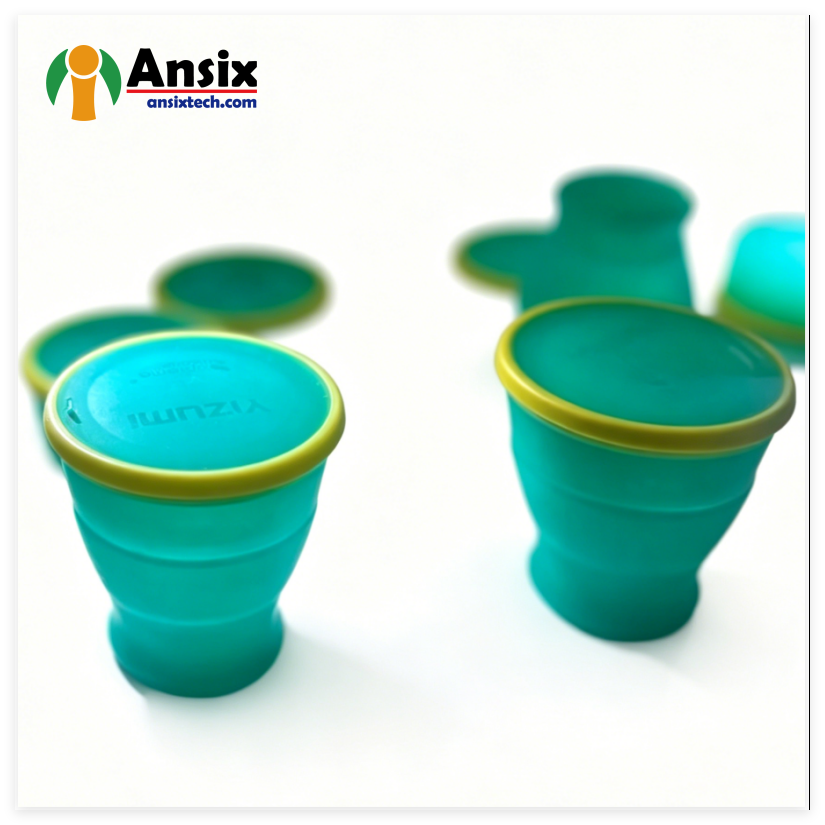


MABS
MABS


Ansix Tech Launches Custom MABS Material Development Initiative: Redefining Value in Transparent Engineering Plastics
Industry-first program combines 29 years of manufacturing expertise with tailored material formulation to address critical challenges in transparency, impact resistance, and cost optimization
Ansix Tech Co., Ltd., a precision injection molding specialist with over 29 years of manufacturing experience, today announced the formal launch of its custom Methyl Methacrylate Acrylonitrile Butadiene Styrene (MABS) material development project. This strategic initiative marks a significant milestone in the company's evolution from a pure-play mold manufacturer to an integrated solutions provider capable of formulating, validating, and processing custom-engineered MABS materials tailored to specific customer applications.
The project, which leverages Ansix Tech's extensive manufacturing infrastructure—including four production bases across China and Vietnam, 260 injection molding machines ranging from 30 to 2,800 tons, and a workforce exceeding 1,200 employees—addresses a critical gap in the transparent engineering plastics market: the lack of application-specific material solutions that balance optical clarity, mechanical performance, and cost efficiency.
Understanding MABS: The Transparent Engineering Thermoplastic
Full Chemical Definition and Nomenclature
MABS, scientifically designated as Methyl Methacrylate Acrylonitrile Butadiene Styrene, is a specialized engineering thermoplastic copolymer that represents one of the most significant innovations in transparent polymer technology over the past three decades. The material is formally classified in international standards under ISO 19066-1:2014 as "methyl methacrylate-acrylonitrile-butadiene-styrene (MABS) moulding and extrusion materials".
The chemical composition of MABS is defined by its four principal monomer components: Methyl Methacrylate (MMA), Acrylonitrile (AN), Butadiene (BD), and Styrene (SM). This quaternary copolymer structure is achieved through a specialized polymerization process wherein polybutadiene rubber is dissolved or dispersed in a mixture of methyl methacrylate, acrylonitrile, and styrene monomers, followed by graft polymerization through either bulk or suspension processing methods.
The defining characteristic that distinguishes MABS from conventional ABS (Acrylonitrile Butadiene Styrene) is the strategic substitution of a portion of styrene content with methyl methacrylate. This molecular modification fundamentally transforms the material's optical properties while preserving—and in some cases enhancing—the mechanical robustness that makes ABS one of the most widely used engineering thermoplastics globally.
The Science Behind Transparency
The transparency of MABS arises from the careful manipulation of the refractive indices of its constituent phases. By adjusting the methyl methacrylate content to values that closely match the solubility parameters of styrene-butadiene rubber, manufacturers achieve optical clarity that approaches that of glass while maintaining the impact resistance characteristic of rubber-toughened polymers. This delicate balance of chemistry and physics is what makes MABS a "clear engineering and commodity thermoplastic" that offers "glass-like transparency while offering superior impact resistance compared to traditional transparent plastics".
The global transparent ABS market, of which MABS is the primary material, is estimated at 340,000-350,000 tons in 2025, with projections reaching 850-950 million USD by 2025 and a compound annual growth rate of 6%-8% through 2030. This growth trajectory underscores the material's increasing importance across multiple industries.
Historical Context and Market Evolution
Toray Industries holds the distinction of being the first company globally to commercially manufacture MABS (transparent ABS) under the TOYOLAC™ brand, accumulating more than 20 years of experience in transparent ABS technology. Since then, major chemical manufacturers including LG Chem, Lotte Advanced Materials, Chi Mei Corporation, and INEOS Styrolution have developed extensive MABS product portfolios.
The market has evolved significantly from its early applications in consumer electronics to encompass medical devices, automotive components, and premium consumer goods. LG Chem has pioneered sustainable manufacturing practices by implementing recycled raw materials in transparent ABS production using methyl methacrylate derived from waste artificial marble—a development that reflects the industry's growing emphasis on environmental responsibility.
MABS Technical Data Sheet (TDS): Comprehensive Material Properties


Physical Properties
MABS exhibits a density range of approximately 1.08 to 1.11 g/cm³, depending on the specific grade and formulation. The material's specific gravity is typically measured at 1.10, with molding shrinkage rates ranging from 0.4% to 0.8% in the flow direction (MD) and 0.6% to 0.8% in the cross-flow direction (TD). Water absorption under 24-hour immersion is approximately 0.7%, indicating good dimensional stability in humid environments.
Mechanical Properties
The mechanical performance of MABS varies significantly across different grades, allowing manufacturers to select formulations optimized for specific applications:
Tensile Properties: Tensile strength at yield typically ranges from 42 MPa to 55 MPa. Some high-performance grades achieve tensile strengths of up to 53 MPa, with elongation at break values ranging from 15% to 50%. The tensile modulus, a measure of stiffness, typically falls between 2,330 MPa and 2,540 MPa.
Flexural Properties: Flexural strength ranges from 61 MPa to 79 MPa, with flexural modulus values spanning 1,805 MPa to 2,400 MPa. These values indicate excellent rigidity and load-bearing capacity, making MABS suitable for structural applications requiring transparency.
Impact Resistance: One of MABS's most distinguishing characteristics is its exceptional impact resistance. Charpy notched impact strength at 23°C typically ranges from 5.8 kJ/m² to 15.1 kJ/m². Notched Izod impact strength values range from 6 kJ/m² to 157 J/m. This combination of transparency and impact resistance—unmatched by traditional transparent plastics like acrylic (PMMA)—positions MABS as a premium solution for demanding applications.
Hardness: Rockwell hardness values range from R102 to R114 on the R-scale, indicating good surface durability and scratch resistance.
Thermal Properties
MABS demonstrates commendable thermal performance for a transparent engineering plastic. The heat deflection temperature (HDT) at 1.82 MPa typically ranges from 76°C to 88°C. Vicat softening temperatures reach approximately 88.8°C, indicating the material's ability to maintain dimensional stability under moderate thermal loads.
The melt flow index (MFI), measured at 220°C with a 10 kg load, varies significantly across grades—from 10.5 g/10 min for higher molecular weight formulations to 23 g/10 min for high-flow grades. This variability allows processors to select materials optimized for specific molding conditions and part geometries.
Optical Properties
The optical performance of MABS is what truly sets it apart from standard ABS. High-transparency grades achieve light transmittance rates of up to 88.5% at 3mm thickness, with haze values as low as 1.8% to 3.71%. The refractive index is approximately 1.518±0.003, closely matching that of many optical-grade polymers.
Key optical characteristics include:
High light transmittance with low haze
Excellent weathering resistance with transparency retention against high humidity and temperature exposure
Low outgassing (minimal weight loss upon heating)
Consistent and stable color and transparency across production batches
Flammability and Regulatory Compliance
Most commercial MABS grades achieve a UL 94 HB flammability rating, indicating slow burning on horizontal specimens. The material is available in injection molding, extrusion, and optical grades, with some formulations specifically designed for infrared penetration applications. Manufacturers offer both flame-rated and antistatic variants to meet diverse industry requirements.
MABS Applications: Industry-Wide Adoption
Electronics and Electrical (E&E) Sector
The electronics and electrical segment represents the largest application area for MABS, with projected growth of 7%-9% through 2030. The material's excellent dimensional stability, flame retardance, and optical clarity make it essential in:
Smartphone cases and tablet housings
Computer peripherals and laptop components
Electronic component covers and display housings
Television bezels and monitor frames
The Asia Pacific region, particularly China, South Korea, and Japan, leads global consumption driven by extensive manufacturing infrastructure in electronics and automotive sectors. China's significant consumption in smartphone cases, automotive interior components, and household appliances reflects the material's versatility.
Medical Devices and Healthcare
The medical sector represents a significant growth opportunity for MABS, projected to grow at 6%-8%. The material's clarity, chemical resistance, and sterilizability make it ideal for:
Medical equipment housings and diagnostic device components
Fluid containers and sterilization trays
Medical instrument housings and sensor components
Perfusion devices and diagnostic equipment
Ansix Tech's ISO 13485 certification and ISO 8 Cleanroom compliance (meeting US medical-grade FDA510K standards) position the company as a qualified partner for medical device manufacturers requiring MABS components.
Appliance Industry
The appliance industry represents the largest volume consumer of MABS resin, with 90,730 metric tons consumed in 2019 alone. Applications include:
Air conditioner and air purifier front panels
Washing machine components and vacuum cleaner housings
Grass cutting machine components and lawn mower assemblies
Small household appliance housings and display panels
Automotive and Transportation
The automotive industry is increasingly adopting MABS for interior applications requiring both aesthetic appeal and durability. The material's toughness, clarity, and ease of molding into complex shapes make it suitable for:
Interior trim components and instrument clusters
Lightweight automotive components supporting fuel efficiency initiatives
Automotive interior components requiring optical clarity and impact resistance
North America's demand for MABS is driven significantly by automotive applications and strict safety regulations in medical applications.
Consumer Goods and Specialty Applications
Beyond these primary sectors, MABS finds extensive application in:
Cosmetic containers and premium packaging
Transparent toys and stationery products
Sporting goods requiring transparency and impact resistance
Lamp housings and lighting components
Keyboard caps and IT products
Ansix Tech's Custom MABS Material Development Initiative
Project Overview and Strategic Rationale
Ansix Tech's decision to launch a custom MABS material development program stems from a fundamental recognition: a mold is not merely a block of steel—it is a profit engine for the customer. By extending this philosophy upstream to material formulation, Ansix Tech aims to deliver comprehensive value that encompasses material science, mold engineering, and process optimization.
The initiative encompasses the entire MABS product lifecycle: from digital concept to validated mass production. Ansix Tech's integrated approach eliminates the traditional fragmentation between material suppliers, mold makers, and injection molders—a fragmentation that often results in suboptimal material selection, extended development cycles, and unnecessary costs.
Custom Material Formulation and Development
Ansix Tech's material development program focuses on formulating MABS compounds that address specific customer requirements across multiple dimensions:
Tailored Optical Performance: For applications requiring exceptional clarity, Ansix Tech can formulate MABS grades with optimized light transmittance (up to 90%+) and minimal haze (<1.5%). For applications where light diffusion is preferred, formulations can be adjusted accordingly.
Enhanced Impact Resistance: By modifying the rubber phase morphology and content, Ansix Tech can develop MABS grades with Charpy impact strengths exceeding 20 kJ/m² while maintaining acceptable transparency levels.
Process-Optimized Flow Characteristics: For complex geometries or multi-cavity molds, Ansix Tech can adjust melt flow index to ensure complete cavity filling at reduced injection pressures—directly translating to lower clamp tonnage requirements and reduced energy consumption.
Thermal Performance Tuning: For applications exposed to elevated temperatures, formulations can be developed with HDT values approaching 100°C through optimized comonomer ratios and additive packages.
Material Selection and Component Specification
Ansix Tech's approach to material selection is systematic and data-driven. The company maintains comprehensive databases of commercially available MABS grades from leading manufacturers including:
Lotte Advanced Materials (Starex® series: TX-0530T, SF-0505EH)
Toray (Toyolac® series: 900-352, TP90-X10, TP90-X02)
Chi Mei Corporation (Polylac® PA-703TRP)
LG Chem (TR558A series)
INEOS Styrolution (Clearlux® series)
Yantai Wanhua (WANOVATE® T126)
For each project, Ansix Tech's material engineers evaluate candidate grades against customer requirements for mechanical properties, optical performance, thermal stability, regulatory compliance, and cost. The selection process considers not only the material's datasheet properties but also its processability characteristics—including drying requirements, optimal melt temperatures, mold temperature ranges, and cycle time implications.
Technical Capabilities: From Design to Production
Design for Manufacturability (DFM) and Mold Flow Analysis
Before any steel is cut for tooling, Ansix Tech conducts rigorous mold flow analysis (MFA) as the cornerstone of its Design for Manufacturability (DFM) process. This simulation-driven approach predicts:
Fill patterns and flow front advancement
Weld line locations and potential weak points
Air trap locations that could cause burn marks or incomplete filling
Pressure distribution and clamp force requirements
Gate placement optimization for balanced filling
This proactive analysis enables Ansix Tech to identify and resolve potential manufacturing issues before mold fabrication begins, eliminating costly downstream revisions and ensuring that the final design can be produced efficiently at scale.
Mold Design and Manufacturing
Mold Material Selection: Ansix Tech selects mold steels based on production volume requirements, material abrasiveness, and dimensional stability requirements. Common choices include S136ESR stainless steel for optical applications requiring mirror finishes.
Cooling System Design: Efficient cooling is critical for MABS processing to minimize cycle times and ensure dimensional stability. Ansix Tech's mold designs incorporate conformal cooling channels that follow part contours, achieving uniform temperature distribution and reducing cooling times by up to 30% compared to conventional straight-drilled cooling.
Runner and Gate Systems: For MABS applications requiring optical quality, Ansix Tech typically employs hot runner systems that eliminate regrind and ensure consistent melt temperature. Gate design is optimized to minimize visible gate marks and flow-induced stress.
Ejection System Design: Complex MABS parts often require sophisticated ejection systems to prevent part deformation during demolding. Ansix Tech's designs incorporate balanced ejection force distribution, appropriate draft angles, and surface treatments that reduce adhesion.
Precision Manufacturing: Ansix Tech's mold fabrication capabilities include five-axis high-speed machining centers capable of achieving ±0.002mm precision on complex three-dimensional surface geometries. The company also operates slow-speed wire electrical discharge machining (EDM) systems that can fabricate fine micro-holes and narrow slots down to 0.03mm without inducing thin-wall deformation.
Injection Molding Process Optimization
MABS Injection Molding Parameters: Ansix Tech has developed comprehensive process guidelines for MABS injection molding, including:
Parameter Recommended Range
Drying Temperature 70-80°C
Drying Time 3-4 hours
Melt Temperature 200-250°C (optimal 220°C)
Mold Temperature 40-80°C
Back Pressure 2-10 bar
Holding Pressure 50-75% of injection pressure
Screw Speed 0.05-0.2 m/s
Injection Volume 30-70% of barrel capacity
Cycle Time Optimization: Ansix Tech's process engineers systematically optimize each phase of the molding cycle—filling, packing, cooling, and mold opening—to achieve the shortest possible cycle time without compromising part quality. This optimization typically reduces cycle times by 15-25% compared to industry averages.
Quality Control and Process Stability: Every injection molding machine integrates with Ansix Tech's MES (Manufacturing Execution System), where critical parameters—melt temperature (±2°C window), injection pressure (±0.5 MPa tolerance), injection velocity (±2% window), holding pressure profile, and cooling time—are locked at qualified setpoints. This systematic approach ensures that every shot in mass production matches the quality of the first.
Material Validation and Testing
Ansix Tech's quality validation process for MABS components includes:
Dimensional Verification: Coordinate measuring machines (CMM) and optical imaging measurement systems conduct comprehensive dimensional inspections. All critical dimensions maintain process capability indices of CPK ≥1.33.
Mechanical Testing: Tensile, flexural, and impact properties are verified against specifications using standardized test methods (ASTM D638, ISO 527, ISO 178, ISO 179).
Optical Quality Assessment: Light transmittance, haze, and clarity are measured using spectrophotometers and haze meters.
Environmental Stress Testing: Parts undergo thermal cycling, humidity exposure, and UV weathering tests to validate long-term performance.
Regulatory Compliance: All materials and processes comply with relevant regulations including RoHS, REACH, and UL requirements.
Customer Value Proposition
Cost Reduction: Material, Process, and Efficiency Optimization
Ansix Tech's most significant value contribution lies in its systematic approach to cost reduction across three dimensions:
Material Cost Optimization: Through custom formulation and strategic material selection, Ansix Tech can reduce material costs by 10-20% compared to off-the-shelf solutions. This is achieved through:
Elimination of unnecessary additives or over-specification
Selection of cost-optimized grades that meet performance requirements without excess
Reduced scrap rates through process optimization
Regrind utilization strategies that maintain material properties
Process Cost Reduction: Ansix Tech's process optimization typically reduces per-part manufacturing costs by 15-30% through:
Cycle time reduction (15-25% improvement)
Energy consumption optimization (10-20% reduction)
Reduced rejection rates (typically <1%)
Automated processes that minimize labor costs
Efficiency Optimization: The company's integrated approach eliminates the costs associated with supplier coordination, specification mismatches, and development delays. Customers benefit from:
Single-point accountability from material selection to delivery
Reduced development timelines (typically 30-50% faster than traditional approaches)
Elimination of tooling iterations through DFM and simulation
Optimized packaging and logistics that reduce transportation costs
Capacity and Delivery Assurance
Ansix Tech's manufacturing infrastructure ensures reliable capacity and delivery:
Production Capacity: With 260 injection molding machines spanning 30 to 2,800 tons across four facilities, Ansix Tech can accommodate production volumes from prototype quantities to millions of parts annually.
Geographic Diversification: Production bases in Shenzhen, Dongguan, Hunan, and Vietnam provide geographic redundancy and supply chain resilience.
Delivery Performance: The company's efficient production lines and processes enable rapid response to customer orders and on-time delivery.
Scalability: Ansix Tech's infrastructure supports rapid scale-up from pilot production to full-volume manufacturing.
Quality Assurance and Reliability
Ansix Tech's quality management systems provide customers with confidence in product reliability:
Certifications: ISO9001 (quality management), IATF16949 (automotive), ISO13485 (medical devices), ISO14001 (environmental management), and BSCI (social compliance).
Cleanroom Capability: ISO 8 Cleanroom and GMP certification complying with US medical-grade FDA510K standards.
Statistical Process Control: CPK ≥1.33 on all critical dimensions ensures process capability and predictability.
Traceability: Full material traceability from receipt to finished product ensures accountability and facilitates root cause analysis if issues arise.
End-to-End Service Integration
Ansix Tech's comprehensive service portfolio eliminates the fragmentation that plagues traditional manufacturing supply chains:
Product Design and Development: Collaborative engineering where Ansix's technical team works alongside customer engineers to optimize designs for manufacturability.
Material Selection and Formulation: Expert guidance on material selection based on application requirements, cost targets, and processing considerations.
Prototyping and Validation: Rapid prototyping and validation services that enable customers to verify form, fit, and function before production tooling commitment.
Production and Assembly: Full-scale production with in-process quality control, assembly, and packaging services.
Supply Chain Management: Established long-term relationships with reliable suppliers ensure raw material quality and supply stability.
Industry Experience and Track Record
With over 29 years of manufacturing experience since its founding in Hong Kong in 1998, Ansix Tech has built over 30,000 mold sets with precision capabilities reaching 0.002mm. The company's annual turnover exceeds one billion RMB, demonstrating substantial operational scale and financial stability.
Ansix Tech's experience spans multiple industries requiring transparent engineering plastics, including:
Medical Devices: The company has successfully delivered medical-grade MABS components for perfusion devices, diagnostic equipment, and sensor housings. ISO 13485 certification and cleanroom capabilities ensure compliance with stringent medical device regulations.
Consumer Electronics: Ansix Tech has extensive experience manufacturing MABS components for smartphones, laptops, and consumer electronic devices.
Automotive: The company's IATF16949 certification demonstrates its capability to meet automotive industry quality standards.
Appliances: Ansix Tech produces MABS components for major appliance manufacturers, leveraging its understanding of high-volume production requirements.
Conclusion: A New Paradigm in MABS Manufacturing
Ansix Tech's custom MABS material development initiative represents a paradigm shift in how transparent engineering plastics are specified, formulated, and processed. By integrating material science with mold engineering and process optimization, the company delivers value that extends far beyond traditional manufacturing services.
For customers, this means:
Materials that are formulated for their specific applications, not adapted from generic solutions
Molds designed for manufacturability, not just functionality
Processes optimized for efficiency, not just capability
Quality that is built in, not inspected in
Costs that are engineered out, not accepted as inevitable
As the global MABS market continues its robust growth trajectory—projected to reach 850-950 million USD by 2025 with a CAGR of 6%-8% through 2030—Ansix Tech's integrated approach positions the company as a strategic partner capable of delivering the transparency, impact resistance, and cost efficiency that modern applications demand.
With four production bases, 260 injection molding machines, over 1,200 employees, and 29 years of manufacturing experience, Ansix Tech has built the infrastructure, expertise, and commitment to quality that enable customers to bring innovative MABS products to market faster, more cost-effectively, and with greater reliability than ever before.
The company's philosophy—"a mold is not a block of steel—it is a profit engine for the customer"—now extends to encompass the material itself. Through its custom MABS material development initiative, Ansix Tech is transforming MABS from a commodity into a strategic asset that drives customer success.
For more information about Ansix Tech's custom MABS material development and injection molding services, visit www.ansixtech.com or contact the company's technical sales team.
About Ansix Tech Co., Ltd.
Ansix Tech is a precision injection molding specialist founded in Hong Kong in 1998, with over 29 years of manufacturing experience. The company operates four production bases in China and Vietnam, spanning more than 200,000 square meters, with over 1,200 employees and 260 injection molding machines ranging from 30 to 2,800 tons. Ansix Tech holds ISO9001, IATF16949, ISO13485, ISO14001, and BSCI certifications, and operates an ISO 8 Cleanroom compliant with US medical-grade FDA510K standards. The company specializes in the R&D, design, manufacturing, sales, and service of plastic molds and injection-molded goods across automotive, electronics, medical, and consumer goods industries.
Ansix Tech Co Ltd
If you have any plans related to MABS , you can contact us at any time. We will turn your ideas into reality, let you realize your dreams, and obtain large orders from the market. Our contact information is info@ansixtech.com. Or contact our CTO, mail: stephen@ansixtech.com
#www.ansixtech.com #ansixtech.com #MABS #MABS Material #MABS Canopy Mold injection mold companies #Ansix #Ansix moulds #Ansix china #Ansix tech china #Ansix tech company #Ansix facotry #MABSinjection molding #MABSinjection tools #MABSinjection moulds #MABSplastic mould #MABSplastic tools #Ansix Tech #Ansix molds #Ansix injection molding #Ansix mold factory #injection molding Customized stainless steel float switch for water level, oil level, high liquid level alarm#Ansix mold factory #MABSchina #MABSmolds #injection factory #MABSinjection molding #MABSinjection molding factory #injection molding company #MABSinjection mold companies #MABSTooling #MABSmold limited #Ansix mold china #Ansix companies #Ansix company China #MABSfacotry #Ansix Tech #Ansix Tech mould #MABSinjection moulding #injection moulding company #Ansix MABSparts injection mold companies #medical injection molding companieschina #MABSchina factory #Ansix moulding companies #Ansix molding company #MABSinjection moulding facotry #Ansix Tech mold #MABSmould #MABSplastic injection molding #ansix plastic mold #Mold manufacturing #MABSparts manufacturing #MABSplastic parts factory #MABSinjection parts mold #MABSPRECISION MANUFACTURING #MABS#China mold #MABSinjection moulding china #MABSmould china #china precision mold #mold in china #MABSmold china #Precision molds #High-precision molds #MABS#Injection molds #MABSFactory #MABSCompany #Super Large Injection Mold Factory #Large Tonnage Injection Molding Factory #MABSCompany #MABSFactory #2800T Injection Molding Factory #3000 Ton Injection Molding #4500 Ton Injection Molding Factory #Large Mold Injection Molding #Large Plastic Mold Injection Molding Factory #Large Injection Mold Manufacturer #Plastic Mold Factory #Injection Mold #Plastic Mold