


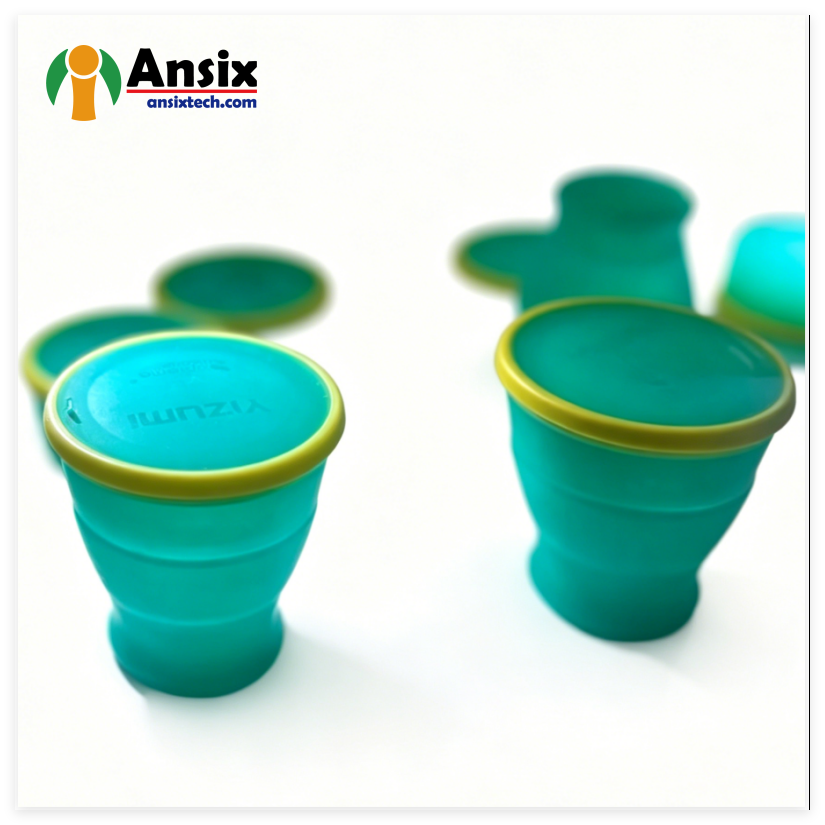


PP
PP


Ansix Tech Launches Custom Polypropylene Formulation Development Initiative, Reinforcing 29-Year Legacy of Precision Injection Molding Excellence
SHENZHEN, China – Ansix Tech, a precision injection molding specialist with over 29 years of manufacturing experience, has announced the formal launch of its custom polypropylene (PP) formulation development project. This strategic initiative marks a significant expansion of the company’s vertically integrated manufacturing ecosystem, positioning Ansix Tech as a one-stop solutions provider capable of delivering tailor-made PP compounds engineered to meet specific application requirements across automotive, medical, packaging, and industrial sectors.
Polypropylene: The World’s Second Most Widely Produced Commodity Plastic
Polypropylene (PP), also known as polypropene, is a thermoplastic polymer produced via chain-growth polymerization from the monomer propylene (C₃H₆). The chemical formula for polypropylene is (C₃H₆)n, and its IUPAC name is poly(1-methylethylene). As a linear hydrocarbon polymer expressed as CnH₂n, PP belongs to the polyolefin family, sharing chemical similarities with polyethylene (PE) and polybutene (PB).
First synthesized in 1954 by Professor Giulio Natta, who later received the Nobel Prize in Chemistry in 1963 for his pioneering work on Ziegler-Natta catalysts, polypropylene became commercially available in 1957. Since then, its use has grown exponentially, making it the second-most widely produced commodity plastic in the world, accounting for approximately 24% of total plastic production with global demand reaching 74 million tons in 2018.
PP is a semi-crystalline, non-polar thermoplastic material produced by the polymerization of propene. The polymer exists in three primary forms depending on the orientation of methyl groups along the carbon chain: isotactic polypropylene (uniform orientation, most common), syndiotactic polypropylene (alternating orientation), and atactic polypropylene (random orientation). The tacticity directly influences the polymer’s physical properties—the more regular the methyl group distribution, the higher the crystallinity.
The properties of polypropylene depend on molecular weight and molecular weight distribution, crystallinity, type and proportion of comonomer (if used), and isotacticity. In isotactic polypropylene, methyl groups are oriented on one side of the carbon backbone, creating a greater degree of crystallinity and resulting in a stiffer material that is more resistant to creep.
Polypropylene offers an exceptional combination of properties that make it indispensable across industries. It is a lightweight material with a density of 0.89–0.92 g/cm³, making it the lightest of all commodity plastics. Its melting point ranges from 130°C to 171°C (266°F to 340°F), providing excellent heat resistance for applications requiring thermal stability. The material exhibits outstanding chemical resistance to acids, bases, and organic solvents, along with good fatigue resistance—a property that enables the famous “living hinge” capability. PP is FDA-approved for food contact per 21 CFR 177.1520 when manufactured with compliant additives, making it suitable for food packaging and medical applications.
Compared to polyethylene, PP is significantly harder, stronger, and thermally more resilient. It is stronger, stiffer, and harder than PE, and softens at higher temperatures, with a melting point of approximately 170°C. PP also demonstrates outstanding electrical properties and high-frequency insulating properties. The material is recyclable, contributing to its appeal as a sustainable material choice in an era of increasing environmental consciousness.
Comprehensive PP Technical Data Sheet (TDS)


Polypropylene’s technical properties are well-documented through standardized testing methods. Typical mechanical properties for PP homopolymer include a tensile strength of approximately 33 MPa (DIN EN ISO 527-2), flexural modulus of 1700 MPa (DIN EN ISO 178), and notched impact strength (Charpy) of 9 kJ/m². The specific gravity of PP-H is 0.915 g/cm³.
Thermal properties are equally impressive, with a continuous operating temperature of 100°C, a thermal expansion coefficient of 16 × 10⁻⁵ K⁻¹ (23–100°C), and dielectric strength of 52 kV/mm. The Vicat softening point typically ranges from 126°C to 150°C, while heat distortion temperature (at 0.46 N/mm² load) falls between 64°C and 90°C. Surface resistivity is exceptionally high at 10¹⁴ Ω.
For injection molding applications, PP materials exhibit melt flow rates that vary by grade, typically ranging from 20–30 g/10 min (at 2.16 kg/230°C) for homopolymer grades. The material demonstrates long-term thermal stability, resistance to thermal oxidative degradation, and resistance to fading from environmental exposure.
Ansix Tech: A Legacy of Manufacturing Excellence
Established in Hong Kong in 1998, Ansix Tech has grown into a global leader in injection molding solutions, operating four production bases across China and Vietnam. The company’s manufacturing footprint encompasses approximately 200,000 square meters of total building area, equipped with 260 injection molding machines ranging from 30 tons to 2,800 tons of clamping force, featuring world-leading brands including Fanuc, Sumitomo, Toshiba, Nissei, Engel, and Arburg. With a workforce exceeding 1,200 employees, including over 200 dedicated designers and engineers, and an annual turnover exceeding one billion RMB, Ansix Tech has manufactured more than 30,000 molds over its history, achieving precision levels of 0.002 mm and an automated processing ratio of 70%.
The company holds ISO9001, ISO13485, IATF16949, ISO14001, and BSCI certifications, and operates ISO Class 8 cleanroom and GMP-certified facilities. These qualifications ensure that every component meets the highest industry standards for quality, consistency, and traceability.
The Custom PP Formulation Development Initiative
The newly launched custom PP formulation development project represents a strategic expansion of Ansix Tech’s capabilities. Recognizing that off-the-shelf PP grades often fall short of meeting specific application requirements, the company has established a dedicated formulation development team that works collaboratively with customers to engineer tailor-made PP compounds.
The formulation development process begins with a thorough understanding of the end-use application requirements. Ansix Tech’s material scientists analyze factors including mechanical performance requirements (tensile strength, impact resistance, flexural modulus), thermal requirements (heat deflection temperature, continuous operating temperature), environmental exposure conditions (chemical resistance, UV stability, moisture resistance), regulatory compliance needs (FDA food-grade, WRAS water contact, USP Class VI), and processing requirements (melt flow characteristics, shrinkage behavior, cycle time optimization).
Based on these requirements, Ansix Tech develops custom formulations through the strategic blending of different PP grades with reinforcing materials, fillers, and additives. The company’s formulation capabilities encompass glass fiber-reinforced PP compounds (offering enhanced stiffness and strength), mineral-filled PP compounds (improving dimensional stability and heat resistance), impact-modified PP compounds (delivering superior toughness at low temperatures), and specialty compounds for specific applications including conductive grades for electronics, flame-retardant grades for electrical components, and FDA-compliant grades for food contact and medical applications.
All PP resins used by Ansix Tech are sourced from FDA-approved suppliers, with full traceability documentation maintained for each batch. The company uses WRAS-approved PP compounds certified for contact with water up to 50°C, maintaining detailed documentation for regulatory audits.
Value Delivery: What Custom PP Formulation Means for Customers
The custom PP formulation development initiative delivers measurable value to customers across multiple dimensions:
Performance Optimization: By engineering PP compounds specifically for the intended application, Ansix Tech enables customers to achieve optimal performance characteristics that off-the-shelf materials cannot provide. For automotive interior components, the company develops modified PP compounds with excellent chemical resistance, good impact strength, and—most importantly—good flow characteristics and low shrinkage that prevent warpage in slender components.
Cost Reduction Through Material Optimization: Ansix Tech’s approach to material selection directly impacts component costs. By avoiding the use of over-specified premium resins and instead engineering compounds that precisely match performance requirements, the company systematically reduces material costs without compromising quality. This strategic material selection, combined with process refinement and efficiency enhancements, reduces total component costs.
Weight Reduction: Through advanced microcellular foaming technologies including the MuCell® process, Ansix Tech achieves significant weight reduction—typically 15–20% with standard processing, with density reduction reaching up to 33% relative to solid PP parts. MuCell® technology itself reduces material consumption by an additional 15–20% compared to conventional foam molding.
Regulatory Compliance Assurance: With PP compounds validated for FDA food-grade compliance and WRAS water contact certification, Ansix Tech eliminates the compliance burden for customers entering regulated markets.
Material Validation: Ensuring Quality from Raw Material to Finished Product
Ansix Tech’s commitment to quality begins with rigorous raw material verification. Every incoming resin lot and compounded PP grade undergoes comprehensive material specification testing to verify that all property requirements defined in the applicable product specification are met. This raw material validation ensures supplier quality consistency and prevents downstream production issues.
The material validation process encompasses mechanical property testing (tensile properties per ASTM D638, flexural properties per ASTM D790, impact resistance per ASTM D256), thermal property characterization (DSC melting behavior per ASTM D3418, heat deflection temperature), rheological characterization (melt flow rate per ASTM D1238 at 230°C/2.16 kg), and density measurement per ASTM D792.
Before mass production commences, Ansix Tech conducts T0 to T3 trial sampling, with each iteration accompanied by comprehensive improvement reports. The company provides 100–500 mold trial production runs, statistically validating yield rates and Cpk values to confirm process stability before production scaling. Critical-to-quality features achieve Cpk ≥ 1.33—a statistical guarantee that 99.993% of production falls within specification limits.
PP Injection Molding: Challenges and Ansix Tech’s Solutions
Polypropylene injection molding presents several inherent challenges that Ansix Tech has systematically addressed through decades of experience and continuous process optimization.
Shrinkage and Warpage: Shrinkage and warpage remain major issues in PP injection molding, leading to dimensional inaccuracies and part distortion that reduce quality consistency. Warpage is attributed to differential shrinkage after the part is ejected from the die cavity due to nonlinear material properties, improper cooling system design, part geometry, and related process parameters.
Ansix Tech addresses these challenges through comprehensive mold flow analysis performed before any steel is cut. Engineers use advanced mold flow simulation to predict how molten PP will fill a mold cavity, identifying potential issues like air traps, weld lines, or uneven cooling early. This proactive approach avoids costly mold rework and ensures optimal gate location, wall thickness, and cooling system design.
PP’s Low Melt Strength in Foaming Applications: Polypropylene’s inherently low melt strength presents a significant challenge in microcellular foaming applications. To achieve cell sizes as small as 30 μm in PP foaming, Ansix Tech implements specific additive systems. The company employs both conventional PP foam molding and MuCell® microcellular foaming technologies, which use supercritical fluid (SCF) as a foaming agent to create closed-cell foam structures with solid skin layers.
Cooling and Cycle Time Optimization: Effective cooling is critical to both cycle time and dimensional stability in PP injection molding. Ansix Tech employs optimized cooling system designs with conformal cooling channels that follow part geometry, dramatically improving heat transfer uniformity. Research demonstrates that conformal cooling channels can achieve a 26% reduction in molding cycle time.
Mold Design and Manufacturing: The Foundation of Production Excellence
Ansix Tech’s mold design and manufacturing capabilities form the foundation of its production excellence. The company’s design philosophy simultaneously considers flow balance, gas channel geometry, cooling efficiency, and long-term reliability.
Design for Manufacturing (DFM) Analysis: Engineers engage in rigorous DFM analysis, scrutinizing part geometry to eliminate unnecessary complexity that drives up tooling and production expenses. Before contract signing, Ansix provides comprehensive mold flow analysis (DFM reports) offering detailed feasibility assessments including draft angle recommendations, wall thickness optimization, gate location planning, and permissible ejector pin mark locations—preventing customers from discovering structural production issues after mold opening.
Mold Flow Analysis: Ansix Tech engineers utilize advanced mold flow analysis software to simulate the injection molding process virtually. This forensic investigation predicts how molten polymer will behave inside the cavity, evaluating filling performance, bubbles, short shots, and other defects to optimize injection molding process parameters.
Cooling System Design: The cooling system is reasonably designed to ensure good cooling effect during the injection molding process, improving production efficiency and product quality. The company runs mold temperature control systems that maintain each cavity within narrow temperature bands.
Hot Runner Systems: Ansix Tech employs optimized hot runner systems to eliminate waste and reduce per-part costs. For multi-cavity molds, hot runner systems with needle valve gates ensure precise melt delivery and gate quality.
Mold Manufacturing: The company’s mold manufacturing capabilities include five-axis CNC machining, slow-wire EDM (electrical discharge machining), and precision polishing. Each mold is shipped with a full dimensional compliance report, with critical-to-quality features achieving Cpk ≥ 1.33.
Process Optimization: Efficiency and Cost Control
Ansix Tech’s approach to PP injection molding process optimization focuses on reducing cycle time, minimizing material waste, and lowering energy consumption while maintaining uncompromising quality.
Cycle Time Reduction: Through optimized cooling system design, precise process parameter control, and advanced machine capabilities, Ansix Tech systematically reduces cycle times. Research indicates that injection time has a significant effect on cycle time, and optimized parameters can substantially improve throughput. Conformal cooling channels, in particular, have demonstrated 26% cycle time reduction.
Material Savings: Through MuCell® microcellular foaming technology, Ansix Tech achieves material consumption reduction of 15–20% compared to conventional foam molding. For large components that previously generated significant runner scrap, optimized hot runner systems translate directly to material cost savings of 15–20% per part.
Energy Efficiency: Process optimization reduces energy consumption during the injection molding cycle. Fully servo-electric driven machines deliver repeatable precision of ±0.1% while consuming significantly less energy than hydraulic alternatives.
Stack Molds: For high-volume production, stack molds double cavity count within the same machine footprint, increasing output by 100% on identical machine hours—effectively halving per-part machine cost.
Quality Control and Assurance
Ansix Tech employs comprehensive quality validation equipment including CMM (Coordinate Measuring Machines) and optical imaging systems. Every mold undergoes full-dimensional reporting before delivery, with critical key dimensions achieving Cpk ≥1.33.
In-process monitoring includes real-time parameter logging in MES systems. The company’s quality management systems, certified to ISO9001, IATF16949, and ISO13485, ensure consistent quality across every production batch.
Packaging and Rapid Delivery
Ansix Tech’s four strategically located production facilities across China and Vietnam enable efficient manufacturing and transportation, with guaranteed on-time delivery. The company maintains a 24-hour response commitment for customer inquiries and offers mold maintenance at 200,000-cycle intervals, with spare ejector pins and cores delivered with each mold. Emergency repair support ensures 24-hour return to production for critical failures.
Industry Experience and Proven Reliability
With over 29 years of integrated injection molding and mold manufacturing experience, Ansix Tech has demonstrated its capability across diverse industries. The company’s cumulative record of building more than 30,000 sets of molds brings unmatched depth of experience to every project.
Ansix Tech operates on a fundamental philosophy: a mold is not a piece of metal—it is a money-printing machine for customers. Every technical specification translates into lower total costs, reduced production risk, faster time-to-market, and uncompromising quality.
Conclusion
The launch of Ansix Tech’s custom polypropylene formulation development initiative represents a significant milestone in the company’s evolution from a precision injection molding manufacturer to a comprehensive solutions provider. By combining material science expertise with world-class mold design and manufacturing capabilities, Ansix Tech delivers measurable value through performance optimization, cost reduction, weight savings, regulatory compliance assurance, and rapid time-to-market.
As global demand for PP continues to grow—with applications expanding across automotive lightweighting, medical device innovation, sustainable packaging, and industrial applications—Ansix Tech’s vertically integrated approach, spanning custom formulation development through to high-volume production and assembly, positions the company as a strategic partner for manufacturers seeking to leverage the full potential of polypropylene.
With four production bases, 260 injection molding machines, over 1,200 employees, and a 29-year legacy of manufacturing excellence, Ansix Tech stands ready to transform customer requirements into reliable, cost-effective, high-quality PP solutions delivered with speed and precision.
Ansix Tech Co Ltd
If you have any plans related to PP , you can contact us at any time. We will turn your ideas into reality, let you realize your dreams, and obtain large orders from the market. Our contact information is info@ansixtech.com. Or contact our CTO, mail: stephen@ansixtech.com
#www.ansixtech.com #ansixtech.com #PP #PP Material #PP Canopy Mold injection mold companies #Ansix #Ansix moulds #Ansix china #Ansix tech china #Ansix tech company #Ansix facotry #PPinjection molding #PPinjection tools #PPinjection moulds #PPplastic mould #PPplastic tools #Ansix Tech #Ansix molds #Ansix injection molding #Ansix mold factory #injection molding Customized stainless steel float switch for water level, oil level, high liquid level alarm#Ansix mold factory #PPchina #PPmolds #injection factory #PPinjection molding #PPinjection molding factory #injection molding company #PPinjection mold companies #PPTooling #PPmold limited #Ansix mold china #Ansix companies #Ansix company China #PPfacotry #Ansix Tech #Ansix Tech mould #PPinjection moulding #injection moulding company #Ansix PPparts injection mold companies #medical injection molding companieschina #PPchina factory #Ansix moulding companies #Ansix molding company #PPinjection moulding facotry #Ansix Tech mold #PPmould #PPplastic injection molding #ansix plastic mold #Mold manufacturing #PPparts manufacturing #PPplastic parts factory #PPinjection parts mold #PPPRECISION MANUFACTURING #PP#China mold #PPinjection moulding china #PPmould china #china precision mold #mold in china #PPmold china #Precision molds #High-precision molds #PP#Injection molds #PPFactory #PPCompany #Super Large Injection Mold Factory #Large Tonnage Injection Molding Factory #PPCompany #PPFactory #2800T Injection Molding Factory #3000 Ton Injection Molding #4500 Ton Injection Molding Factory #Large Mold Injection Molding #Large Plastic Mold Injection Molding Factory #Large Injection Mold Manufacturer #Plastic Mold Factory #Injection Mold #Plastic Mold