



LSR Liquid Silicone O-Rings and Gaskets
FEATURES
Foundation of Hard Capabilities – Building Customer Trust through Equipment Excellence
At Ansix Tech, we believe that customer trust begins with tangible, verifiable infrastructure. Before a single cavity is machined or a single shot is injected, our equipment foundation sets the stage for precision, repeatability, and long-term reliability.
1.1 Precision Mold Machining Equipment
Five-Axis High-Speed Machining Centers
Our shop floor is equipped with advanced five-axis high-speed CNC machining centers from leading global manufacturers including DMG MORI and Makino. These machines enable us to machine complex contour geometries with cavity tolerances within ±0.002 mm. For O-ring and gasket applications, this directly translates to smoother parting lines, virtually no flash, and superior sealing surface integrity.
Customer Value Delivered: A 0.002 mm machining tolerance means your O-rings seal consistently from the first part to the millionth. No manual deflashing, no leak paths, no rejected batches.
-
Mold Description
Product Materials:
LSR SILICONE
Soft rubber: SILICONE
Mold Material:
S136ESR
Number of Cavities:
32
Glue Feeding Method:
Hot runner
Cooling Method:
Water cooling
Molding Cycle
12.5s
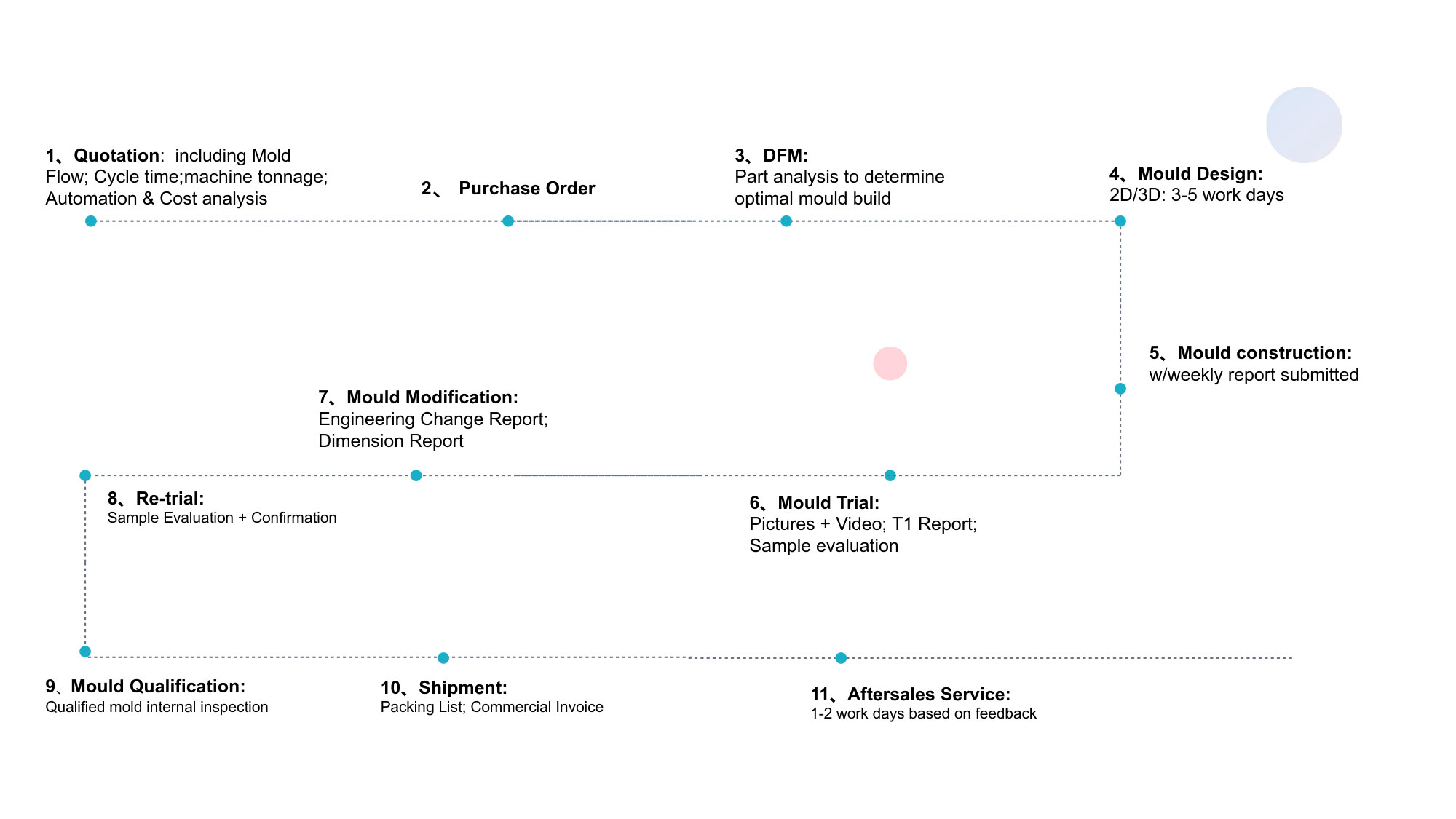
- The mold manufacturing process and product material selection
Wire Electrical Discharge Machining (Wire EDM)
Our wire EDM capabilities allow us to create micro-pores as fine as 0.03 mm and narrow slots with exceptional aspect ratios. This is particularly critical for precision gasket designs requiring thin-walled sections or complex internal geometries. Unlike conventional machining, wire EDM produces no mechanical stress on the workpiece, eliminating the risk of thin-wall deformation.
Customer Value Delivered: When your design calls for ultra-thin sealing lips or micro-channels for fluid dynamics, we achieve them without warping or breakage—saving you from costly design compromises.
In-House Electrode Manufacturing and EDM Workshop
We maintain a fully self-contained electrode machining center and electrical discharge machining workshop. Every mold repair or modification is performed without leaving our facility—ensuring that turnaround times for engineering changes or maintenance are measured in hours, not weeks.
Customer Value Delivered: When your production line needs a mold modification, we respond within 24 hours, not 24 days.
-
Injection Molding Machine Fleet
Ansix Tech operates a comprehensive fleet of all-electric servo-driven injection molding machines with clamping forces ranging from 30 tons to 4,000 tons. This range covers everything from micro O-rings weighing just 0.06 grams to large-format automotive gaskets and industrial sealing components.
All-Electric Servo-Driven Technology
Our machines feature all-electric servo drives with shot repeatability accuracy of ±0.1%. This means that every injection cycle, every shot, and every cavity fills with precisely the same volume of LSR material, batch after batch, shift after shift.
At industry exhibitions, state-of-the-art all-electric LSR molding systems have demonstrated burr-free sealing element production with injection molding precision of 0.01 millimeters. We have integrated similar capabilities across our production floor.
Customer Value Delivered: ±0.1% shot repeatability means your sealing components maintain dimensional consistency within 0.02 mm across million-part production runs. No drift, no surprises, no customer complaints about inconsistent seals.
Dual-Cylinder Metering with Closed-Loop Feedback
LSR materials are supplied as two-component systems (Part A containing platinum catalyst, Part B containing crosslinker), requiring precise 1:1 mixing ratios. Our systems employ dual-cylinder metering units with closed-loop feedback control, maintaining a mixing ratio accuracy of ±0.5%. Integrated temperature control zones regulate material from hopper to nozzle, preventing premature cross-linking and ensuring consistent rheological properties throughout the injection process.
Customer Value Delivered: Precise mixing ratio control eliminates under-cured or over-cured seals—the most common failure modes in LSR sealing applications that lead to field failures and product recalls.
Machine Connectivity and MES Integration
All injection molding machines are networked and integrated into our Manufacturing Execution System (MES). Every critical process parameter—temperature, injection pressure, holding pressure, screw speed, and cycle time—is locked within the system and can only be modified by authorized engineers with full traceability.
Customer Value Delivered: Complete process traceability means when a regulatory auditor or your quality team asks for process validation evidence, we provide it instantly.
1.3 Metrology and Inspection Equipment
Coordinate Measuring Machines (CMM)
Our in-house metrology lab features high-precision CMMs that verify every critical dimension against your part print before production launch and at scheduled intervals during mass production. Each mold undergoes a comprehensive full-dimension inspection prior to shipment, with key dimensions validated to CPK ≥ 1.33.
Customer Value Delivered: CPK ≥ 1.33 means your production yield is statistically guaranteed. You don‘t need to inspect every incoming part—our process capability ensures consistent quality that meets Six Sigma standards.
Optical Measurement Systems
High-resolution optical measurement systems and vision inspection stations enable non-contact measurement of delicate LSR parts that could be deformed by physical probing. These systems capture surface finish, edge quality, and dimensional conformance at production speeds.
Customer Value Delivered: Non-contact optical inspection of soft silicone parts means no measurement-induced deformation—the dimensions we report are exactly the dimensions your assembly line will see.
Part Two: Mold Manufacturing Core Competencies – Speaking with Metrics That Matter to Customers
For LSR O-rings and gaskets, the mold is not just a tool—it is the foundation of your production economics. Customers care most about mold life, achievable tolerances, lead time, and the cost of future modifications. Below, we translate technical specifications into tangible customer value.
2.1 Mold Materials and Predicted Lifespan
The choice of mold materials directly determines how many quality parts you can produce before mold wear degrades performance.
Mold Component Material Options Performance Promise (Customer Value)
Mold Base P20 tool steel Rigid, stable foundation ensuring 20+ years of service life
Mold Core / Cavity S136, 2344, 2343, 8407, SKD11, SKD61, DC53, M340, 4Cr13, 9Cr18, NAK80, H13 500,000 cycles for glass-fiber reinforced materials; 1,000,000+ cycles for standard LSR
High-Wear Features Powder metallurgy steels, carbide inserts Extended service life for high-volume production programs
Mirror Finish Surfaces S136, NAK80, H13 with electropolishing Ra < 0.05 µm surface finish for optical-grade LSR parts
For O-ring and gasket applications where thousands or millions of parts are produced, we provide full material certificates and heat treatment documentation with every mold.
Customer Value Delivered: We don‘t just tell you the mold will last—we provide the documentation to prove it. Our guaranteed minimum lifespan means you can calculate your depreciation and per-part tooling cost before signing a purchase order.
2.2 Achievable Dimensional Tolerances
LSR‘s low viscosity and high flowability demand tighter mold tolerances than traditional thermoplastic molding.
Standard structural components: ±0.05 mm
Precision sealing surfaces and critical O-ring grooves: ±0.01 mm to ±0.02 mm
High-precision medical components: ±0.005 mm
Our five-axis machining and wire EDM processes consistently achieve cavity tolerances within ±0.002 mm. Every mold undergoes full dimension inspection with a detailed report provided to customers prior to production launch.
Customer Value Delivered: Achievable tolerances are documented, not aspirational. Your design team knows exactly what dimensional variation to expect, enabling proper worst-case stack-up analysis before production begins.
2.3 Mold Type Capabilities
Ansix Tech designs and manufactures a complete range of mold configurations:
Cold Runner Systems: For LSR O-rings and gaskets, cold runner molds maintain runner temperatures at 60-80°C to prevent premature cross-linking while the cavity sees full curing temperatures of 160-180°C. This approach eliminates runner waste entirely, with material utilization reaching 95%.
Customer Value Delivered: Material waste is eliminated—you pay for silicone that becomes parts, not runners. For high-volume LSR programs, this represents tens of thousands of dollars in annual material savings.
Advanced Cold Runner Control: The industry is rapidly adopting smart cold runner technologies with servo-actuated nozzle needles that enable automatic cavity balancing, reducing process startup times by approximately 90% compared to manual adjustment. Ansix Tech has integrated analogous capabilities into our high-cavity O-ring tooling.
Customer Value Delivered: Faster startup means less production downtime and lower changeover costs between runs—direct savings on your operating budget.
Hot Runner Systems: For applications requiring maximum precision, hot runner systems maintain the LSR in a semi-cured state within the runner (Shore A hardness 10-20), with rapid final curing at the gate. Material utilization reaches 95%.
Family Molds: Multi-cavity molds with varying cavity sizes allow production of multiple O-ring sizes or gasket configurations in a single cycle.
Two-Shot / Overmolding Molds: For components combining LSR seals with rigid plastic or metal substrates, our two-shot and insert molding capabilities deliver integrated sealing solutions in a single manufacturing operation. LSR can be overmolded onto PC, PA6, PA66, PBT, PP/PE, TPU, and metal substrates including stainless steel, titanium, and aluminum alloys.
Customer Value Delivered: Overmolding eliminates secondary assembly operations, reduces inventory SKUs, and delivers more reliable seals because there are no press-fit interfaces to leak.
High-Polish Mirror Surface Molds: For optical-grade LSR components or applications requiring flawless surface aesthetics, we achieve surface roughness Ra < 0.05 µm on cavity surfaces.
2.4 Gate and Runner System Optimization
Mold Flow Analysis (MFA): Every mold design begins with comprehensive mold flow simulation using advanced CAE software. For LSR O-rings and gaskets, this analysis predicts weld line locations, air trap positions, fill imbalance, and potential shrinkage issues before any metal is cut. Gates are strategically positioned to ensure balanced cavity filling, and runner geometries are optimized to minimize pressure drop while preventing premature cure.
Customer Value Delivered: We identify potential defects in the digital world before they reach your production floor—saving you from weeks of trial-and-error mold rework and accelerating your time-to-market.
2.5 Cooling System and Thermal Management
Proper temperature control is arguably more critical for LSR molding than for any other polymer process. LSR curing is a platinum-catalyzed addition reaction that accelerates exponentially with temperature. To maximize cure rates, LSR is typically cured at high temperatures ranging from 160°C to 220°C, enabling curing times in the order of seconds.
Our molds feature:
Conformal cooling channels machined directly into mold plates, following the contour of the part geometry for uniform heat extraction
Zone-divided temperature control with independent circuits for core and cavity sides
Thermal balance design maintaining core-to-cavity temperature differential within 2°C
Oil circulation temperature control systems achieving ±1°C temperature uniformity across the mold
If temperature differential exceeds 10°C, localized over-cure or under-cure occurs, leading to hardness variations that compromise seal performance
Customer Value Delivered: Uniform mold temperature means every cavity produces seals with identical Shore A hardness and compression set. No soft spots, no hard spots—just consistent sealing performance.
2.6 Ejection System Design
LSR‘s elastic nature and hot-tearing sensitivity make ejection a specialized challenge. Unlike rigid thermoplastics that respond well to traditional ejector pins, LSR requires careful distribution of ejection force to avoid part deformation.
Our ejection system designs include:
Strategically positioned ejector pins located opposite the injection gate location
Air-assisted ejection systems for delicate thin-wall O-rings
Stripper plate designs for parts requiring uniform ejection force distribution
Automated demolding solutions integrated with robotic pickers for fully hands-off production
Customer Value Delivered: Proper ejection design means your LSR O-rings release cleanly, without tearing, sticking, or requiring manual removal—keeping your production line running at full speed.
2.7 Venting Design
LSR‘s low viscosity allows it to flow into the smallest gaps. If not properly vented, trapped air leads to bubbles, incomplete fills, and compromised seal integrity. Our molds incorporate precision-ground venting channels (typically 0.01–0.03 mm deep) at the parting line and along the cavity perimeter.
Customer Value Delivered: Precision venting ensures your O-rings are 100% void-free—no leak paths, no field failures, no quality escapes.
2.8 Mold Lead Time Standards
Mold Complexity Standard Lead Time Expedited Lead Time
Simple O-ring / gasket mold 10–15 days As low as 7 days
Medium-complexity multi-cavity 25–45 days 20 days
Complex family mold or overmolding 45–60 days 35 days
Expedited timelines are achieved without compromising verification protocols—every mold still undergoes full dimensional inspection, steel material certification, and first-shot testing.
Customer Value Delivered: Predictable, transparent lead times allow you to plan production schedules with confidence. And when emergencies arise, we can move faster than industry averages without cutting corners.
Part Three: Injection Molding Process Control – Eliminating Customer Quality Anxiety
Customer anxiety about LSR injection molding centers on five predictable concerns: sink marks and shrinkage, flash, dimensional instability, batch-to-batch color variation, and adhesion failures in overmolded components. Ansix Tech addresses each through systematic, verifiable controls.
3.1 Process Standardization and Parameter Locking
All injection molding machines are networked and integrated into our MES platform. Every critical process parameter—including barrel temperature (maintained at 20–30°C for LSR to prevent premature cross-linking), injection pressure (3–12 Pa range typical for LSR), curing temperature (160–180°C for platinum-catalyzed systems), injection speed, holding pressure, cooling time, and screw position—is locked within the system and requires engineering-level authorization for modification.
Customer Value Delivered: Parameter locking means process drift is impossible. What we validated at production launch stays validated for the life of your program.
3.2 Temperature Control Precision
For LSR processing, barrel temperature is maintained at 20–30°C—unlike thermoplastic processes that require heating—because LSR‘s platinum catalyst exhibits extremely low activity below 40°C (reaction half-life >24 hours), preventing premature cross-linking within the injection unit. Curing occurs only in the heated mold cavity at 160–180°C.
Our systems include:
Water-cooled barrel jackets maintaining ±2°C temperature stability
Eight or more independent temperature control zones from hopper to nozzle
Oil circulation mold temperature controllers achieving ±1°C setpoint accuracy
Real-time temperature monitoring with automated alarms for any zone exceeding control limits
Customer Value Delivered: Precise temperature control means your O-rings achieve full cure without scorching—maximizing tensile strength, tear strength, and compression set performance.
3.3 Dimensional Stability Control System
Mold temperature uniformity is critical for LSR curing dynamics. Our molds incorporate zone-divided temperature control, with core and cavity temperatures maintained within 2°C differential. This eliminates localized over-cure (leading to excessive hardness) or under-cure (compromising tensile strength).
Our process validation protocol includes:
First-article inspection of initial samples with full dimensional report
End-of-batch comparison between first and last parts
In-cycle dimensional monitoring using cavity pressure sensors
Automated optical inspection stations integrated into the production line
Customer Value Delivered: We can document that critical dimensions fluctuate by less than 0.02 mm across three separate production batches produced in the same week—statistically verified dimensional stability.
3.4 Flash Control and Parting Line Quality
Flash—the thin excess material that escapes between mold halves—is a persistent challenge in LSR molding due to the material‘s low viscosity. Our approach to flash prevention includes:
Sub-micron parting line machining with 0.005 mm finishing accuracy
Precision shut-off surfaces designed to withstand high injection pressures without deflection
Self-locking clamp force compensation to maintain consistent mold closure regardless of machine thermal expansion
Controlled flash tolerance < 0.03 mm under normal production conditions
For medical device applications requiring burr-free surfaces, our systems have demonstrated burr-free LSR sealing element production.
When flash does occur, cryogenic deflashing processes can remove flash from tens to thousands of molded LSR parts simultaneously without changing part tolerances or surface finish, providing more consistent results than hand trimming.
Customer Value Delivered: Controlled flash means your O-rings and gaskets are ready to use directly from the press—no secondary trimming operations, no added labor cost, no contamination risk from loose flash particles.
3.5 Surface Quality and Appearance Standards
We classify and deliver LSR parts to documented surface quality levels:
Standard industrial grade: Accepts molded texture as-is
Clear/transparent LSR components: Blemish-free, bubble-free, requiring mirror-polished mold cavities
High-gloss appearance parts: Ra ≤ 0.2 µm surface finish directly from the mold
Overmolded components: Verified chemical bond with plastic/metal substrates
Customer Value Delivered: Clear, verifiable appearance standards eliminate subjective acceptance criteria. You know what you‘re getting before you receive it.
3.6 Comprehensive Material Capabilities
Ansix Tech has production-proven experience with the full spectrum of LSR and related materials:
Standard LSR – General-purpose sealing grades
Medical-grade LSR – Compliant with USP Class VI, ISO 10993, FDA 21 CFR 177.2600
Fluorosilicone (F-LSR) – Enhanced chemical and fuel resistance
Electrically conductive LSR – For EMI shielding applications
Thermally conductive LSR – For heat dissipation in electronic sealing
High-transparency LSR – Transmittance ≥ 95% for optical sealing applications
Flame-retardant LSR – UL94 V-0 rated for high-safety applications
Overmolding compatibility – PC, PA6, PA66, PBT, PP/PE, TPU, stainless steel, titanium, aluminum
Each material batch is supplied with a certificate of analysis and, for medical and automotive applications, full regulatory compliance documentation.
Customer Value Delivered: When your application requires specific material certifications—FDA, USP Class VI, ISO 10993, UL94, IATF 16949—we deliver the documentation that satisfies your regulatory auditors.
Part Four: Full-Service Process Engineering – Reducing Customer Management Costs
Many manufacturers stop at delivering parts. Ansix Tech delivers a complete manufacturing partnership, reducing your internal management burden at every stage.
4.1 Early Engagement: Design for Manufacturability (DFM) Reports
Before any mold steel is cut, our engineering team provides a comprehensive DFM report that includes:
Material selection recommendations based on your application requirements (operating temperature range, chemical exposure, regulatory compliance needs)
Draft angle analysis ensuring proper part release without tearing
Wall thickness optimization preventing sink and ensuring uniform curing
Gate location recommendations minimizing witness marks and balancing fill
Ejector pin mark location negotiation to avoid sealing surfaces
Shrinkage compensation calculation – LSR shrinkage rates range from 5% to 7%, significantly higher than traditional thermoplastics
Weld line and air trap prediction identifying potential quality risks before tooling begins
Customer Value Delivered: We identify manufacturability problems before you pay for tooling. Every DFM issue caught early saves weeks of schedule delay and thousands of dollars in rework. This is risk reduction you can calculate.
4.2 Prototyping and Sample Iteration (T0 to T3)
Our validation protocol includes up to four sample iterations:
T0 samples – First test shots from new mold, identifying any immediate issues
T1 samples – Corrected samples addressing T0 findings, with full dimensional inspection report
T2 samples – Fine-tuned samples optimized for production parameters
T3 samples – Production-ready samples for customer approval
Each sample iteration is accompanied by a detailed improvement report documenting changes made, results achieved, and remaining action items.
Customer Value Delivered: Transparent iteration reporting means you never wonder what changed between samples. You have full visibility into every engineering decision affecting your product.
4.3 Low-Volume Pilot Production
Prior to full-scale mass production, we offer 100–500 piece pilot runs to validate:
Process capability (CPK ≥ 1.33)
First-pass yield under production conditions
Dimensional stability across multiple cavities
Packaging and handling procedures
Customer Value Delivered: Pilot production confirms everything works at scale before you authorize a million-piece order. If something needs adjustment, we find and fix it on 500 pieces, not 500,000.
4.4 Maintenance, Spare Parts, and Post-Delivery Support
Every mold we deliver includes:
Standard spare parts kit – Critical wear components including ejector pins, core pins, and cavity inserts
Recommended preventive maintenance schedule – Including cleaning intervals, lubrication points, and wear inspection checkpoints
Lifetime repair services – Performed at cost, including rework for normal wear after the warranty period
2000-shot wear test for qualification molds – Complete with documented wear report prior to delivery
Customer Value Delivered: A spare parts kit in your toolroom means unplanned downtime is measured in hours, not days. And lifetime repair-at-cost means you never face a surprise invoice when mold maintenance is required.
4.5 Quality Management System Certifications
Our manufacturing operations are certified to:
ISO 9001 – Quality management systems
IATF 16949 – Automotive quality management specific to sealing and component manufacturing
ISO 13485 – Medical device quality management systems
For medical applications, we maintain documented compliance pathways for FDA 21 CFR Part 820 and EU Medical Device Regulation (MDR) 2017/745, including biocompatibility validation per ISO 10993.
Customer Value Delivered: Our certifications reduce your supplier audit burden. When your regulatory auditor asks for evidence of our quality system, we provide the certificates and supporting documentation immediately.
4.6 Packaging and Logistics
LSR O-rings and gaskets are delicate components requiring careful handling. Our packaging solutions include:
Cleanroom bagging under ISO Class 7 (10,000) conditions for medical and electronic applications
Anti-static packaging for electronics-sensitive applications
Verified sealing and labeling with full traceability to production batch
Lot traceability connecting each shipment to specific production parameters, raw material certificates, and inspection records
Customer Value Delivered: Traceable packaging means if a field issue arises, we can identify the specific production batch, shift, mold cavity, and material lot within hours—enabling targeted recalls instead of blanket replacements.
Part Five: Differentiated Value Proposition – Direct Answers to Common Customer Complaints
The most effective way to demonstrate value is to answer the questions customers ask most often. Below, we address common industry frustrations with specific, verifiable answers.
Complaint 1: “Molds Require Constant Repair, Disrupting Production Schedules”
Ansix Tech Commitment: We perform a 2000-cycle wear test on every new mold prior to delivery, complete with a documented wear report. Additionally, we provide a three-year structural warranty on every mold (excluding normal wear on ejector pins and other consumables). If a structural issue emerges within three years under normal operating conditions, we repair it at no cost.
Customer Value: Three years of predictable tooling performance means you don‘t budget for surprise mold repairs. The wear report gives you documented evidence of what to expect.
Complaint 2: “Excessive Flash Requires Expensive Secondary Trimming Operations”
Ansix Tech Commitment: We machine parting line surfaces to a 0.005 mm finishing accuracy and utilize self-compensating clamp force systems. Under normal production conditions, flash thickness is controlled to less than 0.03 mm—thin enough that parts require no manual deflashing.
Customer Value: Eliminating manual deflashing removes a labor cost center from your production budget. For high-volume programs, this represents tens of thousands of dollars in annual savings.
Complaint 3: “Dimensions Drift Between Batches”
Ansix Tech Commitment: Every injection molding machine is equipped with in-mold cavity pressure sensors and, for select applications, integrated ultrasonic wall thickness sensors. These sensors provide real-time feedback to the injection control system, enabling automatic compensation for viscosity variations between material batches. This closed-loop control keeps critical dimensions within specification regardless of batch-to-batch material differences.
Customer Value: Batch-to-batch dimensional stability means your assembly line never needs to adjust fixturing or tolerances based on incoming inspection results. You receive consistent parts, shipment after shipment.
Complaint 4: “Mold Repair Lead Times Are Unacceptable”
Ansix Tech Commitment: Our self-contained electrode manufacturing center and EDM workshop mean that mold modifications and repairs never leave our facility. For standard rework—including spot welding repairs or ejector pin replacements—we guarantee 24-hour turnaround from the time of diagnosis.
Customer Value: When your line stops, waiting weeks for mold repair costs tens of thousands of dollars per hour. Our 24-hour standard repair commitment means you‘re back in production when you need to be.
Part Six: Cost Optimization – Reducing Hard Costs Through Engineering Excellence
This is the question that matters most to your finance team: “How does Ansix Tech reduce my total cost of ownership?”
Ansix Tech attacks cost from three directions simultaneously: material cost reduction, process efficiency gains, and defect prevention. The results are cumulative and calculable.
6.1 Material Cost Reduction
Cold Runner Material Savings: For LSR O-ring and gasket production, cold runner systems eliminate runner waste entirely. In conventional injection molding, runners can account for 20–40% of total material consumption—material that ends up as scrap. Our cold runner designs achieve material utilization rates of 95%.
Calculated Savings: For a 100-ton annual LSR consumption program, a 20% reduction in material waste (from conventional to cold runner) saves 20 tons of LSR annually. At prevailing LSR prices, this represents substantial five-figure annual savings.
Multi-Cavity Efficiency: By engineering higher cavity counts without compromising fill balance or part quality, we reduce the material and energy consumed per part. Each additional cavity spreads fixed overhead costs across more parts.
Calculated Savings: Doubling cavity count from 16 to 32 cuts per-part processing cost by approximately 40% on a throughput basis.
6.2 Process Efficiency Gains
Cycle Time Optimization: LSR cures in seconds at 160–220°C. For platinum-catalyzed formulations at optimal mold temperatures (e.g., 175°C yields 15–20 second cure times), we have documented cycle time reductions of 20–35% through optimized thermal management and cure kinetics analysis.
Calculated Savings: On a 16-cavity O-ring mold running 5,000 hours annually, a 25% cycle time reduction increases annual output by approximately 1.25 million parts without additional capital expenditure.
Automated Demolding and Handling: Our production cells integrate linear robotic systems for parts removal and boxing, eliminating manual demolding operations. For large-scale production, automatic demolding minimizes waste and eliminates trimming operations.
Calculated Savings: Eliminating manual parts handling reduces direct labor costs on high-volume programs by 50–70%.
Process Startup Time Reduction: Smart cold runner systems have demonstrated process startup time reductions of approximately 90% compared to manual operator adjustment. For production lines with frequent changeovers, this translates directly to increased available production time.
Calculated Savings: For a line with weekly changeovers, a 2-hour startup reduced to 12 minutes adds over 90 hours of annual production capacity.
6.3 Defect Prevention and Scrap Reduction
First-Pass Yield Enhancement: Through integrated in-mold sensing, automated optical inspection, and statistical process monitoring, we achieve first-pass yields exceeding 98% on most LSR O-ring and gasket applications.
Calculated Savings: Every 1% reduction in scrap rate on a million-part annual volume saves 10,000 parts from being scrapped—direct material and labor savings.
Predictive Maintenance: By monitoring machine parameters and mold wear indicators, we schedule maintenance before failures occur, preventing unplanned downtime.
Calculated Savings: Avoiding one eight-hour unplanned shutdown on a high-volume LSR line prevents tens of thousands of dollars in lost production and emergency repair costs.
Conclusion: Transforming Technical Expertise into Customer Value
At Ansix Tech, we view LSR molds and injection molding equipment not as tools, but as revenue-generating assets. Every engineering decision we make—from mold steel selection to cooling channel design to process control strategy—is evaluated against a single question: “Does this deliver measurable value to our customer?”
Our 28 years of experience in LSR product design and manufacturing have taught us that customers don‘t buy precision machining or advanced process control. They buy reliable seals that don‘t leak. They buy predictable production schedules. They buy lower per-part costs. They buy reduced regulatory risk.
That is why we structure every engagement around five customer-focused pillars:
Hard capabilities that make precision possible
Verifiable mold specifications that eliminate surprises
Process controls that prevent defects before they occur
Full-service engagement that reduces your management burden
Direct answers to common complaints that build trust through transparency
We invite you to experience the Ansix Tech difference. Share a current LSR O-ring or gasket project with our engineering team. We will provide a comprehensive DFM report that demonstrates exactly how we would address your specific manufacturability challenges—before you commit to any tooling investment.
Ansix Tech – Engineering Reliability into Every Seal
For technical consultation, DFM report requests, or to discuss your LSR O-ring and gasket requirements, please contact our engineering team. We provide rapid quotation turnaround and welcome the opportunity to demonstrate our capabilities on your next project.
Ansix Tech Co Ltd
If you have any plans related to LSR Liquid Silicone O-Rings and Gaskets , you can contact us at any time. We will turn your ideas into reality, let you realize your dreams, and obtain large orders from the market. Our contact information is info@ansixtech.com. Or contact our CTO, mail: stephen@ansixtech.com
#www.ansixtech.com #ansixtech.com #LSR Liquid Silicone O-Rings and Gaskets #LSR Liquid Silicone Cap injection molding companies #LSR Liquid Silicone Cap Canopy Mold injection mold companies #Ansix #Ansix moulds #Ansix china #Ansix tech china #Ansix tech company #Ansix facotry #LSR Liquid Silicone Cap injection molding #LSR Liquid Silicone Cap injection tools #LSR Liquid Silicone Cap injection moulds #LSR Liquid Silicone Cap plastic mould #LSR Liquid Silicone Cap plastic tools #Ansix Tech #Ansix molds #Ansix injection molding #Ansix mold factory #injection molding LSR Liquid Silicone Cap#Ansix mold factory #LSR Liquid Silicone Cap china #LSR Liquid Silicone Cap molds #injection factory #LSR Liquid Silicone Cap injection molding #LSR Liquid Silicone Cap injection molding factory #injection molding company #LSR Liquid Silicone Cap injection mold companies #LSR Liquid Silicone Cap Tooling #LSR Liquid Silicone Cap mold limited #Ansix mold china #Ansix companies #Ansix company China #LSR Liquid Silicone Cap facotry #Ansix Tech #Ansix Tech mould #LSR Liquid Silicone Cap injection moulding #injection moulding company #Ansix LSR Liquid Silicone Cap parts injection mold companies #medical injection molding companieschina #LSR Liquid Silicone Cap china factory #Ansix moulding companies #Ansix molding company #LSR Liquid Silicone Cap injection moulding facotry #Ansix Tech mold #LSR Liquid Silicone Cap mould #LSR Liquid Silicone Cap plastic injection molding #ansix plastic mold #Mold manufacturing #LSR Liquid Silicone Cap parts manufacturing #LSR Liquid Silicone Cap plastic parts factory #LSR Liquid Silicone Cap injection parts mold #LSR Liquid Silicone Cap PRECISION MANUFACTURING #LSR Liquid Silicone Cap #China mold #LSR Liquid Silicone Cap injection moulding china #LSR Liquid Silicone Cap mould china #china precision mold #mold in china #LSR Liquid Silicone Cap mold china #Precision molds #High-precision molds #LSR Liquid Silicone Cap #Injection molds #LSR Liquid Silicone Cap Factory #LSR Liquid Silicone Cap Company #Super Large Injection Mold Factory #Large Tonnage Injection Molding Factory #LSR Liquid Silicone Cap Company #LSR Liquid Silicone Cap Factory #2800T Injection Molding Factory #3000 Ton Injection Molding #4500 Ton Injection Molding Factory #Large Mold Injection Molding #Large Plastic Mold Injection Molding Factory #Large Injection Mold Manufacturer #Plastic Mold Factory #Injection Mold #Plastic Mold