



Medical filter overmolding
FEATURES
How Ansix Tech is Revolutionizing Medical Filter Overmolding: A New Industry Benchmark in Value Engineering, Quality Validation, and Cost Leadership
In an exclusive industry report, we examine how a precision medical molding specialist is redefining the economics and engineering standards of medical filter overmolding through a vertically integrated approach spanning DFM, advanced mold design, material science, and scalable production.
-
Mold Description
Product Materials:
SUS316+Overmolding PPS
Mold Material:
S136ESR
Number of Cavities:
1*1
Glue Feeding Method:
Hot runner
Cooling Method:
Water cooling
Molding Cycle
32.5s
SHENZHEN, CHINA – The global medical device industry is experiencing unprecedented demand for high-performance filtration components that deliver reliability, biocompatibility, and cost-effectiveness at scale. At the heart of this supply chain evolution stands Ansix Tech, a specialized manufacturer with over 28 years of injection molding heritage, now embarking on a transformative medical filter overmolding project designed to address the industry’s most persistent engineering challenges.
Medical filter overmolding—the process of encapsulating porous filter elements within precision-engineered thermoplastic housings—represents one of the most technically demanding disciplines in medical device manufacturing. These components serve as critical safety vessels in hemodialysis machines, respiratory support systems, infusion pumps, and diagnostic equipment, with applications spanning Class II and Class III medical devices. A single filter malfunction can compromise patient safety, making manufacturing precision a matter of life itself.
-
Ansix Tech, operating as an ISO 13485:2016 certified manufacturer with extensive experience in medical product design, mold engineering, and precision injection molding, has formally launched a dedicated medical filter overmolding initiative that reimagines the entire value chain—from collaborative design engineering through to validated mass production. This comprehensive project positions the company as a strategic enabler for OEMs seeking to reduce total cost of ownership without compromising quality or compliance.
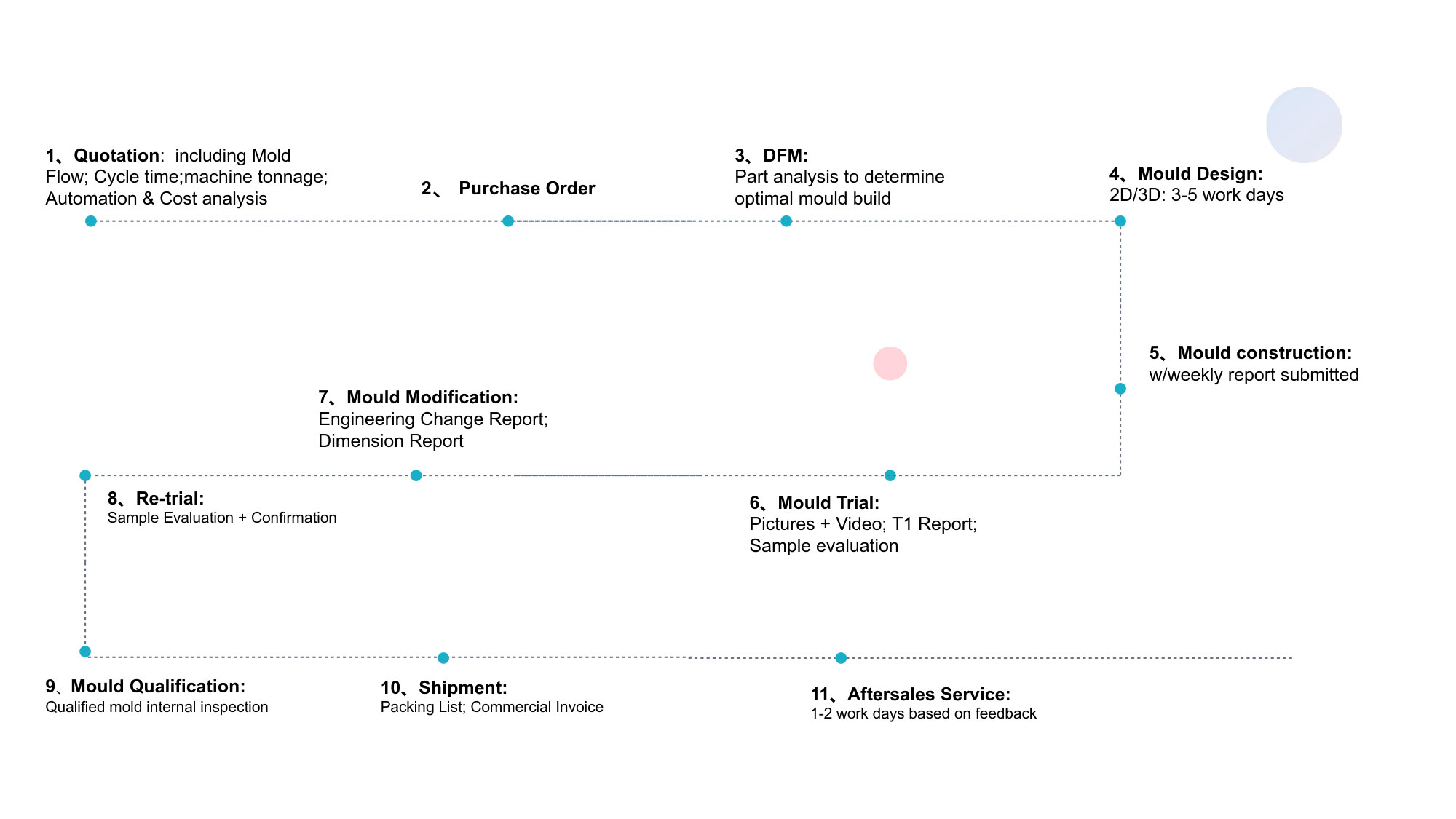
This report provides an in-depth analysis of Ansix Tech’s methodology, covering project value proposition, design-for-manufacturability (DFM) protocols, material selection frameworks, mold engineering innovations, process validation strategies, cost optimization mechanisms, and scalable production systems.
The Strategic Value Proposition: Beyond Component Manufacturing
The core value that Ansix Tech brings to the medical filter overmolding market transcends simple injection molding. The company’s philosophy is rooted in a simple yet powerful premise: true value stems from meticulous engineering at the outset. By controlling the entire manufacturing ecosystem—from digital simulation and material science through advanced mold tooling and intelligent production—Ansix Tech transforms overmolding from a costly specialty process into a strategic advantage for its customers.
What Customers Receive: A Partner Ecosystem, Not Just a Supplier
When an OEM engages Ansix Tech for a medical filter overmolding project, the engagement delivers:
End-to-End Turnkey Solutions: From concept prototyping to high-volume production and final assembly validation, Ansix Tech provides a single-source accountability structure that eliminates supply chain friction.
Low-Risk Product Development Pathways: Leveraging decades of injection molding expertise, the company offers risk-mitigated development solutions that accelerate regulatory submissions.
Regulatory-Ready Production: Certified under ISO 13485:2016 and compliant with FDA 21 CFR Part 820 frameworks, Ansix Tech’s facilities operate under documented quality management systems (QMS) that support medical device design controls, risk management, and cleanroom manufacturing protocols.
Value-Added Engineering Services: Beyond production, customers gain access to in-house mold flow simulation, material consulting, tooling development, metrology support, and packaging validation.
What Problems Are Solved
Medical device manufacturers face persistent challenges that Ansix Tech’s overmolding project directly addresses:
Problem 1: Sealing Integrity and Contamination Risk. Traditional assembly methods—adhesives, mechanical fasteners, secondary seals—introduce potential failure points and contamination sources. Ansix Tech’s overmolding approach creates a monolithic interface where the housing material forms a chemical or mechanical bond directly with the filter element, eliminating leak paths and reducing particle generation.
Problem 2: Substrate-to-Overmold Bond Reliability. Poor adhesion between the filter carrier and overmold material leads to delamination under sterilization or mechanical stress. Ansix Tech’s engineering team conducts rigorous material compatibility assessments and validates bond strength through controlled process windows.
Problem 3: Flash and Dimensional Instability. In medical filters, flash cannot exist—it blocks pore structures and contaminates fluid pathways. Ansix Tech’s mold design methodology incorporates optimized shutoff strategies and CTQ (critical-to-quality) inspection plans that prevent flash generation at production speed.
Problem 4: High Assembly Costs. Multi-component filter assemblies require manual sealing, alignment, and inspection steps that scale poorly. Overmolding consolidates multiple operations into a single molding cycle, reducing labor, eliminating adhesives, and simplifying the supply chain.
Problem 5: Regulatory Burdens. Navigating ISO 13485 validation for molding processes is resource-intensive. Ansix Tech’s built-in validation infrastructure—including IQ/OQ/PQ protocols and statistical process controls—reduces OEM documentation overhead while ensuring compliance.
From Prototype to Production: A Structured, Data-Driven Roadmap
Ansix Tech’s project methodology follows a four-phase development pathway designed to minimize surprises and maximize manufacturing readiness:
Phase 1: Collaborative DFM Analysis. The process begins with a thorough design-for-manufacturability assessment. Engineers scrutinize customer-provided 3D CAD models, focusing on critical dimensions such as wall thickness uniformity, appropriate draft angles, and geometric compatibility with the insertion process. This initial stage is not merely a formality—it represents the single most cost-saving intervention, identifying material bonding, stress concentration, or ejection issues before any steel is cut.
Phase 2: Digital Validation & Mold Flow Analysis. Upon DFM approval, the design enters advanced digital validation. Using Autodesk Moldflow and other CAE platforms, Ansix Tech’s engineers simulate molten plastic flow, cooling behavior, and solidification dynamics. Moldflow analysis serves as a predictive tool that reveals filling patterns, identifies air traps and weld lines, forecasts sink marks and warpage, evaluates cooling efficiency, and predicts material shrinkage rates. This simulation-driven approach reduces risk, shortens lead times, and enables design refinement before tooling investments are made.
Phase 3: Precision Tooling & Manufacturing. The validated design proceeds to mold fabrication. Ansix Tech maintains in-house machining capabilities for tool steel processing, enabling tight control over tolerances and surface finish requirements.
Phase 4: Validation & Ramp-Up. Before mass production authorization, the process undergoes installation qualification (IQ), operational qualification (OQ), and performance qualification (PQ) per ISO 13485 and FDA requirements.
Raw Material Selection: Balancing Performance, Biocompatibility, and Manufacturability
The choice of materials in medical filter overmolding defines not only the component’s functional performance but also the economic viability of the entire manufacturing program. Ansix Tech maintains an extensive material database and leverages simulation tools to guide customers toward optimized solutions.
Substrate Materials (Filter Housing Carrier)
The rigid base structure—the substrate—must withstand sterilization modalities, maintain dimensional stability under thermal cycling, and provide structural integrity without interfering with filter functionality. Common medical-grade polymers specified include:
Polycarbonate (PC): Offers high dimensional stability, impact resistance, and optical transparency, making it suitable for filter housings requiring visual inspection. Typical cycle times for PC components range from 15–25 seconds.
Polypropylene (PP): A cost-effective, chemically resistant material widely used in disposable filter housings, particularly for high-volume consumable applications.
Cyclic Olefin Copolymer (COC/COP): Delivers excellent transparency, low extractables, and biocompatibility, ideal for diagnostic and pharmaceutical filter applications where purity is paramount.
Polyamide (PA) and ABS: Employed in non-patient-contact structural components requiring higher mechanical strength.
Overmold Materials (Sealing and Functional Layers)
The overmold material—typically a thermoplastic elastomer (TPE) or liquid silicone rubber (LSR)—provides sealing, ergonomics, strain relief, or encapsulation functions. The selection between TPE and LSR hinges on specific application requirements.
Thermoplastic Elastomer (TPE): Certain TPE formulations are engineered to chemically bond to rigid plastic substrates during overmolding/two-shot molding processes, creating both chemical and mechanical adhesion that increases seal strength. TPE offers distinct advantages for high-volume production: standard injection molding equipment compatibility, fast cycle times (typically lower tens of seconds per cycle), material recyclability, and broad hardness adjustability. The material’s ability to achieve chemical bonding to polypropylene, ABS, and polycarbonate substrates eliminates secondary assembly operations and reduces overall part costs. For disposable medical filter applications requiring cost optimization, TPE frequently delivers superior return on investment.
Liquid Silicone Rubber (LSR): When applications demand extreme temperature resistance, chemical compatibility, or compliance with implantation requirements, LSR becomes the material of choice. LSR exhibits naturally high biocompatibility, excellent chemical resistance, and broad sterilization tolerance (autoclave, gamma irradiation, EtO). However, LSR processing requires specialized tooling, thermal curing cycles, and longer cycle times—often reaching minutes per cycle rather than seconds. For implantable or long-term contact filters, LSR’s performance characteristics justify its higher processing costs.
TPU and SEBS Variants: For specialized overmolding applications, thermoplastic polyurethane (TPU) offers toughness, flexibility, and biocompatibility for external body contact, while styrene-ethylene/butylene-styrene (SEBS) copolymers provide excellent flow characteristics, warp resistance, and adhesion to other thermoplastics.
A Technical Deep Dive: Medicine Filter Overmolding Mold Engineering
Mold Flow Analysis and DFM Integration
Mold flow analysis represents the cornerstone of Ansix Tech’s design validation methodology. Before committing to tool fabrication, engineers employ advanced computer-aided engineering (CAE) software to simulate the entire injection molding cycle, generating accurate virtual models that evaluate:
Filling patterns to identify areas prone to short shots or hesitation
Air traps and weld lines identifying potential structural weaknesses
Sink marks and warpage forecasting post-cooling deformation behavior
Cooling efficiency determining cycle time and thermal distribution
Material-specific shrinkage rates and processing tolerances
This upfront simulation investment enables engineers to optimize gate positions, balance runner systems, and address potential defects—such as weld lines, gas traps, and unbalanced fill—before any steel is machined. The DFM report generated from this analysis covers shrinkage allowances, mold steel recommendations, gating position optimization, wall thickness analysis, parting line definitions, and surface finish specifications.
Mold Design Priorities for Medical Filter Overmolding
The unique requirements of medical filter overmolding impose specific design constraints that distinguish these tools from general-purpose injection molds:
Runner and Gate Systems. Optimal gating strategies balance fill speed, minimize shear heating, prevent material degradation, and control knit line placement away from critical filter interface regions. For multi-cavity configurations, naturally balanced hot runner systems with equal-length flow channels ensure consistent filling across all cavities. Valve gate technology enables sequential filling for complex geometries where progressive cavity fill is required.
Ejection Systems. Ejection must occur without distorting the filter element or damaging the overmold interface. Ansix Tech’s mold designs incorporate strategically positioned ejector pins that avoid direct contact with the filter to maintain filter pore integrity. Where needed, stripper plate and air-assisted ejection systems provide uniform, non-contact removal.
Parting Line Geometry. The parting line location must accommodate the insertion of the filter substrate while ensuring complete encapsulation without flash. Shutoff surfaces are designed with precision angles and surface finishes to maintain seal integrity across millions of production cycles.
Cooling System Architecture—The Cycle Time Multiplier. Cooling time represents the dominant driver of cycle cost in high-volume molding. Ansix Tech integrates advanced cooling designs—including conformal cooling channels fabricated via additive manufacturing—to achieve uniform thermal distribution, reduce warpage, and improve cavity-to-cavity repeatability. Research confirms that conformal cooling can reduce cycle times by as much as 15 seconds (up to 33%) compared to traditional straight-drilled cooling channels, while simultaneously improving dimensional accuracy and reducing defect rates. The cooling circuit design balances flow paths, optimizes Reynolds numbers for turbulent flow, and locates channels as close as possible to the cavity surface without compromising structural integrity.
Mold Manufacturing: Processing Flows, Challenges, and Material Selection
Mold Base and Cavity Steel Selection. Ansix Tech specifies premium tool steels based on production volume and material compatibility:
S136 (Stainless Steel): Offers excellent corrosion resistance for cleanroom operations and compatibility with medical-grade polymers. Its through-hardened properties maintain dimensional stability across millions of cycles.
H13 (Hot-Work Tool Steel): Provides superior toughness and thermal fatigue resistance, ideal for high-cavitation molds requiring extended production life.
Surface Treatments and Coatings. For high-cavity tools and abrasive resin applications, PVD (Physical Vapor Deposition) or DLC (Diamond-Like Carbon) coatings reduce friction, protect against wear, and facilitate easier part release.
Mold Processing Workflow. The mold fabrication sequence follows a structured flow: (1) CAD model finalization and design review, (2) CNC roughing of mold base components, (3) high-speed precision milling of cavity and core details, (4) wire EDM for detailed features and inserts, (5) manual finishing and polishing to specified SPI or VDI surface finish standards, (6) heat treatment for steel hardening, (7) final grinding and fitting, (8) cooling channel integration and leak testing, and (9) assembly with hot runner systems and ejector mechanisms.
Manufacturing Challenges. Medical filter molds present unique fabrication challenges: maintaining micron-level tolerances across multiple cavities, ensuring consistent shutoff surfaces that prevent flash at the filter interface, achieving uniform cooling channel placement without compromising wall thickness, and preventing burr formation on delicate insert geometries. Ansix Tech’s 28 years of manufacturing experience address these challenges through CNC machining precision, EDM capabilities for complex cavity geometries, and in-process inspection protocols using coordinate measuring machines (CMM) and vision inspection systems.
Process Validation and Quality Assurance
IQ/OQ/PQ Validation Framework
Ansix Tech implements the three-stage validation paradigm mandated by FDA 21 CFR Part 820 for medical molding processes:
Installation Qualification (IQ). Verifies correct installation of the injection molding machine, auxiliary equipment, tooling, and software. This stage includes equipment calibration verification, utility connection confirmation, environmental condition documentation, and ensuring all safety systems function as required.
Operational Qualification (OQ). Defines and challenges operating limit windows for critical process parameters including melt temperature, injection pressure, holding pressure, cooling time, cycle time, and clamp force. Design of Experiments (DOE) methodology identifies the proven acceptable ranges (PAR) for each variable.
Performance Qualification (PQ). Confirms that under routine production conditions—using nominal parameter settings, routine operators, and standard materials—the process consistently produces parts meeting all specifications across multiple production runs, typically three consecutive lots. Statistical measures including Cpk (capability index) ≥ 1.33 provide quantitative evidence of process capability.
Statistical analysis embedded within the validation framework includes Gauge R&R (Repeatability and Reproducibility) studies for measurement systems, control charting for ongoing production monitoring, and CpK/PpK targets for critical dimensions.
Scientific Molding and Process Control
Beyond the mandatory validation framework, Ansix Tech employs scientific molding principles that engineer processing windows through data-driven parameter optimization rather than trial-and-error guesswork. This methodology defines optimal process parameters and confirms them with real-time data, employing DOE methodology to fine-tune processes before formal validation phases.
Materials undergo strict lot-level traceability protocols from incoming inspection through blending, drying, and barrel loading. Control measures include resin moisture content checks—essential for hygroscopic medical materials such as nylon or PETG—and verification of certificates of analysis (COA) for each incoming lot.
Advanced Metrology and CT Scanning
Ansix Tech invests in advanced metrology capabilities, including CT scanning technology that captures full internal and external geometries nondestructively in a single scan. This enables first-article inspection, full CAD-to-part comparison, visual insight into internal features and warpage, and precise measurements of hard-to-access geometries. The technology accelerates tooling validation and provides early detection of dimensional drift before defects reach production.
Cleanroom Manufacturing
Ansix Tech’s facilities operate under ISO 14644-1 cleanroom standards, typically Class 7 or Class 8, with certified HEPA filtration, positive pressure differentials, validated environmental monitoring (particulates, microbial load), and personnel gowning protocols.
Packaging Validation
Finished medical filter components require packaging that maintains sterility and protects integrity through transport and storage. Ansix Tech’s packaging system follows ISO 11607 requirements, with documented IQ/OQ/PQ validation of sealing processes. Verification ensures that the packaging forms a complete sterile barrier system compatible with terminal sterilization modalities (EtO, gamma, autoclave) specified for each device.
Cost Reduction: Transforming the Economics of Medical Filter Overmolding
Ansix Tech’s most significant value contribution lies in its systematic approach to cost optimization—reducing the hard costs of medical filter components without compromising quality or regulatory compliance.
Material Cost Optimization
TPE overmolding applications demonstrate that replacing silicone seals with overmolded TPE can achieve over 70% cost savings through lower material costs and elimination of manual assembly. Ansix Tech’s material consulting helps customers identify optimal material grades that meet performance requirements at the lowest cost structure. Selecting specific TPE grades over alternatives can significantly improve flow characteristics around complex geometries, reduce required injection pressure, and shorten cycle times—delivering cascading cost reductions.
Design-for-Cost (DFC) Engineering
The DFM process identifies opportunities to consolidate multiple components into a single overmolded part, eliminating secondary operations, fasteners, adhesives, and assembly steps. Two-shot molding with TPE eliminates multi-component assembly processes, saving $70,000 or more annually for high-volume programs. Each eliminated assembly step reduces labor, material handling, inspection points, and the risk of assembly errors.
Cycle Time Compression
Medical filter overmolding cycle time directly correlates with cost per part. Through optimized cooling system design, balanced mold filling, and process parameter refinement, Ansix Tech reduces cycle times by up to 20–30% compared to baseline processing.. Conformal cooling implementations have demonstrated cycle time reductions of 15 seconds per shot (33% improvement), enabling more parts per machine-hour without additional capital investment.
High-Cavitation Molding
Multi-cavity tools—typically 8, 16, 32, or higher cavity configurations—spread the fixed cost of machine operation and labor across more parts per cycle. For annual volumes exceeding 5–10 million components, high-cavitation tools deliver lower cost per part through cycle time efficiency and tooling amortization. Symmetrical cavity layouts and balanced melt flow ensure consistent part quality across all cavities while achieving economies of scale.
Automation and Assembly Consolidation
Automated insert placement using pick-and-place robotics reduces labor costs and improves process repeatability. Overmolding eliminates post-processing assembly steps, reducing potential points of failure while simplifying the supply chain. The elimination of assembly operations also reduces floor space requirements and inventory carrying costs.
Energy and Material Yield Optimization
Precise shot control reduces material waste from sprues, runners, and rejected parts. Ansix Tech’s process monitoring systems provide real-time defect detection, preventing scrap generation before it occurs. Recyclable TPE edge materials and scrap can be reprocessed, further reducing material costs.
Capacity, Capability, and Delivery Assurance
Production Capacity Management
Ansix Tech’s medical filter overmolding program operates with redundant injection molding machine capacity, multiple cavity sets for high-volume programs, and flexible production scheduling that can expand capacity to meet demand surges. The company’s 28-year history includes managing annual quantities exceeding 20 million components for single device programs.
The company also supports low-volume production for clinical trials, market testing, and specialized devices through rapid prototyping and smaller cavity tools, maintaining high quality standards that represent the final production version accurately.
Real-Time Process Monitoring
Intelligent production systems provide real-time process monitoring that detects parameter drift before defect generation. AI-assisted process optimization tools—such as Hopper—provide situational parameter recommendations based on live process data, reducing scrap, shortening ramp-up times, and increasing transparency of validated injection molding processes. For long-run validated medical programs, these tools maintain process stability while enabling rapid troubleshooting when deviations occur.
Supply Chain and Logistics
Ansix Tech offers flexible delivery arrangements—including just-in-time (JIT) scheduling, consignment inventory, and kanban pull systems—that reduce OEMs’ inventory carrying costs while ensuring product availability. Finished components are packaged in cleanroom-sealed containers labeled with complete lot traceability information supporting medical device recalls if required.
Quality at Production Speed
Medical filter validation requires inspection without slowing production. Ansix Tech’s inspection plan defines CTQs (critical-to-quality features) and measurement protocols that integrate with automated vision systems, CMM inspection, or manual gauging as appropriate for each feature. The combination of online inspection and offline metrology provides comprehensive quality coverage without constraining throughput.
Industry Experience: A Track Record of Value Delivery
Ansix Tech’s medical molding portfolio includes precision molds for complex medical applications, demonstrating the company’s capability to deliver reliability and value under the most demanding requirements.
Prior projects encompass heat and moisture exchanger (HME) tracheostomy casings, hemodialysis filter housings, and various precision medical components. These projects required micron-level tolerances, regulatory-grade materials, validated manufacturing processes, and mass-production scalability—all delivered within cost and schedule constraints.
For hemodialysis casings, the project demonstrated the company’s ability to develop and deliver mass-production molds for next-generation medical components that must withstand sterilization, ensure absolute sealing, and protect the integrity of patient blood treatment sessions.
This experience directly translates to medical filter overmolding, where the same engineering rigor, validation discipline, and cost-conscious methodology apply.
Summary: The Ansix Tech Advantage in Medical Filter Overmolding
Ansix Tech’s medical filter overmolding project represents a comprehensive value proposition for OEMs seeking to improve product performance while reducing total cost of ownership:
Technical Excellence: Collaborative DFM, advanced mold flow simulation, precision tooling, and scientific molding principles ensure first-time-right development.
Regulatory Readiness: ISO 13485 certification with embedded IQ/OQ/PQ validation infrastructure reduces OEM compliance burden.
Material Expertise: Extensive material database with demonstrated TPE/LSR selection frameworks ensuring optimal performance-to-cost ratios.
Process Economics: Cycle time reduction (20–30%), high-cavitation tooling, assembly elimination, and manufacturing cost optimization deliver hard cost savings without quality trade-offs.
Seamless Scale-Up: From rapid prototyping through billion-cycle validated production, Ansix Tech provides turnkey program management.
28 Years of Proven Performance: A track record of delivering precision medical molds and components under the most demanding quality, cost, and schedule constraints.
For medical device OEMs navigating the complex intersection of performance, compliance, and cost, Ansix Tech offers not merely a component supplier but a strategic manufacturing partner—one that transforms medical filter overmolding from a manufacturing challenge into a competitive advantage.
Ansix Tech Co Ltd
If you have any plans related to Medical filter overmolding , you can contact us at any time. We will turn your ideas into reality, let you realize your dreams, and obtain large orders from the market. Our contact information is info@ansixtech.com. Or contact our CTO, mail: stephen@ansixtech.com
#www.ansixtech.com #ansixtech.com #Medical filter overmolding #Medical filter overmolding #Medical filter overmolding moulds #Medical filter overmolding molds #Medical filter overmolding injection molding companies #Medical filter overmolding #Medical filter overmolding Canopy Mold injection mold companies #Ansix #Ansix moulds #Ansix china #Ansix tech china #Ansix tech company #Ansix facotry #Medical filter overmolding injection molding #Medical filter overmolding injection tools #Medical filter overmolding injection moulds #Medical filter overmolding plastic mould #Medical filter overmolding plastic tools #Ansix Tech #Ansix molds #Ansix injection molding #Ansix mold factory #injection molding Medical filter overmolding #Ansix mold factory #Medical filter overmolding china #Medical filter overmolding molds #injection factory #Medical filter overmolding injection molding #Medical filter overmolding injection molding factory #injection molding company #Medical filter overmolding injection mold companies #Medical filter overmolding#Medical filter overmolding mold limited #Ansix mold china #Ansix companies #Ansix company China #Medical filter overmolding facotry #Ansix Tech #Ansix Tech mould #Medical filter overmolding injection moulding #injection moulding company #Ansix Medical filter overmolding parts injection mold companies #medical injection molding companieschina #Medical filter overmolding china factory #Ansix moulding companies #Ansix molding company #Medical filter overmolding injection moulding facotry #Ansix Tech mold #Medical filter overmolding mould #Medical filter overmolding plastic injection molding #ansix plastic mold #Mold manufacturing #Medical filter overmolding parts manufacturing #Medical filter overmolding plastic parts factory #Medical filter overmolding injection parts mold #Medical filter overmolding PRECISION MANUFACTURING #Medical filter overmolding #China mold #Medical filter overmolding injection moulding china #Medical filter overmolding mould china #china precision mold #mold in china #Medical filter overmolding mold china #Precision molds #High-precision molds #Medical filter overmolding #Injection molds #Medical filter overmolding Factory #Medical filter overmolding Company #Super Large Injection Mold Factory #Large Tonnage Injection Molding Factory #Medical filter overmolding Company #Medical filter overmolding Factory #2800T Injection Molding Factory #3000 Ton Injection Molding #4500 Ton Injection Molding Factory #Large Mold Injection Molding #Large Plastic Mold Injection Molding Factory #Large Injection Mold Manufacturer #Plastic Mold Factory #Injection Mold #Plastic Mold