


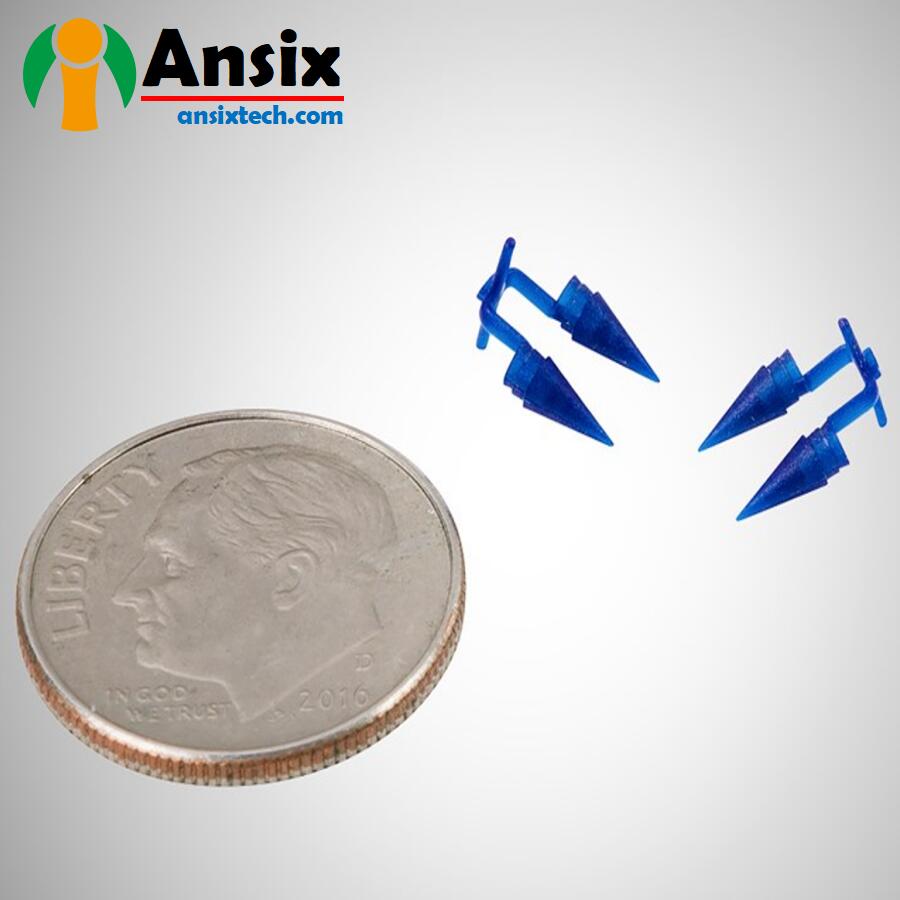


Micromolding for Medical Plastic
FEATURES
- Micromolding for Medical Plastic
Micro molding is an injection molding technology specifically used to manufacture tiny-sized parts and products. It is a specialized application of injection molding technology used to produce microscopic parts, often with dimensions on the millimeter or sub-millimeter scale.
The process of micromolding is similar to traditional injection molding, but requires greater precision and control.
Small mold design: Micromolding requires specially designed small molds to accommodate tiny-sized parts. The design of the mold needs to take into account factors such as dimensional accuracy, flow channel design, cooling system, etc. to ensure the quality and consistency of the parts.
High-precision injection molding machine: Micro-molding usually requires a high-precision injection molding machine to achieve precise injection molding of tiny-sized parts. These injection molding machines have higher injection precision, temperature control and pressure control capabilities.
Fine material selection: Material selection for micro-molding needs to take into account dimensional requirements, material properties and processing performance. Commonly used materials include thermoplastic polymers (such as polypropylene, polycarbonate), liquid silicone (LSR), etc.
Precision control and monitoring: The micromolding process requires precise control and monitoring to ensure the dimensional accuracy and quality of the parts. This includes temperature control, pressure control, injection speed control, etc.
Special post-processing: Micro-molded parts usually require special post-processing, such as cleaning, deburring, inspection, etc. These steps require special equipment and processes to ensure part integrity and quality.
As medical treatments become less invasive, medical devices are getting smaller. We have the expertise to do precision micromolding, including specialized equipment, tool designs, and measurement systems.
Micromolding is widely used in medical devices, electronics, optics, micromachines and other fields. It can manufacture micro parts such as micro connectors, micro valves, micro sensors, micro optical components, etc. Micromolding technology provides new possibilities for the design and manufacturing of micro-products, but it also requires higher technical requirements and precise process control.
- Micromolding Capabilities for Medical Parts
Micro molding is an injection molding technology specifically used to manufacture tiny-sized parts and products.
Small-size parts manufacturing: Micromolding can manufacture tiny parts with dimensions on the millimeter or sub-millimeter level. It can achieve high-precision injection molding to meet the requirements of tiny-sized parts.
High-precision injection molding: Micro-molding requires high-precision injection molding machines and molds to achieve precise injection molding of tiny-sized parts. Injection molding machines need to have high-precision injection control, temperature control and pressure control capabilities to ensure the dimensional accuracy and quality of parts.
Multi-cavity mold support: Micro-molding often uses multi-cavity molds to improve production efficiency and output. Multi-cavity molds can simultaneously inject multiple tiny-sized parts in the same injection cycle.
Special material selection: Material selection for micro-molding needs to take into account the requirements and application scenarios of micro-sized parts. Commonly used materials include thermoplastic polymers (such as polypropylene, polycarbonate), liquid silicone (LSR), etc. These materials have good flow and processing properties, making them suitable for micromolding applications.
Precision control and monitoring: The micromolding process requires precise control and monitoring to ensure the dimensional accuracy and quality of the parts. This includes temperature control, pressure control, injection speed control, etc. At the same time, precise dimensional measurement and quality inspection are also required to ensure that the parts meet the requirements.
Special post-processing: Micro-molded parts usually require special post-processing, such as cleaning, deburring, inspection, etc. These steps require special equipment and processes to ensure part integrity and quality.
Micromolding produces parts that weigh a fraction of a gram or as small as a single pellet. We understand the micromolding process, from raw material through QA inspection.
Capabilities
Ability to define micro mold tool design requirements
High-speed injection with precision accuracy
Understanding material flow dynamics
Precise measurement systems
High-resolution, precision inspection
Micromolding is widely used in medical devices, electronics, optics, micromachines and other fields. It can manufacture micro-sized parts such as micro-connectors, micro-valves, micro-sensors, micro-optical components, etc. Micromolding technology provides new possibilities for the design and manufacturing of micro-products, but it also requires higher technical requirements and precise process control.
-
Polyamides: Polyamide plastics, such as nylon and polyamide imide (PAI), have excellent mechanical properties, heat resistance and chemical resistance. They are commonly used in microforming to manufacture wear-resistant parts, structural parts, and electronic devices.
Polyetheretherketone (PEEK): PEEK is a high-temperature, high-performance plastic with excellent heat resistance, chemical resistance and mechanical properties. It is commonly used in micromolding to create high temperature and corrosion resistant parts such as seals, valves and sensors.
Polyetherketoneketone (PEKK): PEKK is a high-performance plastic similar to PEEK, with excellent heat resistance, chemical resistance and mechanical properties. It is commonly used in micromolding to create high-temperature, high-strength parts, such as those in the aerospace and automotive fields.
Polyphenylene Sulfide (PPS): PPS is a plastic with excellent heat resistance, chemical resistance and electrical insulation. It is commonly used in micro-molding to manufacture electronic devices, electrical insulation parts and corrosion-resistant parts.
Polyetherketoneetherketoneketone (PEKEKK): PEKEKK is a high-performance plastic with excellent heat resistance, chemical resistance and mechanical properties. It is commonly used in micromolding to create high-temperature, high-strength parts, such as those in the aerospace and automotive fields.
These high-performance engineering thermoplastics offer excellent properties such as high temperature resistance, chemical resistance, mechanical strength and wear resistance. They meet the demands for part dimensional accuracy, durability and performance requirements in micromolding. However, cost, processability and application-specific requirements also need to be considered when selecting materials.
In micromolding, biodegradable material kits are a common material choice for making absorbable medical devices and implants in tiny sizes. These materials gradually degrade and absorb within the body, eliminating the need for a second surgery to remove the implant. Here are some common bioabsorbable material kits:
Poly(lactic acid), PLA): Polylactic acid is a commonly used bioabsorbable material with good biocompatibility and degradability. It is often used in micromolding to manufacture absorbable sutures, bone nails, bone plates and other medical devices and implants.
Poly(lactic-co-glycolic acid) (PLGA): PLGA is a copolymer composed of lactic acid and glycolic acid and has good biocompatibility and degradability. It is often used in micro-molding to manufacture absorbable microspheres, microparticles, microneedles and other materials for sustained drug release and tissue engineering.
Poly(caprolactone) (PCL): Polycaprolactone is a bioabsorbable polyester material with good biocompatibility and degradability. It is commonly used in micromolding to create absorbable scaffolds, micro-implants and tissue engineering materials.
Poly(lactic-co-glycolic-co-caprolactone) (PLGCL): PLGCL is a copolymer composed of lactic acid, glycolic acid and caprolactone. It has good Biocompatibility and degradability. It is commonly used in micromolding to create absorbable micro-implants and tissue engineering materials.
Bioresorbable suite of materials, such as PLA, PLG, and PLGA
These suites of bioabsorbable materials are capable of meeting the requirements for tiny size, absorbability and biocompatibility in micromoulding. However, when selecting materials, the material’s degradation rate, mechanical properties, and application-specific requirements also need to be taken into consideration. In addition, the preparation and processing of bioresorbable materials require special processes and equipment to ensure the quality and consistency of the materials. If you have any products or parts that require PEEK materials, mold manufacturing, injection molding, extrusion molding or other molding processes, you can contact us at any time (Email: info@ansixtech.com ) and we will get back to you within 8 hours Provide the best manufacturing solutions and opinions so that your design can be realized and applied.