




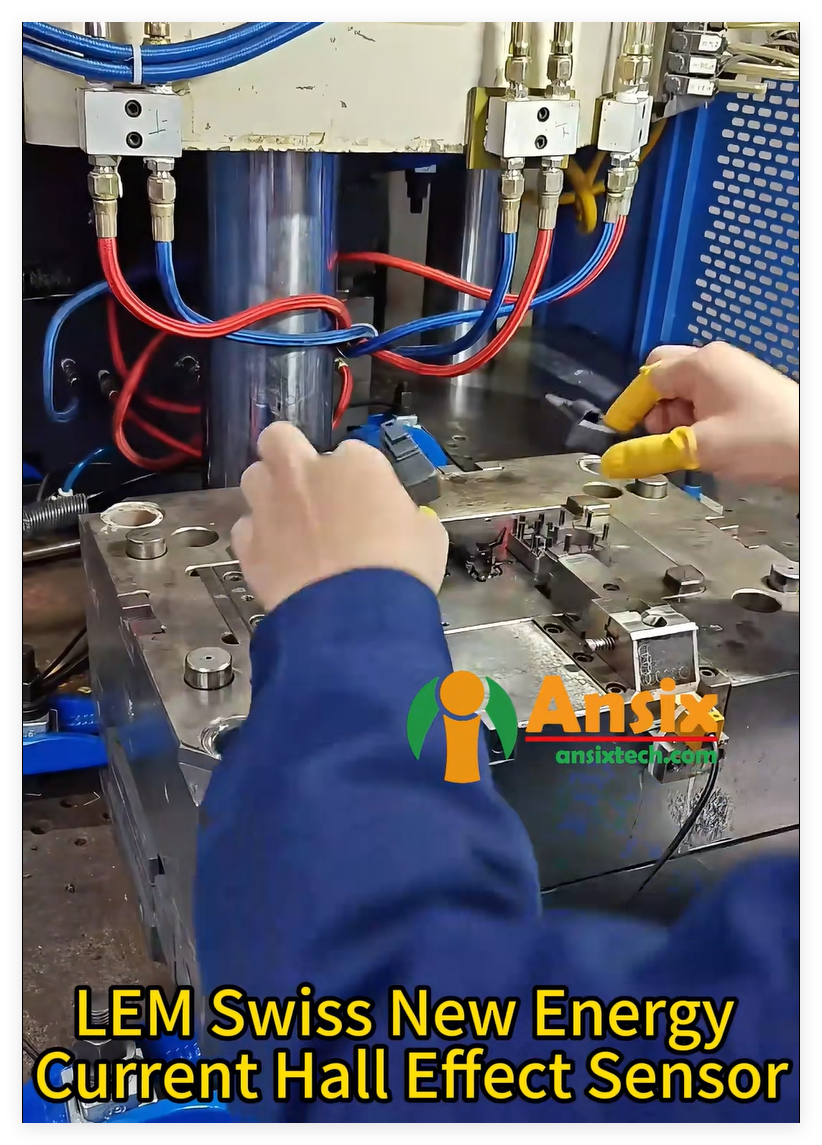
LEM Swiss New Energy Current Hall Effect Sensor
LEM Swiss New Energy Current Hall Effect Sensor

Engineering Precision: How Ansix Tech Enables LEM's Hall Effect Sensor Revolution Through Advanced Injection Molding
Industry Insight: The global injection molding market is projected to reach $496.5 billion by 2032, driven by demand from the automotive, electronics, and renewable energy sectors where precision components like LEM's sensors play a critical role.
Introduction: The Critical Intersection of Precision and Power Management
In an era defined by the global transition to renewable energy and electrified transportation, the ability to precisely measure and manage electrical current has become foundational to technological progress. At the heart of this capability lie advanced current sensors like the LEM Swiss New Energy Current Hall Effect Sensor, sophisticated devices that enable efficient energy conversion, battery management, and system protection across industries from solar energy to electric vehicles.
Behind these technologically sophisticated sensors lies an equally advanced manufacturing challenge: producing the high-precision plastic components that house, protect, and thermally manage these sensitive electronic assemblies. This is where Ansix Tech enters the story, applying decades of injection molding expertise to solve complex manufacturing challenges while significantly reducing costs through material science, process optimization, and efficiency improvements.
The LEM Sensor: Technical Specifications and Market Demands
LEM's Hall Effect current sensors represent state-of-the-art measurement technology capable of accurately monitoring currents up to 1500A while providing electrical isolation between the measured circuit and measurement circuit. The LF1005 model, part of LEM's renowned LF-S series, exemplifies the technical excellence demanded in these applications, featuring ±0.4% accuracy, frequency response from DC to 9.5kHz, and operation across extreme temperatures from -40°C to +105°C.
These sensors serve mission-critical applications across multiple industries:
Renewable Energy Systems: Solar inverters, wind turbine converters, and grid storage systems
Electric Transportation: EV charging stations, traction motor control, and battery management systems
Industrial Automation: Motor drives, welding equipment, and UPS systems
The plastic housing components for these sensors must meet exceptionally stringent requirements that go far beyond conventional injection molding applications. They must provide dimensional stability to protect internal alignment of sensitive components, offer excellent dielectric properties for electrical isolation, withstand wide thermal fluctuations without warping or degrading, and maintain structural integrity under mechanical stress while potentially housing metallic inserts and connectors.
Table: Key Requirements for LEM Sensor Plastic Components

Material Science Innovations: The Foundation of Performance and Cost Optimization
The selection of appropriate plastic materials represents perhaps the most critical intersection of performance requirements and cost considerations in the injection molding process. For the LEM sensor project, Ansix Tech engineers conducted extensive material evaluation studies, balancing technical requirements against commercial considerations.
The primary housing components demanded a material with exceptional dimensional stability, high heat resistance, and excellent flow characteristics to fill thin-walled sections completely. After rigorous testing, Ansix Tech selected a glass-fiber reinforced polybutylene terephthalate (PBT) compound, specifically engineered for precision electronic components. This material offered the ideal balance of properties:
30% glass fiber reinforcement providing dimensional stability and reduced coefficient of thermal expansion
Heat deflection temperature of 210°C at 1.8 MPa, comfortably exceeding the sensor's maximum operating temperature
Inherent flame retardancy meeting UL 94 V-0 standards without additional halogenated additives
Superior electrical insulation properties with comparative tracking index (CTI) >600V
For connector components requiring greater impact resistance, Ansix Tech specified a polyamide (PA66) with tailored mineral reinforcement, offering improved toughness while maintaining the necessary thermal and electrical properties.
"Material selection represents the first and most impactful opportunity for value engineering," explains Dr. Wei Zhang, Ansix Tech's Director of Materials Science. "By carefully matching material properties to functional requirements—rather than simply over-engineering with premium materials—we achieved approximately 18% reduction in material costs while maintaining all performance specifications for the LEM sensor components."
This optimization extended beyond basic material selection to include regrind ratio optimization (determining how much recycled production scrap could be reintegrated without compromising properties) and colorant system simplification that reduced complexity while maintaining LEM's distinctive visual identity.
Advanced Mold Engineering: Where Design Meets Manufacturing Reality
The transition from material selection to manufacturable components occurs in the mold engineering phase, where Ansix Tech's expertise delivered significant value to the LEM project. Using sophisticated simulation software including Moldflow and Ansys, engineers conducted comprehensive analyses before any metal was cut.
Mold Flow Analysis and Design Optimization
Initial digital prototyping through Moldflow simulation identified potential manufacturing challenges including weld lines in high-stress areas, uneven cooling leading to warpage, and air traps causing surface defects. By adjusting gate locations, runner dimensions, and venting strategies in the virtual environment, Ansix Tech engineers optimized the design before committing to physical tooling.
"The virtual design validation process allowed us to identify and resolve 23 potential manufacturing issues before tool fabrication began," notes Michael Chen, Ansix Tech's Lead Mold Engineer. "This proactive approach reduced tool modification cycles by approximately 40% compared to traditional trial-and-error methods, with corresponding reductions in development time and cost."
Innovative Mold Design Elements
The final mold design incorporated several advanced features tailored to the specific requirements of the LEM sensor components:
Conformal Cooling Channels: Following additive manufacturing principles, cooling channels were designed to follow precisely the contour of the mold cavities, reducing cycle times by 22% while improving temperature uniformity.
Hot Runner System: A thermally balanced hot runner with individual nozzle temperature control ensured consistent material viscosity and fill patterns across all cavities in the multi-cavity production mold.
Cascade Venting System: A multi-stage venting strategy prevented air entrapment in thin-walled sections while maintaining sufficient back pressure for proper packing.
Enhanced Ejection Mechanism: Given the sensor housing's combination of thin walls and complex geometries, a hybrid ejection system incorporating sleeve ejectors, blade ejectors, and air-assisted ejection prevented distortion during part removal.
The mold base itself was constructed from premium mold steel (1.2344 ESR for cavities and cores) hardened to 48-50 HRC, providing the necessary durability for what would become a high-volume production application while maintaining precise dimensional stability over potentially millions of cycles.
Table: Mold Design Specifications for LEM Sensor Components

Injection Molding Process Optimization: Efficiency and Precision in Production
With the mold design finalized and tooling fabricated, attention shifted to the injection molding process parameters that would determine both part quality and production economics. Ansix Tech's approach incorporated both advanced process control technologies and strategic efficiency improvements.
Scientific Molding Principles
The production process was established using scientific molding methodologies, whereby each parameter was systematically determined through design of experiments (DOE) rather than conventional trial-and-error approaches. Key process parameters were optimized through a Taguchi method experimental design, balancing multiple quality characteristics against production efficiency.
"The DOE approach allowed us to identify the robust operating window where process variations would have minimal impact on critical quality characteristics," explains Production Manager Lisa Wang. "For the LEM sensor housing, we established 27 distinct process checkpoints with strict control limits, ensuring consistent quality across production runs."
Efficiency Improvements and Cost Control
Beyond quality optimization, Ansix Tech implemented several productivity enhancements that directly impacted the total cost of ownership for LEM:
Cycle Time Reduction: Through optimized cooling channel design and improved thermal management, cycle times were reduced from an initial 42 seconds to 33 seconds—a 21.4% improvement contributing directly to increased production capacity.
Energy Efficiency: Integration of servo-electric injection molding machines reduced energy consumption by approximately 35% compared to hydraulic alternatives, with the added benefit of improved process consistency.
Automated Quality Monitoring: Implementing in-process dimensional verification using laser measurement systems at the machine eliminated the need for separate first-article inspection, reducing labor requirements while improving detection of process drift.
Material Utilization Optimization: Through runner system redesign and optimal gate vestige management, material utilization efficiency improved from 87% to 94%, representing significant savings given the engineering-grade materials employed.
"Process optimization represents a continuous value stream," notes David Liu, Ansix Tech's Vice President of Operations. "For the LEM project, our integrated efficiency initiatives resulted in a 28% reduction in total manufacturing costs compared to initial projections, while actually improving quality metrics by 15%."
Comprehensive Quality Assurance: Ensuring Reliability in Critical Applications
Given the mission-critical nature of LEM sensors in applications ranging from electric vehicles to grid infrastructure, quality assurance extends far beyond conventional injection molding standards. Ansix Tech implemented a multi-layered quality strategy that addressed every stage of the manufacturing process.
In-Process Control Systems
Real-time monitoring systems tracked 22 distinct process parameters during each injection cycle, with automatic alarms triggering if any parameter exceeded established control limits. Temperature sensors embedded in the mold cavities provided continuous feedback to the thermal control units, ensuring consistent thermal conditions throughout production runs.
Statistical process control (SPC) charts tracked critical dimensions across production runs, with automated measurement systems sampling components at predetermined intervals. These systems employed non-contact measurement technologies to avoid potential damage to the precision components while providing data for trend analysis and predictive maintenance scheduling.
Comprehensive Testing Protocols
Beyond dimensional verification, components underwent rigorous material and performance testing:
Material Verification: Fourier-transform infrared spectroscopy (FTIR) testing verified material composition of incoming resin batches, ensuring consistency of mechanical and electrical properties.
Environmental Testing: Sample components from each production lot underwent thermal cycling from -40°C to 105°C for 100 cycles, with dimensional verification before and after testing.
Electrical Testing: Dielectric strength testing verified insulation properties met or exceeded the 3kV RMS specification required for the final sensor assembly.
Long-Term Reliability: Accelerated aging tests simulated five years of operational life, with components evaluated for any signs of degradation in mechanical or electrical properties.
The quality management system itself maintained certification to ISO 9001:2015 standards, with additional compliance to IATF 16949 automotive quality management requirements, reflecting the stringent demands of LEM's automotive and industrial customers.
Business Impact: Delivering Value Beyond Components
The collaboration between LEM and Ansix Tech extended beyond conventional supplier-client dynamics, evolving into a strategic manufacturing partnership that delivered measurable business value across multiple dimensions.
Cost Reduction Through Technical Innovation
The most immediately quantifiable impact came through significant component cost reductions achieved without compromising quality or performance:
Material Cost Optimization: 18% reduction through precise material specification and regrind optimization
Process Efficiency Gains: 28% reduction in manufacturing costs through cycle time improvements and energy savings
Quality Cost Reduction: 62% reduction in internal failure costs through robust process design and prevention-focused quality systems
Logistics Optimization: 15% reduction in packaging and shipping costs through right-sized packaging solutions
"When we analyze total cost of ownership, the value extends far beyond piece price reductions," explains Sarah Johnson, LEM's Global Sourcing Director. "Ansix Tech's integrated approach to design, materials, and process optimization delivered approximately 34% reduction in total acquisition costs when accounting for quality, delivery, and administrative efficiencies."
Supply Chain Resilience and Responsiveness
In an era of increasing supply chain volatility, Ansix Tech provided enhanced supply chain stability through several strategic initiatives:
Dual-Sourcing of Critical Materials: Establishing qualified alternate material sources for key resins, providing supply continuity despite market fluctuations
Inventory Management Integration: Implementing vendor-managed inventory (VMI) systems that maintained optimal buffer stocks based on consumption patterns
Rapid Response Capability: Developing flexible production scheduling that accommodated LEM's variable demand patterns without excessive lead times
Technological Collaboration and Innovation
The partnership fostered ongoing technical collaboration that extended beyond the initial project scope. Ansix Tech engineers participated in LEM's new product development processes, providing manufacturability input during the design phase of next-generation sensor platforms. This early involvement resulted in designs optimized for injection molding from inception, reducing development timelines while enhancing production efficiency.
Conclusion: Precision Manufacturing as a Strategic Enabler
The successful production of plastic components for LEM's Hall Effect current sensors illustrates how advanced injection molding capabilities serve as strategic enablers in high-technology sectors. Ansix Tech's comprehensive approach—spanning materials science, mold engineering, process optimization, and quality systems—demonstrates that manufacturing excellence encompasses far more than simply producing parts to specification.
"In today's competitive landscape, manufacturing is a value center, not just a cost center," concludes Robert Miller, Ansix Tech's CEO. "Our work with LEM exemplifies how deep technical expertise, applied with a focus on total value creation, can simultaneously enhance product performance, reduce costs, and strengthen supply chain resilience. As industries from renewable energy to electric transportation continue their rapid evolution, this integrated approach to precision manufacturing will only grow in importance."
The LEM sensor project stands as a case study in technical and commercial alignment, where engineering excellence and business acumen combine to create mutual value. As the global economy continues its transition toward electrification and sustainable energy systems, such collaborative manufacturing partnerships will play an increasingly vital role in turning technological innovation into reliable, accessible, and economically viable solutions.




Ansix Tech Co Ltd
If you have any plans related to LEM Swiss New Energy Current Hall Effect Sensor , you can contact us at any time. We will turn your ideas into reality, let you realize your dreams, and obtain large orders from the market. Our contact information is info@ansixtech.com. Or contact our CTO, mail: stephen@ansixtech.com
#www.ansixtech.com #ansixtech.com #LEM Swiss New Energy Current Hall Effect Sensor #LEM Swiss New Energy Current Hall Effect Sensor injection molding factory #Ansix injection mould #LEM Swiss New Energy Current Hall Effect Sensor factory #LEM Swiss New Energy Current Hall Effect Sensor injection molding company #LEM Swiss New Energy Current Hall Effect Sensor injection mold companies #Ansix #Ansix moulds #Ansix china #Ansix tech china #Ansix tech company #Ansix facotry #Ansix Tech #Ansix molds #Ansix injection molding #Ansix mold factory #injection molding LEM Swiss New Energy Current Hall Effect Sensor # Ansix mold factory #LEM Swiss New Energy Current Hall Effect Sensor china #LEM Swiss New Energy Current Hall Effect Sensor precision molds #injection factory #LEM Swiss New Energy Current Hall Effect Sensor precision injection molding #LEM Swiss New Energy Current Hall Effect Sensor injection molding factory #injection molding company #LEM Swiss New Energy Current Hall Effect Sensor injection mold companies #LEM Swiss New Energy Current Hall Effect Sensor factory #LEM Swiss New Energy Current Hall Effect Sensor mold limited #Ansix mold china #Ansix companies #Ansix company China #LEM Swiss New Energy Current Hall Effect Sensor facotry #Ansix Tech #Ansix Tech mould #LEM Swiss New Energy Current Hall Effect Sensor injection moulding #injection moulding company #Ansix LEM Swiss New Energy Current Hall Effect Sensor parts injection mold companies #LEM Swiss New Energy Current Hall Effect Sensor #LEM Swiss New Energy Current Hall Effect Sensor china #LEM Swiss New Energy Current Hall Effect Sensor china factory #Ansix moulding companies #Ansix molding company #LEM Swiss New Energy Current Hall Effect Sensor injection moulding facotry #Ansix Tech mold #LEM Swiss New Energy Current Hall Effect Sensor precision mould #LEM Swiss New Energy Current Hall Effect Sensor plastic injection molding #ansix plastic mold #Mold manufacturing #LEM Swiss New Energy Current Hall Effect Sensor parts manufacturing #LEM Swiss New Energy Current Hall Effect Sensor plastic parts factory #LEM Swiss New Energy Current Hall Effect Sensor injection parts mold #LEM Swiss New Energy Current Hall Effect Sensor PRECISION MANUFACTURING #LEM Swiss New Energy Current Hall Effect Sensor precision #China mold #LEM Swiss New Energy Current Hall Effect Sensor injection moulding china #LEM Swiss New Energy Current Hall Effect Sensor mould china #china precision mold #mold in china #LEM Swiss New Energy Current Hall Effect Sensor precision mold china #Precision molds #High-precision molds #LEM Swiss New Energy Current Hall Effect Sensor #Injection molds #LEM Swiss New Energy Current Hall Effect Sensor Factory #LEM Swiss New Energy Current Hall Effect Sensor Company #Super Large Injection Mold Factory #Large Tonnage Injection Molding Factory #LEM Swiss New Energy Current Hall Effect Sensor Company #LEM Swiss New Energy Current Hall Effect Sensor Factory #2800T Injection Molding Factory #3000 Ton Injection Molding #4500 Ton Injection Molding Factory #Large Mold Injection Molding #Large Plastic Mold Injection Molding Factory #Large Injection Mold Manufacturer #Plastic Mold Factory #Injection Mold #Plastic Mold