



TPU Foot Pad Injection Molding
FEATURES
Mold Manufacturing Core Competencies
Ansix Tech transforms mold engineering from an ambiguous tooling cost into a predictable, long-term asset. Our structured approach eliminates the unknowns customers dread most.
Mold Life and Steel Selection recognizes that different TPU compounds impose vastly different demands on tooling. Standard unfilled TPU grades produce minimal wear, but glass-filled grades (e.g., 10–30% GF TPU) are highly abrasive. Ansix deploys grade-specific steel strategies tailored to each customer‘s material, process volume, and budget:
P20 (pre-hardened, HRC 28–33): Default for medium-volume unfilled TPU applications up to 500,000 shots per cavity. Cost-effective, easy to machine and repair for standard foot pad needs.
H13 (hot-work steel, HRC 48–52 after heat treatment): Essential for glass-filled TPU compounds and high-temperature molding environments. With 3× superior wear resistance to P20 and retention of mechanical properties above 300°C, H13 survives abrasive TPU grades for 500,000–1,000,000+ shots without softening or surface degradation.
S136 (420 stainless, HRC 48–52): Required for high-clarity transparent TPU applications and when strong corrosion resistance is needed. Holds mirror polish to Ra ≤ 0.02μm and prevents rusting from moisture-sensitive resins.
718H: Offers stronger deformation resistance than P20 for large-cavity foot pad tools without the premium cost of S136.
Each steel selection comes with a full material certificate and heat treatment verification report. Tooling decisions are not guesses but data-backed engineering choices that maximize lifetime value.
Achievable Tolerances align with your design requirements. Standard structural components meet ±0.05mm; precision features achieve ±0.005mm where required. Cadence and upfront design precision drive predictability.
-
Mold Description
Product Materials:
TPU
Soft rubber: TPR AND TPE
Mold Material:
S136ESR
Number of Cavities:
1
Glue Feeding Method:
Hot runner
Cooling Method:
Water cooling
Molding Cycle
22.5s
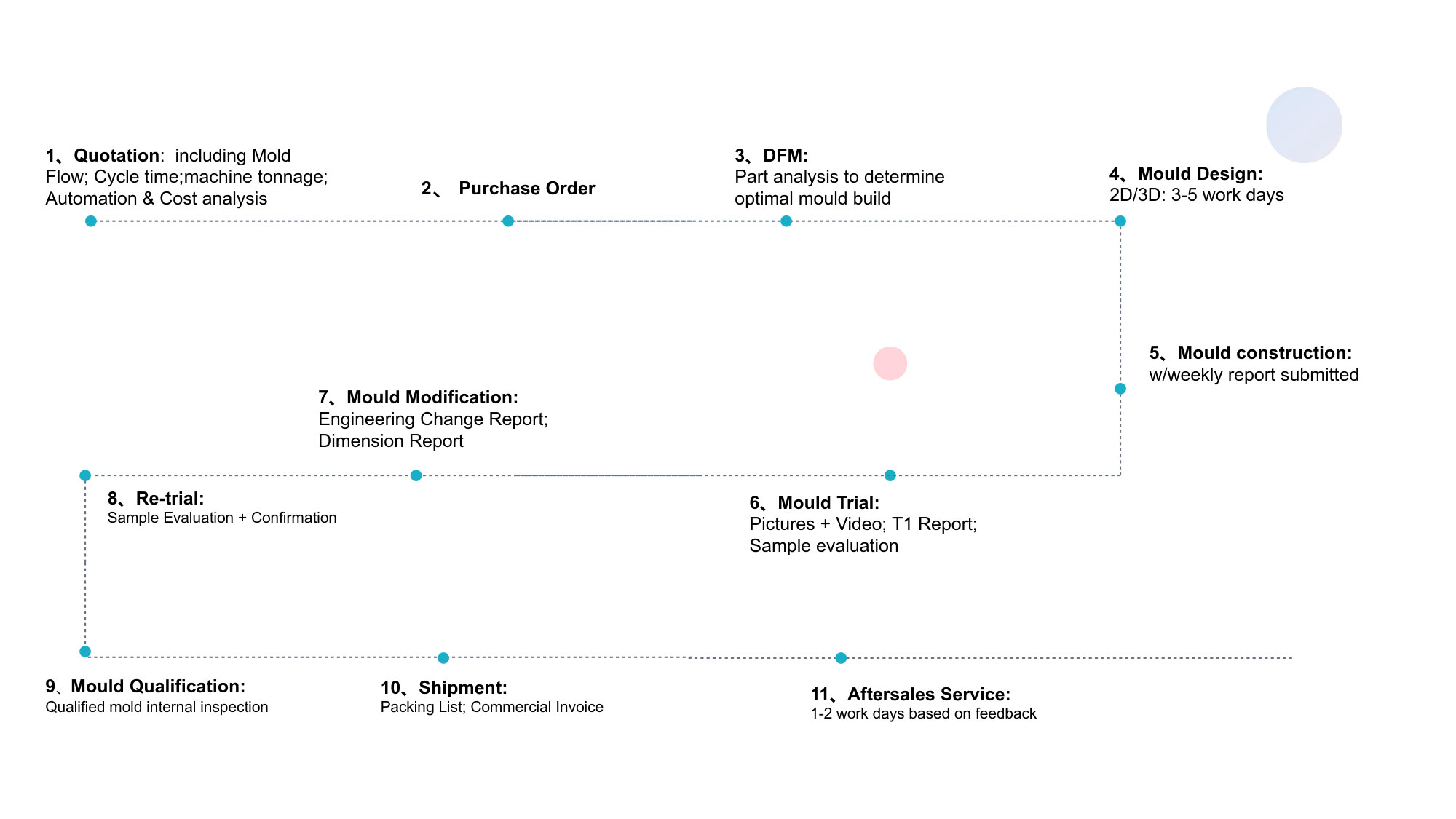
- The mold manufacturing process and product material selection
Mold Configuration Options address diverse production strategies. Hot runner systems eliminate runner waste and reduce cycle times by removing cold sprue cooling from the schedule. Multi-cavity layouts (4‑, 8‑, 16‑, 32‑cavity) proportionally reduce per-part cost by distributing molding overhead across more cavities. Stack molds effectively double cavity count without increasing machine clamp tonnage, halving per-part capital utilization. Two‑shot/overmolding tools integrate TPU soft-touch pads onto rigid substrates in one automated cycle—eliminating secondary assembly operations.
Gating Strategy is optimized through comprehensive Moldflow simulation. Ansix analyzes melt behavior into high‑grade TPU to predict weld‑line formation, air‑trap locations, and pressure distribution before steel is cut. Simulations guide gate quantity and placement to ensure balanced cavity filling without voids or knit lines. One mold design iteration in simulation costs pennies; cutting steel on a bad design costs tens of thousands of dollars in rework, re‑polishing, and production delays.
Lead Time Standards are transparently defined: simple molds deliver in 10 days, medium–difficulty projects in 25–45 days. Rush options (as low as 20 days) are available with approval—but Ansix never shortcuts DFM validation, moldflow accuracy, or first‑article inspection.
-
Injection Molding Process Control
TPU is a technically demanding material with unique challenges. Moisture absorption degrades melt quality and part aesthetics. Narrow thermal windows between melting and decomposition demand precise barrel control. High melt viscoelasticity and polarity create mold‑release difficulties. Ansix meets these challenges with robust process controls.
TPU Material Properties and Drying Protocols: TPU is highly hygroscopic and must be thoroughly dried before molding to prevent bubbles, yellowing, surface streaks, and property degradation. Ansix follows grade‑specific guidelines:
Standard TPU grades: 80–100°C for 4–6 hours, residual moisture below 0.03%
High‑grade/glass‑filled compounds: Up to 110°C, 3–4 hours, moisture content below 0.05%
Polyester‑based TPU (hydrolysis‑sensitive): 100–120°C drying protocols
Ansix selects TPU materials based on specific application requirements: Shore hardness spanning 63A to 65D, polyether/polyester backbone chemistries for hydrolysis resistance or oil resistance, glass‑fiber reinforcement up to 30% GF for stiffness, and UV‑stabilized grades for outdoor foot pad applications. All materials meet REACH, RoHS, and UL94 V‑2 or V‑0 flame ratings per customer specification.
Key TPU injection parameters that drive quality and repeatability:
Barrel temperature zones: Rear section ≤180°C (suppresses degradation and mold adhesion), mid sections 185–200°C, nozzle 190–205°C depending on TPU grade hardness
Mold temperature control: Front mold surface 80–85°C / rear mold 40–45°C gradient balances crystallization and shrinkage
Injection strategy: Multi‑stage injection (low‑speed fill ~90%, micro‑speed shrinkage ~5%, final holding ≤30% initial injection pressure)
Cooling water differential: ≤3°C across mold halves to avoid local sticking and unequal shrinkage
Demolding optimization: Two‑stage ejection speed (initial 0.5m/s to break adhesive layer, rapid 2m/s thereafter)
Process Standardization eliminates the single greatest source of manufacturing variability: operator adjustment. All Ansix molding machines are networked to a central MES, with every critical parameter (temperatures throughout barrel zones, multi‑stage injection pressures and speeds, holding pressure and time, cooling time, ejection sequences) locked to approved recipes. Parameter changes require authorized engineering approval and are fully audited. Each batch begins with first‑article inspection, compares to the acceptance sample, and ends with final verification—creating an unbroken quality lineage from setup approval through full production.
Advanced Process Technologies drive cycle reduction, defect elimination, and dimensional consistency:
Ultrasonic wall‑thickness monitoring integrates sensors directly into mold cavities, providing shot‑by‑shot feedback of melt flow and frozen layer formation. Real‑time data drives automatic pressure and timing corrections cycle to cycle.
In‑mold temperature and pressure sensors feed closed‑loop control algorithms that automatically adjust holding pressure to maintain part weight consistency (±0.5% variation) despite material viscosity shifts or ambient temperature changes.
Conformal cooling channels follow part geometry to provide uniform heat extraction where straight‑drilled lines cannot reach. HP MJF or laser‑PBF printed inserts reduce cooling time by up to 50+% and eliminate localized hot spots that cause warpage and sink.
MuCell® microcellular foaming technology injects supercritical fluid (SCF) into the TPU melt, reducing density 30–50% while preserving mechanical integrity. Lower weight and faster cycle times reduce material consumption and energy per part significantly.
Dimensional Stability Assurance is managed through mold temperature zone control, limiting core‑cavity differential to ≤2°C to minimize warpage and residual stress. Production monitoring demonstrates typical variation of key boss‑center distances ≤0.02mm across three separate production weeks—a proven track record of repeatability.
Aesthetic Grade Assurance is specified precisely: transparent pad requirements include zero bubbles and flow‑line free surfaces; high‑gloss pad specifications meet Ra ≤ 0.2μm. For pad designs requiring printing or post‑mold graphics, Ansix incorporates shrinkage compensation offsets into cavity geometry to hold graphics registration to ±0.1mm.
Special Material Capabilities extend beyond TPU to engineering resins when foot pad designs require integration with rigid carriers: PC/ABS for structural carriers, polycarbonate for optical clarity, PPS+40%GF for high temperature stability, PEEK/PEI for extreme durability, nylon grades for toughness, PBT for chemical resistance, and LCP/LSR for specialized sealing and soft‑touch overmolding. Each material receives validated processing protocols.
4. Full‑Service Delivery Model
Ansix Tech reduces customer management cost through a comprehensive service architecture that eliminates the wasteful gaps between design concept and mass production.
Early DFM Engagement delivers a mold feasibility analysis report before contract signing, complete with draft angle recommendations, wall thickness optimization, gate location mapping, and documented allowable mark footprint zones and ejector pin mark positions—eliminating the structural conflicts that force expensive mold rework after tooling launch.
Staged Validation solves the costly problem of “open the mold, find failure, re‑cut steel.” Ansix delivers T1, T2, and T3 validation samples with documented improvement reports for each iteration. Where alternative gate, runner, or cooling strategies require comparison, multiple cavity inserts allow side‑by‑side evaluation without building entirely new tools.
Pre‑Production Verification removes the leap‑of‑faith transition from sample approval to full production. Ansix runs a 100–500 shot pilot lot, documents yield and part‑to‑part variation, confirms CPK performance at the intended production machine, and only then authorizes high‑volume release.
Maintenance and Spares transform mold ownership from reactive repairs to predictable asset management. Spare wear components (ejector pins, core inserts, gate pins) are delivered with the mold package. Every 200,000 cycles, a preventive service is performed to prolong peak performance. Lifetime repairs are priced at cost, capped at a minimal administrative fee.
5. Differentiators that Solve Customer Pain Points
Problem 1: “Every mold we buy requires frequent repair and interrupts our production schedule.” → Ansix solution: Every mold undergoes a 2,000‑shot accelerated wear test before delivery, complete with documented wear measurements across critical surfaces. A three‑year structural warranty covers the mold body (excluding normal consumable wear). Your line stays running.
Problem 2: “Our TPU parts have inconsistent flash, requiring labor‑intensive hand trimming that adds hidden costs.” → Ansix solution: Ansix maintains ±0.003mm fit‑class precision on all parting surfaces, plus locking ring‑force compensation to maintain seal across day‑long production runs. Flash is consistently held ≤0.03mm, eliminating hand‑deburring entirely.
Problem 3: “Dimensions drift every batch, forcing us to sort parts and risk customer rejects.” → Ansix solution: Closed‑loop cavity pressure sensors detect fill and pack variations within milliseconds and automatically adjust holding pressure and transfer point to maintain part weight within ±0.5%. Major dimensional characterization numbers are repeatable from week to week.
Problem 4: “Mold repairs take weeks, and we lose production while waiting for outside shops.” → Ansix solution: Ansix maintains dedicated electrode machining and EDM repair cells within the same facility. Standard repairs like rebuilding worn parting surfaces or replacing damaged inserts are completed in ≤24 hours. Your mold returns to press the next day.
Problem 5: “TPU often sticks in the mold, causing ejection damage and compromising part finish.” → Ansix solution: Ansix treats problem TPU adhesion as a chemistry‑based challenge requiring physical‑chemical surface engineering. Surface energy is controlled via superhydrophobic diamond‑like carbon (DLC) coatings (thickness 1–3μm) reducing surface energy to 18–22 dyn/cm and raising TPU contact angle >105°. Laser micro‑texturing engraves 20–50μm honeycomb arrays on non‑contact surfaces, reducing real contact area up to 85%. Cavity surfaces are electro‑polished to Ra ≤ 0.02μm, eliminating mechanical locking points.
Problem 6: “TPU requires very precise temperature control, and our products suffer air traps, burn marks, or incomplete fills.” → Ansix solution: Ansix combines three‑zone precise temperature regulation—rear barrel zone ≤180°C to suppress degradation, front mold 80–85°C / rear mold 40–45°C gradient to balance crystallization and minimize shrinkage differential, and mold cooling water differential ≤3°C to eliminate local overheating and sticking. Multi‑stage injection timing management is applied: low‑speed fill for 90% of cavity volume to prevent jetting and air entrapment, intermediate micro‑speed shrinkage for 5% to settle the melt, and final zero‑pressure holding for 5% to relieve residual stress. These sequences are locked in MES recipes and cannot be changed without engineering authorization.
Problem 7: “Our TPU parts develop sink marks over thick sections or at transitions from thin to thick geometry.” → Ansix solution: Sink in TPU is primarily a failure of gate freeze management—the gate remains molten after cavity volume has solidified, allowing pack pressure to bleed backward. Ansix eliminates sink through gate‑freeze validation studies that scientifically determine minimum pack time requirements. Holding pressure is matched to geometry: sink‑prone thick pads receive extended pack times, while thin sections are protected from over‑packing. Advanced case studies show sink is eliminated without lengthening overall cycle.
6. Cost Reduction Delivered
Ansix Tech dramatically reduces the total cost of ownership across every injection molding expense category.
Raw Material Costs: Ansix works with major TPU suppliers (Lubrizol, Covestro, Huntsman, BASF, and domestic Chinese producers) to secure optimal pricing through volume aggregation. Glass‑filled TPU (10–30% GF) and specialty grades are sourced at tier‑one pricing without minimum volume penalties. Current pricing benchmarks show unfilled TPU compounds at
1.80–2.80/kgandengineeringTPUgradesinthe2,800–4,500/ton range, with preferential pricing available to Ansix contract customers based on aggregated purchase volumes. Standard material forecasts can reduce resin expense 12–18%.
Process Cycle Optimization: Conformal cooling reduces cooling time by 40–56% compared to conventional straight‑drilled channels, accelerating full cycles 15–30%. Higher cavity counts (8‑cavity vs. 4‑cavity) and stack-tool configurations double output per press and proportionally reduce amortized press‑time burden per part. Servo‑electric machines consume 30‑50% less energy per part than hydraulic analogues.
Defect and Scrap Elimination: Scientific process development reduces reject rates from typical 8‑12% industry standards down to ≤1‑2% across most TPU foot pad programs. Every scrap reduction point is direct cost recovery. Secondary deburring and trimming labor are eliminated outright when flash is controlled to ≤0.03mm.
Post‑Processing Extinction: Effective gate location planning and mold geometry optimization eliminate hand‑finishing of gate vestiges. Parts drop from the machine in a ready‑to‑ship state. One major pad program reduced post‑mold labor 0.8 minutes per part, saving 35 minutes of labor per 1,000 parts.
Tooling Longevity: Correct steel selection, hardening treatment, and wear coatings extend tool life from worn‑out replacements (typically 300,000–500,000 shots) to 800,000–1,000,000 shots or more. Reduced tool re‑polishing, re‑coating, and replacement spending improve long‑term financial returns of every production contract.
Supply Chain Simplification: One vendor manages everything from mold design and construction through validation, materials procurement, process development, serial production, and warehousing. Every retained vendor interface removed from your supply chain cuts management time 15–20% on ongoing production oversight.
Investment Recovery: Ansix implements scientific molding methodologies—Design of Experiments (DOE) to identify optimal process windows, cavity‑pressure sensors capturing real‑time viscosity and pressure profiles, and CPK tracking on every critical dimension. These investments reduce the need for extended production trials, limit validation runs to 100–500 pieces, and shorten the path from first samples to full‑rate manufacturing by weeks.
7. Delivery Efficiency and Rapid Turnaround
Ansix Tech’s integrated manufacturing and supply chain strategy delivers reliable, predictable on‑time delivery.
Confirmed Lead Times: Simple TPU foot pad tooling delivers in 10 days from design approval; medium–complexity programs deliver in 25–45 days. Pilot production (100–500 shots) takes 1–3 days; full‑rate production release occurs immediately upon CPK confirmation.
Capacity Scaling: 30–4000 ton machines allow Ansix to tool small pads on 30‑ton presses while simultaneously running automotive‑scale pads across 1000–4000 ton platforms. Interchangeable cavities allow mid‑program capacity expansion by simply adding cavity inserts without building whole new molds.
Automated Operations: As machines near capacity, Ansix deploys turnkey automated cells with integrated take‑out robots, vision gauging, and part sorting to operate 24 hours without dedicated operator staffing. Over 50% of our high‑volume lines already incorporate smart automation. Full lights‑out operation can be implemented for large programs.
8. Quality Assurance Framework
Ansix Tech’s quality system is built on a foundation of documented, repeatable, verifiable controls:
Moldflow and DFM Simulation: Every tool receives full pre‑cut Moldflow analysis—validating fill patterns, pressure distributions, weld line locations, and air trap positions before steel cutting begins. Ansix provides each customer a complete DFM report package before tooling commitment.
Scientific Development: Process window validation is conducted through formal DOE methodology, establishing upper and lower control limits for each variable and documenting the “golden batch” reference recipe for each approved part. Target CPK on every critical dimension is ≥1.33 before production authorization.
In‑Process Monitoring: MES‑based parameter locking prevents operator drift. Cavity temperature, pressure, cushion, and shot‑to‑shot weight data are captured and archived per ISO/TS traceability protocols. Three‑zone temperature differential is maintained ≤3°C using proportional coolant regulation.
End‑of‑Line Verification: Vision systems inspect each pad for critical dimensions and surface appearance. Out‑of‑spec parts are automatically diverted and quarantined. First article and initial run inspection reports are delivered to customers for approval before authorizing full rate production.
Full Documentation Package: Each shipment includes material certifications, CPK reports for held dimensions, process parameter summaries, visual acceptance standards, and batch records that support full backward traceability to specific production runs, material lots, and machine settings.
Conclusion
For customers evaluating TPU foot pad injection molding suppliers, Ansix Tech eliminates the hidden costs, hidden risks, and hidden frustrations that conventional toolrooms deliver. Every pound of raw material, every minute of cycle time, every repair, every scrap piece is accounted for and minimized. Our mold and process engineering are validated by data, not by luck. When you partner with Ansix, you are not buying a block of steel and a machine. You are securing a proven manufacturing system designed to deliver consistent, high‑quality TPU foot pads at the lowest possible per‑unit cost, on time, every time.
Ansix Tech Co Ltd
If you have any plans related to TPU Foot Pad Injection Molding , you can contact us at any time. We will turn your ideas into reality, let you realize your dreams, and obtain large orders from the market. Our contact information is info@ansixtech.com. Or contact our CTO, mail: stephen@ansixtech.com
#www.ansixtech.com #ansixtech.com #TPU Foot Pad Injection Molding #TPU Foot Pad Injection Molding moulds #TPU Foot Pad Injection Molding injection molding companies #TPU Foot Pad Injection Molding Canopy Mold injection mold companies #Ansix #Ansix moulds #Ansix china #Ansix tech china #Ansix tech company #Ansix facotry #TPU Foot Pad Injection Molding injection molding #TPU Foot Pad Injection Molding injection tools #TPU Foot Pad Injection Molding injection moulds #TPU Foot Pad Injection Molding plastic mould #TPU Foot Pad Injection Molding plastic tools #Ansix Tech #Ansix molds #Ansix injection molding #Ansix mold factory #injection molding TPU Foot Pad Injection Molding #Ansix mold factory #TPU Foot Pad Injection Molding china #TPU Foot Pad Injection Molding molds #injection factory #TPU Foot Pad Injection Molding injection molding #TPU Foot Pad Injection Molding injection molding factory #injection molding company #TPU Foot Pad Injection Molding injection mold companies #TPU Foot Pad Injection Molding#TPU Foot Pad Injection Molding mold limited #Ansix mold china #Ansix companies #Ansix company China #TPU Foot Pad Injection Molding facotry #Ansix Tech #Ansix Tech mould #TPU Foot Pad Injection Molding injection moulding #injection moulding company #Ansix TPU Foot Pad Injection Molding parts injection mold companies #medical injection molding companieschina #TPU Foot Pad Injection Molding china factory #Ansix moulding companies #Ansix molding company #TPU Foot Pad Injection Molding injection moulding facotry #Ansix Tech mold #TPU Foot Pad Injection Molding mould #TPU Foot Pad Injection Molding plastic injection molding #ansix plastic mold #Mold manufacturing #TPU Foot Pad Injection Molding parts manufacturing #TPU Foot Pad Injection Molding plastic parts factory #TPU Foot Pad Injection Molding injection parts mold #TPU Foot Pad Injection Molding PRECISION MANUFACTURING #TPU Foot Pad Injection Molding #China mold #TPU Foot Pad Injection Molding injection moulding china #TPU Foot Pad Injection Molding mould china #china precision mold #mold in china #TPU Foot Pad Injection Molding mold china #Precision molds #High-precision molds #TPU Foot Pad Injection Molding #Injection molds #TPU Foot Pad Injection Molding Factory #TPU Foot Pad Injection Molding Company #Super Large Injection Mold Factory #Large Tonnage Injection Molding Factory #TPU Foot Pad Injection Molding Company #TPU Foot Pad Injection Molding Factory #2800T Injection Molding Factory #3000 Ton Injection Molding #4500 Ton Injection Molding Factory #Large Mold Injection Molding #Large Plastic Mold Injection Molding Factory #Large Injection Mold Manufacturer #Plastic Mold Factory #Injection Mold #Plastic Mold
- Mass production and Quality control
Mass production and quality control are the keys to ensuring product quality and production efficiency.
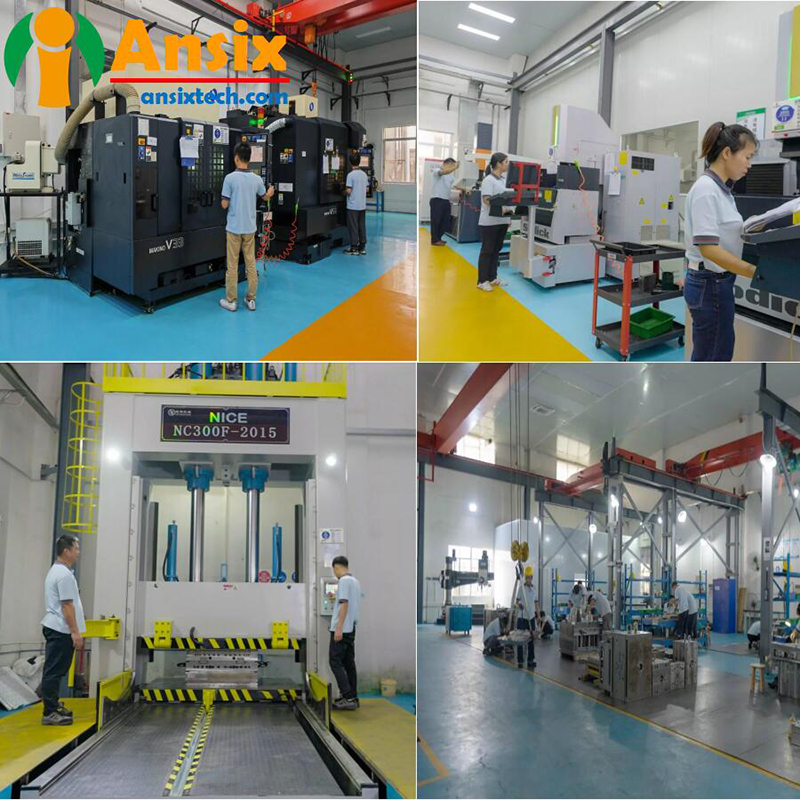
- The mold manufacturing process and product material selection
The mold manufacturing process and product material selection of plastic products are key factors to ensure product quality and production efficiency.