



Zinc Alloy Overmolded LSR Liquid Silicone Waterproof Sealing Ring
FEATURES
Demonstrating Hard Power Infrastructure — Building Customer Trust Through Equipment Excellence
Every high-quality molded part begins with precision tooling. Ansix Tech has strategically invested in world-class manufacturing equipment to ensure that your sealing ring components are produced with micron-level accuracy, zero flash, and exceptional repeatability.
Advanced Mold Machining Equipment
The quality of a mold directly determines the quality of every part produced from it. Ansix Tech operates a comprehensive mold manufacturing workshop equipped with:
Five-Axis High-Speed Machining Centers — Our five-axis CNC machining centers enable the production of complex contoured surfaces with machining accuracy reaching 0.002 mm. For sealing rings, this level of precision directly translates to a smooth, burr-free parting line where the LSR meets the zinc alloy substrate, ensuring a perfect seal without secondary deburring operations. A seamless parting line eliminates potential leak paths and reduces post-molding labor by 100%.
-
Mold Description
Product Materials:
zinc alloy +lsr silicone
Soft rubber: lsr silicone
Mold Material:
S136ESR
Number of Cavities:
2+2
Glue Feeding Method:
Hot runner
Cooling Method:
Water cooling
Molding Cycle
42.5s
- The mold manufacturing process and product material selection
Slow-Speed Wire EDM (Electrical Discharge Machining) — For intricate features such as 0.03 mm micro-holes, narrow slots, and delicate undercuts, our slow-speed wire EDM machines deliver burr-free, stress-free cuts. Unlike conventional machining that can induce micro-cracks or cause thin-wall deformation, wire EDM preserves the structural integrity of mold components, directly extending mold life and reducing the risk of premature wear that could lead to flash or dimensional drift.
CNC EDM with C-axis Capability — Precision EDM is critical for creating the intricate cavity geometries required for sealing rings. Our machines can produce surface finishes down to Ra 0.05 μm on cavity surfaces, ensuring that every sealing lip is perfectly formed and that LSR flows smoothly without turbulence or air entrapment.
Precision Surface Grinding and Jig Grinding — For components requiring extreme flatness and parallelism, our grinding capabilities achieve tolerances of ±0.002 mm on critical parting surfaces. This precision ensures that mold halves close perfectly every cycle, controlling flash to under 0.03 mm and eliminating costly manual deflashing operations that can damage sealing surfaces.
-
Mold Assembly and Fitment Standards — Every mold undergoes meticulous assembly using calibrated torque tools and precision alignment fixtures. Our standard fitment specification requires gap-free mating of all parting surfaces, ensuring that the low-viscosity LSR (which flows like water during injection) cannot escape through even the smallest gap.
Injection Molding Machine Fleet
The molding machine is the engine of production. Ansix Tech maintains a diverse fleet of all-electric injection molding machines covering clamping forces from 30 tons to 400 tons, capable of producing sealing ring components ranging from miniature SIM card seals (5 mm diameter) to large industrial sealing gaskets (over 200 mm diameter).
All-Electric Servo Drive Technology — Every production machine in our LSR cell is equipped with all-electric servo motors. Unlike hydraulic machines that suffer from oil viscosity variations and thermal drift, our all-electric machines deliver repeatable injection precision with ±0.1% stability on all key parameters. For sealing ring applications, this means that part number 1 and part number 1,000,000 will have identical dimensions, sealing lip profiles, and compression set characteristics. The reduction in part-to-part variation directly translates to lower scrap rates and predictable assembly line performance for your production.
Specialized LSR Injection Units with Cold Runner Systems — LSR is fundamentally different from thermoplastics. It is a two-component platinum-catalyzed thermoset material with very low viscosity and a narrow processing window. Our machines are equipped with precision metering pumps (A/B ratio accuracy within ±0.5%), static mixers for homogeneous blending, and water-cooled cold runner systems that prevent premature curing before the material enters the heated cavity. The cold runner system eliminates material waste entirely—every gram of LSR that enters the machine either becomes a part or is recycled, achieving material utilization rates exceeding 98%.
Closed-Loop Process Control — All injection parameters (injection pressure, speed, mold temperature profile, curing time, and shot volume) are locked within our MES (Manufacturing Execution System). Only authorized process engineers can make adjustments, and every change is logged with timestamp and operator identification. This eliminates the risk of unauthorized parameter tweaking that could introduce variability.
In-Mold Temperature and Pressure Sensors — Select molding machines are equipped with cavity pressure transducers and thermocouples that feed real-time data into adaptive process control algorithms. If the system detects pressure decay or temperature deviation during the injection phase, it automatically compensates by adjusting hold pressure or curing time within the same cycle. This closed-loop intelligence has been shown to reduce scrap rates by up to 62% in precision LSR applications.
Quality Inspection Equipment
You cannot manage what you cannot measure. Ansix Tech maintains a fully equipped metrology laboratory with:
ZEISS CMM (Coordinate Measuring Machine) — Our CMM provides dimensional verification with measurement uncertainty below ±0.001 mm. Every mold produced in our facility undergoes a full dimensional verification against the customer print before shipment, with a complete First Article Inspection Report (FAIR) documenting every critical dimension.
Optical Digital Measurement Systems — For features that are challenging to probe, such as fine sealing lips and small radii, our optical measurement systems capture 3D surface contours with 0.002 mm resolution. This is particularly valuable for verifying the geometry of LSR sealing lips after molding.
Vision Inspection Systems — Integrated into the production line for real-time dimensional monitoring and surface defect detection.
Hardness Testers — Both for mold steel certification and for verifying LSR cured hardness (Shore A) on production samples.
Professional Grade Go/No-Go Gauges — Custom-designed functional gauges that simulate the mating assembly to verify seal fit and compression.
Part Two: Core Competitiveness in Mold Manufacturing — Translating Technical Specifications into Customer Value
Customers evaluating a manufacturing partner for zinc alloy overmolded LSR sealing rings need tangible, measurable guarantees. The following table translates our technical capabilities into customer benefits:
Category Technical Specification Customer Value Delivered
Mold Life Hardened tool steel selection (S136, H13, NAK80, 2344, 2343, 8407, SKD11/61/DC53, M340, 4Cr13/9Cr18) according to production volume: P20/NAK80 for 100,000–500,000 cycles; H13/S136 for 500,000–1,000,000+ cycles Lower tooling amortization per part — a mold that lasts 1 million cycles instead of 100,000 cycles reduces per-part tooling cost by 90%. No unexpected mold repairs during production runs. We provide full material certification and heat treatment curves for full transparency.
Achievable Tolerances Standard structural features: ±0.05 mm; Precision sealing surfaces: ±0.01 mm; Critical features (sealing lip height, groove width): up to ±0.005 mm Your assembly line works every time. A sealing ring that fits perfectly in the first assembly eliminates rework, reduces warranty claims, and prevents field failures.
Mold Type Capabilities Cold runner systems (zero waste, prevents premature curing); Hot runner systems (for thermoplastics); Two-shot/multi-material molds (for integrated thermoplastic + LSR); Stack molds (doubles output per machine cycle); Mirror-finish molds (Ra ≤0.05 μm for transparent/optical LSR) Flexibility to match your product roadmap. As your product evolves from a standard sealing ring to a multi-material integrated component, Ansix Tech has the tooling expertise to make it happen without retooling from scratch.
Gate and Runner System Mold flow analysis to predict weld line location, air trap positions, and filling imbalances before steel is cut. Optimized gate placement ensures balanced cavity filling in multi-cavity molds No surprises at T1 sampling. We identify potential defects in the simulation phase, not after the mold is built. Reduced cycle times and material savings through optimized runner design. Balanced filling means all cavities produce identical parts — essential for multi-cavity production economics.
Lead Time Simple molds: 10 days; Medium complexity: 25–45 days; Expedited: as short as 20 days (with accelerated processing but without skipping validation steps) Predictable project timelines. You know exactly when sample parts will be available for testing and when mass production can begin. We do not sacrifice quality for speed — expedited molds still undergo complete DFM review and machining validation.
Mold Flow Analysis — The Digital Twin Advantage
Before we cut a single piece of steel, Ansix Tech performs comprehensive mold flow analysis using specialized simulation software. This digital prototyping step is critical for LSR overmolding, where material behavior is fundamentally different from thermoplastics. Our simulation workflow includes:
Gate Location Optimization — We evaluate multiple gate placement scenarios to minimize flow length, ensure balanced filling across all cavities, and position weld lines in non-critical areas away from sealing surfaces.
Air Trap Prediction — LSR is prone to air entrapment due to its low viscosity and high flow velocity. Our simulations identify where air becomes trapped during filling, allowing us to position venting channels precisely to achieve zero-void parts.
Thermal Analysis — LSR cures by heat-activated crosslinking. Our simulations predict cavity temperature distribution and curing progression, ensuring uniform vulcanization and eliminating under-cured or over-cured regions.
Shrinkage Compensation — LSR exhibits shrinkage rates of 2.0–3.0%, significantly higher than most thermoplastics. Our simulation tools allow us to predict final part dimensions after cooling and incorporate compensation into the cavity geometry.
Part Three: Injection Molding Process Control — Eliminating Quality Anxiety
The single biggest fear customers express about LSR overmolding is quality inconsistency — the nightmare scenario of receiving a batch of sealing rings with dimensional variation, flash on sealing surfaces, air bubbles, or inconsistent bonding between LSR and zinc alloy.
Ansix Tech’s process control system is designed to eliminate these fears entirely.
Process Standardization with MES Lockout
All injection molding machines are networked to our MES system. The approved process parameters are locked at the machine controller level — operators cannot adjust temperature, pressure, speed, or timing without supervisor authorization and documented change records. Each batch begins with first-article inspection and ends with last-article inspection, with ongoing in-process sampling at defined intervals. This ensures that the quality of the first part of the run is identical to the last.
Dimensional Stability Control
For zinc alloy overmolded sealing rings, dimensional stability is critical because the LSR must compress to a precise height against the mating surface to achieve the specified IP rating.
Multi-Zone Mold Temperature Control — Each mold is equipped with independent temperature controllers for cavity and core sides. We maintain cavity temperature within ±1°C of setpoint and limit temperature differential between cavity and core to within 2°C. This eliminates warpage caused by non-uniform cooling and ensures consistent shrinkage across every cycle.
Real-Time Cavity Pressure Monitoring — For high-volume production, our machines are equipped with cavity pressure transducers that provide real-time feedback on packing pressure and holding time. The system automatically adjusts to compensate for material viscosity variations between batches.
Verified Stability Data — In validation runs for similar overmolded ring products, we have demonstrated that key dimensional features (such as LSR lip height and groove-to-groove spacing) remain within ±0.02 mm across three consecutive production batches produced over a one-week period. This level of stability means your assembly line can operate without needing to adjust pick-and-place equipment or sealing force settings between batches.
Surface Quality Specifications
The surface quality of both the zinc alloy substrate and the overmolded LSR directly affects sealing performance and product aesthetics.
Zinc Alloy Surface Finish — Before overmolding, the zinc alloy substrate must be clean, properly roughened for adhesion, and free of oils, oxides, and casting flash. Our pretreatment process includes ultrasonic degreasing, mechanical abrasion (sandblasting) to Ra 1.6–3.2 μm for mechanical interlocking, and silane coupling agent application (primer coating) for chemical bonding. The result is a bonding interface that survives thermal cycling, humidity exposure, and mechanical stress without delamination.
LSR Surface Quality — For transparent sealing applications, we guarantee bubble-free, flow-mark-free surfaces. For high-gloss cosmetic applications, we achieve surface roughness as low as Ra 0.05 μm directly from the mold — no secondary polishing required. For bonding surfaces, we provide the specified surface activation (plasma treatment or primer coating) at the mold interface.
Special Materials Processing Capabilities
Ansix Tech has extensive production experience with a wide range of engineering materials, including:
Engineering Thermoplastics : PC/ABS, PC, PPS+40% GF, PEEK, PTFE/PFA, PA6+GF30, PBT, PEI, PPS/LCP
Liquid Silicone Rubber : General purpose, self-bonding, food-grade, medical-grade, optically clear, low-volatile, flame-retardant
Metal Substrates : Zinc alloy (die-cast), aluminum, stainless steel, brass, copper
Our material expertise translates directly into customer value. For flame-retardant applications, we process UL94 V-0 rated materials with documented material certifications and lot traceability. For outdoor applications, we validate material UV resistance to 3,000 hours without discoloration. For medical devices, we maintain ISO 13485 certification and process only FDA-compliant, biocompatible LSR grades.
Part Four: Full-Process Service — Reducing Customer Management Costs
Many molders view their job as simply delivering finished parts. Ansix Tech takes a different approach: we view ourselves as an extension of your engineering team, working collaboratively to ensure that every aspect of the product lifecycle is optimized.
Early Intervention through DFM (Design for Manufacturability) Reports
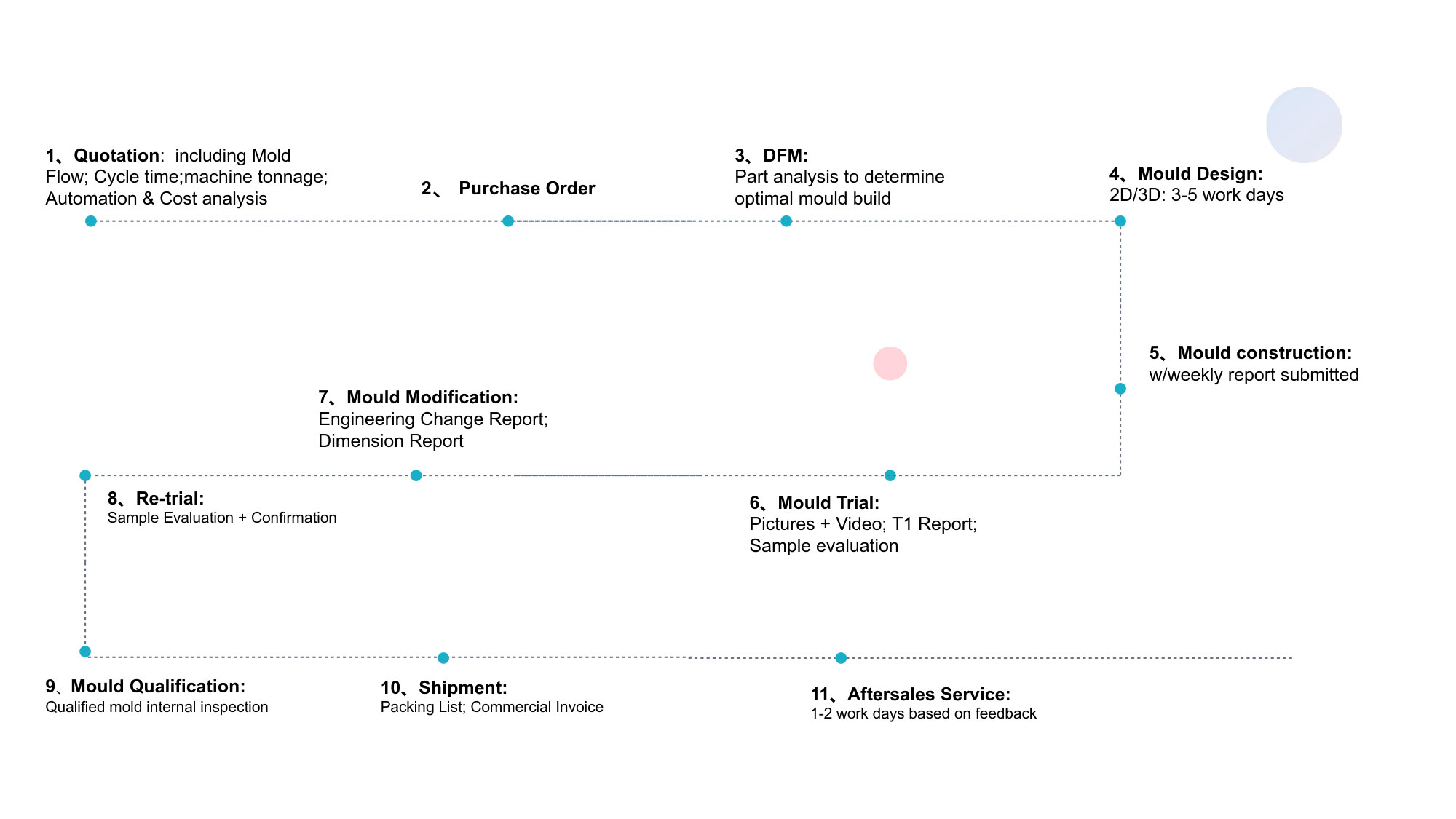
Before any formal contract is signed, Ansix Tech provides a comprehensive DFM report that reviews your 3D model and identifies potential manufacturing issues that could lead to higher costs, longer lead times, or quality problems. The DFM report includes:
Draft Angle Recommendations — Ensuring that parts can be ejected cleanly without damaging LSR sealing features
Wall Thickness Optimization — Preventing sink marks, voids, and excessive cooling times
Gate Location and Marking — Specifying where the injection point will be placed and whether the gate vestige is acceptable in its proposed location
Ejector Pin Placement — Identifying where ejector pins will contact the part and ensuring these locations do not interfere with sealing surfaces or cosmetic areas
Parting Line Location — Defining where the mold halves separate and ensuring the resulting witness line does not compromise seal performance
This DFM analysis is provided before we cut a single piece of steel. If design changes are needed, we identify them early — when changes cost hours, not weeks. The alternative is discovering a molding problem after the mold is built, requiring weeks of rework and thousands of dollars in modifications.
Mold Sampling and Iterative Validation
Once the mold is complete, Ansix Tech provides a structured sampling protocol that documents each iteration:
T1 (First Shot) — We produce the first parts from the completed mold, measure all critical dimensions, inspect for defects, and provide a full sample report. Any deviations from print are documented with root cause analysis and recommended corrective actions.
T2 and T3 — As mold adjustments are made, we provide additional sample batches with incremental improvement data. Each sample comes with a dimensional report, visual inspection sheet, and process parameter log.
Rapid Interchangeable Core Testing — For complex sealing ring geometries where multiple design options are being evaluated, we can design molds with interchangeable cavity inserts. This allows you to test multiple design variants in the same mold without building a completely new tool for each variant.
Pilot Production Validation
Before committing to mass production, Ansix Tech offers a pilot run of 100 to 500 shots. This pilot run validates:
Yield Rate — The percentage of good parts produced under production conditions
Cpk (Process Capability Index) — Statistical verification that the process can consistently hold tolerances with Cpk ≥ 1.33 on critical dimensions
Cycle Time — Confirmation that production cycle times meet the targets used for cost modeling
Operator Training — Validation that production operators can run the cell at target efficiency
Only after pilot validation is complete and you have approved the results do we proceed to full-scale production. This staged approach means you never pay for mass production until the process has been proven.
Mold Maintenance and Spare Parts
A well-maintained mold produces consistent parts for years. Ansix Tech supports your mold throughout its entire lifecycle:
Spare Parts Kit — Every mold ships with a complete set of spare wear components including ejector pins, core pins, and wear plates. If a component fails during production, your maintenance team has the replacement immediately available.
Scheduled Maintenance Plan — We provide a detailed maintenance schedule recommending inspection intervals, cleaning procedures, and replacement schedules for wear components. Routine cleaning and lubrication every 100,000 cycles prevents unexpected downtime.
Lifetime Repair Support — For repairs needed during the mold’s service life, we offer cost-plus pricing on replacement components and labor. We do not mark up repair parts — you pay only our actual costs.
Part Five: Differentiated Value Proposition — Direct Answers to Common Customer Complaints
Rather than making generic claims about being “better,” Ansix Tech provides specific, verifiable responses to the most common complaints customers have about other suppliers.
Common Customer Complaint Ansix Tech’s Solution Verified Performance
“Molds need constant repairs, delaying my orders.” We conduct 2,000-cycle aging tests on every production mold before shipment, complete with wear report documenting condition of all components. We offer a three-year structural warranty on the mold (excluding normal wear components). Mold reliability is proven before delivery, not discovered in your production. No surprises — we know the mold works before it leaves our facility.
“Flash is everywhere — I’m spending hours deburring.” We machine parting surfaces to 0.005 mm fitment tolerance and use self-locking mold base designs with lock-step interlocks to maintain perfect alignment under clamping force. Our standard flash specification is ≤0.03 mm on all sealing surfaces. No manual flash removal required. Your parts go directly from molding machine to assembly line. Eliminates secondary labor cost and the risk of damaging sealing surfaces during deburring.
“Dimensions change from batch to batch.” Our all-electric machines with closed-loop cavity pressure control maintain dimensional consistency across batches. For each production batch, we maintain records of first-piece and last-piece dimensional data. Your assembly line never needs recalibration between batches. Pick-and-place equipment, ultrasonic welding fixtures, and automated test stations all see the same dimensions every time.
“Mold repairs take weeks.” We operate an in-house electrode manufacturing center and EDM workshop. Most mold modifications — including welding repairs and core pin replacements — are completed within 24 hours. Production downtime measured in hours, not weeks. Your line stays running.
“LSR delaminates from the metal in field use.” Our pretreatment process combines mechanical roughening (sandblasting to Ra 1.6–3.2 μm), ultrasonic degreasing, and silane coupling agent application. We provide bonding strength validation data including peel testing results (typically 8–15 N/cm with self-bonding LSR grades). Delamination is eliminated from your field failure list. No warranty claims for seal failure caused by adhesion loss.
“Cycle times are too long — I can’t meet demand.” Our conformal cooling channels (3D-printed in mold cores) conform to part geometry rather than relying on straight-drilled cooling lines. This reduces cooling time by 25–40% compared to conventional molds. Our cold runner systems eliminate runner waste and reduce injection time. More parts per hour from the same machine footprint. Your capital equipment investment works harder.
Detailed Manufacturing Process for Zinc Alloy Overmolded LSR Sealing Rings
The complete production process for high-quality zinc alloy overmolded LSR sealing rings involves five critical phases:
Phase 1: Zinc Alloy Substrate Preparation
The zinc alloy component (typically produced by die casting) must be prepared to receive LSR overmolding:
Ultrasonic Degreasing — The substrate is immersed in heated ultrasonic cleaning baths to remove all oils, casting lubricants, and particulate contamination. Cleanliness is verified by water break testing — a continuous water film indicates a properly cleaned surface.
Mechanical Roughening — The bonding surface is sandblasted with 80–120 mesh aluminum oxide media to achieve surface roughness of Ra 1.6–3.2 μm. This roughness creates micro-scale undercuts that provide mechanical interlocking between the LSR and the zinc alloy — contributing approximately 30–50% of total bonding strength.
Primer Application (Silane Coupling Agent) — For non-self-bonding LSR grades, we apply a silane coupling agent (primer) to the roughened metal surface. The primer chemically bonds to metal oxides and also reacts with the LSR during curing, forming a molecular bridge that contributes the remaining 50–70% of bonding strength.
Drying/Curing — The primed substrate is oven-dried at 80–100°C for 10–15 minutes to cure the primer and remove any remaining solvents.
Phase 2: Mold Loading and Positioning
The prepared zinc alloy substrates are loaded into the LSR injection molding machine. The mold is equipped with precision locating pins and vacuum suction cups that hold each substrate in its exact position. Positioning accuracy is critical — even 0.1 mm of misalignment will cause LSR flash over the wrong surfaces or incomplete coverage of the sealing groove.
Phase 3: LSR Metering, Mixing, and Injection
The LSR material system is supplied as two liquid components (Part A containing the base polymer and catalyst, Part B containing the crosslinker). These components are:
Metered — Precision gear pumps dispense Parts A and B at a controlled ratio (typically 1:1 by volume) with ±0.5% accuracy.
Mixed — The two components flow through a static mixer containing helical mixing elements that thoroughly blend the materials without introducing air bubbles.
Injected — The mixed LSR is injected through a cold runner system into the heated mold cavities. The cold runner is maintained at 20–30°C (below curing temperature) to prevent premature vulcanization. The injection phase takes 1–5 seconds depending on part volume.
Phase 4: Curing (Vulcanization)
Once the LSR fills the cavity, the mold is held closed under clamping pressure while the material cures. The curing process is heat-activated:
Mold Temperature : 160–200°C (depending on LSR grade)
Curing Time : 30–90 seconds (shorter for thin-wall sealing lips, longer for thick sections)
Crosslinking : Platinum catalyst triggers polymerization, converting liquid silicone to solid elastomer
During curing, the silane coupling agent on the metal surface reacts with the LSR to form permanent covalent bonds at the interface.
Phase 5: Ejection and Secondary Operations
After curing completes, the mold opens and ejector pins push the finished parts out of the cavity:
Demolding : Parts are removed by a pick-and-place robot or gravity-assisted drop
Flash Removal : If any flash exists (<0.03 mm by design), it is removed by robotic deflashing or cryogenic tumbling
Post-Curing (Optional) : For demanding applications requiring maximum bond strength and low outgassing, parts may undergo oven post-curing at 180°C for 2–4 hours
100% Vision Inspection : Every sealing ring passes through an automated vision system that checks critical dimensions, surface defects, and LSR coverage before packaging
Material Selection Guidelines for Zinc Alloy Overmolded LSR Sealing Rings
Proper material selection is the foundation of a reliable sealing ring. Ansix Tech provides expert guidance on both the zinc alloy substrate and the LSR overmolding material.
Zinc Alloy Substrate Materials
The most common zinc alloys used for overmolded sealing applications are:
Alloy Composition Key Properties Best Applications
ZAMAK 3 (ASTM AG40A) Al 3.5–4.3%, Cu 0.03–0.1%, Mg 0.03–0.06% Excellent castability, good dimensional stability, moderate strength General purpose sealing rings, consumer electronics
ZAMAK 5 (ASTM AC41A) Al 3.5–4.3%, Cu 0.7–1.2%, Mg 0.03–0.06% Higher hardness and strength than ZAMAK 3, but slightly reduced ductility High-wear applications, automotive sensors
ZA-8 Al 8.2–8.8%, Cu 0.8–1.3%, Mg 0.02–0.03% Higher aluminum content improves elevated temperature properties Engine compartment sealing components
ZA-27 Al 25.5–28.0%, Cu 2.0–2.5%, Mg 0.012–0.020% Highest strength of zinc alloys, low density Structural sealing applications requiring high load capacity
LSR Material Grades
Ansix Tech works with all major LSR suppliers including Dow Corning (SILASTIC®), Wacker (ELASTOSIL®, SILPURAN®), Momentive (Silopren®), and Shin-Etsu. Key material selections by application:
General Purpose Sealing (Shore A 40–60) — For standard waterproofing applications (IP65–IP67 rating). Good compression set resistance and moderate tensile strength. Brand examples: Dow Corning SILASTIC RBL-9200 series, Wacker ELASTOSIL LR 3000 series.
High-Performance Sealing (Shore A 50–70) — For demanding applications requiring sustained compression at elevated temperatures or in contact with oils/fuels. Lower compression set (typically <15% after 22 hours at 175°C). Brand examples: Dow Corning SILASTIC RBL-9600 series, Wacker ELASTOSIL LR 3840 series.
Self-Bonding LSR — Formulated with built-in silane coupling agents that bond directly to zinc alloy without primer treatment. Reduces process complexity and eliminates primer cost. Self-bonding grades can achieve peel strengths of 8–15 N/cm on properly prepared zinc surfaces. Brand examples: Dow Corning SILASTIC LS-4xxx series, Wacker SILPURAN 6700 series.
Food-Grade/FDA LSR — For sealing rings used in food processing equipment, water filtration systems, and beverage dispensing. Materials comply with FDA 21 CFR 177.2600 and European Framework Regulation (EC) No 1935/2004.
Medical-Grade LSR — For sealing rings used in medical devices, drug delivery systems, and diagnostic equipment. Materials are ISO 10993 biocompatibility tested, USP Class VI certified, and supplied with complete lot traceability documentation. Processed in cleanroom environment (ISO Class 7 or better). Brand examples: Dow Corning SILASTIC QP1 series, Wacker SILPURAN 6600/6700 series.
Optically Clear LSR — For sealing rings where visual inspection of seal interface is required or where product aesthetics demand transparency. Low haze (<5% at 2 mm thickness) and excellent optical clarity. Brand examples: Dow Corning SILASTIC MS-1002 series, Wacker ELASTOSIL LR 7600 series.
Low-Volatile LSR — For applications in optical assemblies, electronic sensors, and cleanroom environments where outgassing can cause contamination or damage sensitive components. Optimized for minimal volatile organic compound (VOC) release.
Quality Assurance System — A Zero-Defect Philosophy
Quality is not inspected into a product — it is engineered into the process. Ansix Tech operates a comprehensive quality management system certified to ISO 9001:2015 and ISO 13485:2016 (for medical applications).
Incoming Material Quality Control
Every material shipment entering our facility undergoes verification testing:
LSR : Batch number verification, viscosity measurement, cure rate testing, color confirmation
Zinc Alloy Substrates : Dimensional inspection, surface finish verification, cleanliness testing, material certification review
Mold Components : Hardness testing, dimensional verification, surface finish inspection
In-Process Quality Control
During production, quality checks occur at defined frequencies:
First Article : Complete dimensional inspection of the first good part from each production run, including all critical, major, and minor dimensions per control plan
In-Process Sampling : Visual and dimensional checks at specified intervals (typically every 50–200 parts depending on batch size)
SPC Monitoring : Critical dimensions are tracked on control charts; process adjustments triggered when data violates control limits
Vision Inspection : 100% automated inspection of all sealing rings for surface defects, flash, and LSR coverage completeness
Outgoing Quality Control
Before shipment, each batch undergoes final verification:
Final Sampling : Statistical sampling per ANSI/ASQ Z1.4 (standard) or customer-specified sampling plan
Functional Testing : Where applicable, samples from each batch undergo sealing performance testing (pressure decay, leak test, IP rating verification)
Certificate of Analysis (CoA) : Each batch ships with a CoA documenting material lot numbers, process parameters, and dimensional results
Quality Metrics and Reporting
Ansix Tech tracks and reports key quality metrics:
Yield Rate : Percentage of good parts versus total parts produced (target >98% for mature production)
Cpk : Process capability index for each critical dimension (minimum requirement Cpk ≥ 1.33)
Customer PPM : Parts per million returned for quality defects (target <500 PPM)
On-Time Delivery : Percentage of orders shipped by committed date (target >95%)
Cost Reduction Strategy — Lowering Total Cost Without Compromising Quality
Ansix Tech’s approach to cost reduction focuses on eliminating waste from the total production system, not on using lower-quality materials or labor.
Material Cost Optimization
Volume Purchasing : Ansix Tech maintains long-term supply agreements with major LSR suppliers (Dow Corning, Wacker, Momentive, Shin-Etsu) and zinc alloy foundries, securing volume pricing that is passed directly to customers
Material Selection Consulting : We will not automatically specify the highest-grade LSR for every application. For non-critical sealing applications, we may recommend standard LSR grades that meet your IP rating and environmental requirements at a lower material cost
Runner Waste Elimination : Our cold runner systems produce zero runner waste — every gram of LSR that enters the machine either becomes a part or is recycled. In traditional thermoplastic injection molding, runners can account for 15–30% of material usage. For expensive LSR material, this represents a significant recurring cost savings
Multi-Cavity Efficiency : For high-volume sealing rings, we design molds with 4, 8, 16, or more cavities. The incremental cost of adding cavities is relatively low, but the output per machine hour increases linearly, reducing per-part machine cost and labor cost
Process Efficiency Optimization
Cycle Time Reduction : Through mold flow analysis and conformal cooling design, we identify opportunities to reduce injection time, cooling time, and curing time. For sealing rings with thin LSR walls (1–2 mm), cycle times as low as 20–30 seconds are achievable
Automation Integration : All production cells are equipped with robots for part removal, degating, and packaging. This reduces direct labor cost per part by 70–80% compared to manual-insert injection molding
Quick Mold Change Systems : For customers requiring frequent changeovers between different sealing ring designs, we can implement quick-mold-change systems that reduce changeover time from hours to minutes
Comparison: LSR Injection Molding vs. Compression Molding for Sealing Rings
Factor LSR Injection Molding (Ansix Tech) Compression Molding
Material utilization 95–98% (cold runner minimizes waste) 70–85% (trim waste from flashing)
Labor cost Low — highly automated High — manual loading/unloading
Scrap rate <1% for mature processes 5–10% typical
Consistency Excellent — automated process control Variable — operator-dependent
Cycle time 20–90 seconds 60–180 seconds
Tolerance capability ±0.02–0.05 mm typical ±0.10–0.20 mm typical
Surface finish Mirror finish directly from mold (Ra≤0.2 μm) Variable; may require secondary finishing
Best application High-volume, precision-critical parts Low-volume, simple geometry parts
For high-volume sealing ring production, LSR injection molding delivers lower per-part total cost despite higher initial tooling investment, due to faster cycle times, higher yields, lower labor cost, and better material utilization.
Delivery and Logistics — Fast, Reliable, and Predictable
Ansix Tech operates a customer-centric logistics model that prioritizes delivery reliability.
Lead Time Commitments
Prototype Tooling : 10–15 days for simple designs; 15–25 days for complex designs
Production Tooling : 25–45 days standard; expedited service available
Production Lead Time : 5–10 days from confirmed order to shipment for stocked products; 2–4 weeks for custom production runs
Packaging Solutions
Standard Packaging : Bulk-packed in sealed polyethylene bags, labeled with part number, quantity, batch code, and date code
Tray Packaging : Custom thermoformed trays for automated assembly lines requiring individual part presentation
Tape-and-Reel : For high-volume automated assembly, we can supply sealing rings on tape-and-reel format compatible with pick-and-place equipment
Cleanroom Packaging : Double-bagged in cleanroom-grade materials with ESD protection where required
Order Tracking and Communication
Order Portal : Real-time status tracking via customer portal with automatic notifications at key milestones (DFM complete, mold start, T1 sampling, pilot approval, production release, shipment)
Project Management : Dedicated project manager assigned to every production mold, serving as single point of contact for all technical and commercial communications
Sample Approval : Digital sample reports with embedded 3D measurement data, downloadable in PDF or CSV formats
Conclusion: Why Ansix Tech for Your Zinc Alloy Overmolded LSR Sealing Rings
For customers requiring high-volume, high-precision zinc alloy overmolded LSR waterproof sealing rings, the choice of manufacturing partner has far-reaching consequences. A poorly executed sealing ring compromises product reliability, increases warranty claims, damages brand reputation, and adds hidden costs throughout the supply chain.
Ansix Tech eliminates these risks through:
Hard Power — World-class five-axis machining centers, all-electric injection molding machines, and ZEISS metrology equipment that deliver consistent quality at scale
Process Discipline — MES-locked process parameters, multi-zone temperature control, and closed-loop cavity pressure monitoring that ensure part-to-part consistency across millions of cycles
Material Expertise — Deep understanding of zinc alloy surface preparation, self-bonding LSR grades, and material selection trade-offs that balance performance and cost
Total Cost Focus — Cold runner waste elimination, multi-cavity efficiency, and automation integration that reduce per-part cost without compromising quality
Customer Partnership — Early DFM intervention, structured sample validation, and lifetime mold support that reduce your risk and management burden
When you work with Ansix Tech, you are not just buying sealing rings. You are gaining a manufacturing partner with 28 years of injection molding experience, ISO 13485 certification, and a proven track record of delivering reliable, cost-effective solutions for demanding applications across automotive, consumer electronics, medical device, and industrial equipment markets.
The mold is not just a block of steel — it is your production asset, designed for longevity, process stability, and predictable output. Ansix Tech designs every mold with injection pressure distribution, venting paths, and thermal balance optimized from the first shot to the millionth shot. When the mold arrives at your production facility, it is ready to run — no debugging, no surprises, just consistent quality at the lowest total cost of ownership.
Contact Ansix Tech today to begin a DFM review of your sealing ring design. Let us show you how we translate technical complexity into customer value — solving real problems, reducing real costs, and eliminating real risks.
Ansix Tech Co Ltd
If you have any plans related to Zinc Alloy Overmolded LSR Liquid Silicone Waterproof Sealing Ring , you can contact us at any time. We will turn your ideas into reality, let you realize your dreams, and obtain large orders from the market. Our contact information is info@ansixtech.com. Or contact our CTO, mail: stephen@ansixtech.com
#www.ansixtech.com #ansixtech.com #Zinc Alloy Overmolded LSR Liquid Silicone Waterproof Sealing Ring #Zinc Alloy Overmolded LSR Liquid Silicone Waterproof Sealing Ring injection molding companies #Zinc Alloy Overmolded LSR Liquid Silicone Waterproof Sealing Ring Canopy Mold injection mold companies #Ansix #Ansix moulds #Ansix china #Ansix tech china #Ansix tech company #Ansix facotry #Zinc Alloy Overmolded LSR Liquid Silicone Waterproof Sealing Ring injection molding #Zinc Alloy Overmolded LSR Liquid Silicone Waterproof Sealing Ring injection tools #Zinc Alloy Overmolded LSR Liquid Silicone Waterproof Sealing Ring injection moulds #Zinc Alloy Overmolded LSR Liquid Silicone Waterproof Sealing Ring plastic mould #Zinc Alloy Overmolded LSR Liquid Silicone Waterproof Sealing Ring plastic tools #Ansix Tech #Ansix molds #Ansix injection molding #Ansix mold factory #injection molding Zinc Alloy Overmolded LSR Liquid Silicone Waterproof Sealing Ring#Ansix mold factory #Zinc Alloy Overmolded LSR Liquid Silicone Waterproof Sealing Ring china #Zinc Alloy Overmolded LSR Liquid Silicone Waterproof Sealing Ring molds #injection factory #Zinc Alloy Overmolded LSR Liquid Silicone Waterproof Sealing Ring injection molding #Zinc Alloy Overmolded LSR Liquid Silicone Waterproof Sealing Ring injection molding factory #injection molding company #Zinc Alloy Overmolded LSR Liquid Silicone Waterproof Sealing Ring injection mold companies #Zinc Alloy Overmolded LSR Liquid Silicone Waterproof Sealing Ring Tooling #Zinc Alloy Overmolded LSR Liquid Silicone Waterproof Sealing Ring mold limited #Ansix mold china #Ansix companies #Ansix company China #Zinc Alloy Overmolded LSR Liquid Silicone Waterproof Sealing Ring facotry #Ansix Tech #Ansix Tech mould #Zinc Alloy Overmolded LSR Liquid Silicone Waterproof Sealing Ring injection moulding #injection moulding company #Ansix Zinc Alloy Overmolded LSR Liquid Silicone Waterproof Sealing Ring parts injection mold companies #medical injection molding companieschina #Zinc Alloy Overmolded LSR Liquid Silicone Waterproof Sealing Ring china factory #Ansix moulding companies #Ansix molding company #Zinc Alloy Overmolded LSR Liquid Silicone Waterproof Sealing Ring injection moulding facotry #Ansix Tech mold #Zinc Alloy Overmolded LSR Liquid Silicone Waterproof Sealing Ring mould #Zinc Alloy Overmolded LSR Liquid Silicone Waterproof Sealing Ring plastic injection molding #ansix plastic mold #Mold manufacturing #Zinc Alloy Overmolded LSR Liquid Silicone Waterproof Sealing Ring parts manufacturing #Zinc Alloy Overmolded LSR Liquid Silicone Waterproof Sealing Ring plastic parts factory #Zinc Alloy Overmolded LSR Liquid Silicone Waterproof Sealing Ring injection parts mold #Zinc Alloy Overmolded LSR Liquid Silicone Waterproof Sealing Ring PRECISION MANUFACTURING #Zinc Alloy Overmolded LSR Liquid Silicone Waterproof Sealing Ring #China mold #Zinc Alloy Overmolded LSR Liquid Silicone Waterproof Sealing Ring injection moulding china #Zinc Alloy Overmolded LSR Liquid Silicone Waterproof Sealing Ring mould china #china precision mold #mold in china #Zinc Alloy Overmolded LSR Liquid Silicone Waterproof Sealing Ring mold china #Precision molds #High-precision molds #Zinc Alloy Overmolded LSR Liquid Silicone Waterproof Sealing Ring #Injection molds #Zinc Alloy Overmolded LSR Liquid Silicone Waterproof Sealing Ring Factory #Zinc Alloy Overmolded LSR Liquid Silicone Waterproof Sealing Ring Company #Super Large Injection Mold Factory #Large Tonnage Injection Molding Factory #Zinc Alloy Overmolded LSR Liquid Silicone Waterproof Sealing Ring Company #Zinc Alloy Overmolded LSR Liquid Silicone Waterproof Sealing Ring Factory #2800T Injection Molding Factory #3000 Ton Injection Molding #4500 Ton Injection Molding Factory #Large Mold Injection Molding #Large Plastic Mold Injection Molding Factory #Large Injection Mold Manufacturer #Plastic Mold Factory #Injection Mold #Plastic Mold