



8-cavity PCO 1810 caliber PET preform mold
FEATURES
Hard Power Infrastructure — Building Customer Confidence Through Tangible Assets
Precision Mold Manufacturing Equipment
Customer Value Delivered: Faster mold production cycles, higher dimensional accuracy, reduced need for manual finishing, and extended mold service life.
Our mold-making capability rests on a foundation of industry-leading manufacturing equipment. We operate 5-axis high-speed machining centers capable of achieving positioning accuracy of ±0.002mm on complex contoured surfaces. For the 8-cavity PCO 1810 preform mold, this precision translates directly into a seamless, burr-free parting line on every cavity — eliminating the secondary deflashing operations that many molders accept as unavoidable costs. This alone saves our customers an estimated 3–5 seconds per preform cycle in post-processing labor.
-
Mold Description
Product Materials:
PET PETG PS AS PP
Mold Material:
S136ESR
Number of Cavities:
1*8
Glue Feeding Method:
Hot runner
Cooling Method:
Water cooling
Molding Cycle
16.5s
- The mold manufacturing process and product material selection
We complement this capability with slow-wire EDM (Electrical Discharge Machining) systems that can cut micro-features down to 0.03mm, including narrow slots and cooling channels that are critical for uniform thermal management across all eight cavities. This prevents localized overheating that commonly causes crystallization defects such as whitening, haze, or yellowing in PET preforms. Our EDM capability ensures thin-wall sections maintain their structural integrity without warpage or deformation.
All mold components undergo precision grinding on surface and cylindrical grinders, achieving surface roughness Ra ≤ 0.2μm on critical sealing interfaces. This level of finish is essential for achieving consistent gate vestige quality and preventing leakage between mold halves.
Injection Molding Machine Fleet
Customer Value Delivered: Production scalability across product weight ranges, batch-to-batch consistency, and lower energy operating costs.
-
Our injection molding facility is equipped with 260 injection molding machines ranging from 30 tons to 2,800 tons of clamping force. For the 8-cavity PCO 1810 preform mold — typically producing preforms in the 20–55 gram weight range — a 220–300 ton clamping force machine provides the optimal match, ensuring the mold stays completely sealed under peak injection pressures without flash or leakage.
All our machines are equipped with all-electric or servo-hydraulic drive systems. This is not merely a specification point — it represents a quantifiable customer benefit: full-electric machines achieve up to 60% energy savings compared to conventional hydraulic systems. For a facility running 20 hours per day, these savings translate to tens of thousands of dollars annually in reduced electricity costs.
More importantly, servo-electric drives deliver repeatable injection accuracy of ±0.1%. For PET preform production where cavity-to-cavity weight variation must be held within ±0.2–0.5%, this precision means every preform across all eight cavities emerges with identical mass, consistent IV (intrinsic viscosity) retention, and uniform crystallinity distribution.
Metrology and Inspection Capabilities
Customer Value Delivered: Zero-defect mold delivery, traceable quality documentation, and elimination of production line surprises.
We maintain a comprehensive metrology laboratory equipped with coordinate measuring machines (CMM) with volumetric accuracy of 1.5 + L/300 μm, optical image measurement systems, and surface profilometers. Every mold that leaves our facility undergoes full dimensional inspection before shipment, with a complete dimensional report provided to the customer.
Critical dimensions — including thread major/minor diameters, tamper-evident band geometry, sealing land surface, core-cavity concentricity, and gate vestige height — are measured against customer drawings and held to process capability indices of CPK ≥ 1.33. For customers demanding higher assurance levels, we can achieve CPK ≥ 1.67 on request.
All materials used in mold construction are accompanied by certified mill test reports (MTR) and heat treatment curves. We can provide full traceability from raw material receipt through final inspection, giving our customers complete confidence in the integrity of their tooling investment.
Part Two: Mold Manufacturing Core Competencies — Specifying the Unspecified
Mold Material Selection and Performance Guarantees
Customer Value Delivered: Predictable mold life expectancy, reduced unplanned maintenance, and lower per-part tooling amortization costs.
The table below translates material science into customer-relevant commitments:
Dimension Technical Specification Customer Value Translation
Mold Base Material P20 pre-hardened steel, 28–32 HRC, nickel-plated for corrosion resistance Structural rigidity ensures no deformation under millions of clamping cycles
Core & Cavity Material S136 / DIN 1.2083 / 2316 stainless steel, 48–52 HRC Wear resistance for 3 million+ shots; no rust from PET condensation or cooling water
Neck Thread Insert Material 2316 / S136 high-strength anti-corrosive stainless steel Thread integrity maintained across mold lifetime — no premature stripping or wear
Sliding Components Graphite-inlaid copper alloy bearings (self-lubricating) Maintenance-free thread split operation; reduced downtime for lubrication
Ejector Pins SKD-61 (Japanese standard), 48–50 HRC Consistent ejection force across 3 million+ cycles without pin breakage
Mold life is not a speculation — it is a commitment. For standard PET applications (IV 0.72–0.84 dL/g, virgin or up to 25% regrind), we guarantee 3 million shots before requiring major refurbishment. For glass-fiber reinforced materials (GF-PET up to 40%), we guarantee 1 million shots. These guarantees are backed by material certifications, hardness test records, and documented heat treatment process controls.
The graph illustrates how higher-grade mold materials yield exponentially longer service life:
text
Mold Material Life Expectancy vs. Investment
3.5M + --------------------------------------------------X (Premium)
| /|
3.0M | / |
| / |
2.5M | / |
| / |
2.0M | / |
| / |
1.5M |--------------------X (Standard)------/ |
| / |
1.0M | / |
| / |
0.5M | / |
| / |
0.0M +--------------+-------------------------------+
Standard Premium Ultra-Premium
Material Grade Progression →
Legend: Standard = P20 base + 2316 inserts (1-1.5M shots)
Premium = P20 nickel-plated + S136 inserts (2-3M shots)
Ultra-Premium = Premium + DLC coating + nitriding (5M+ shots)
Dimensional Capabilities and Tolerances
Customer Value Delivered: Interchangeable parts, predictable assembly outcomes, and elimination of rework costs.
Precision Level Achievable Tolerance Application for 8-Cavity PCO 1810
Standard Structural ±0.05 mm Mold base alignment pins, support pillars, cooling plate mounting
Precision Fit ±0.01 mm Core-cavity closure, sliding plate guides, ejector plate alignment
High-Precision ±0.005 mm Thread geometry, tamper band undercuts, sealing land diameter
Ultra-Precision ±0.002 mm Valve gate needle seat, critical concentricity interfaces
For PCO 1810 neck finishes, we maintain thread lead accuracy within ±0.02mm per full thread turn, ensuring consistent cap application torque across millions of cycles. Gate vestige protrusion is controlled to ≤0.1mm above the gate surface — eliminating any need for post-mold gate trimming and preventing downstream capping line jams.
Mold Type Expertise
Customer Value Delivered: Application-matched solutions and elimination of technology mismatches.
We offer multiple mold configurations for PET preform applications:
Hot Runner with Valve Gate System (Standard for 8-Cavity PCO 1810): Balanced hot runner manifold delivering uniform melt flow to all eight cavities, with individual valve gate actuation for each nozzle. This configuration eliminates sprue waste completely, reduces material consumption by 5–8% compared to cold runner systems, and produces gate vestiges that are flush with the preform surface — no trimming required. The sequential valve gate timing can be independently controlled for each cavity, preventing stringing (residual melt filaments) and ensuring gate mark quality consistent with premium beverage brands.
Available Alternatives: Stack molds for doubling output without increasing machine tonnage, and 2-shot/overmolding configurations for specialized applications requiring multi-material preforms (e.g., barrier layer preforms for oxygen-sensitive products).
Cooling System Design for High-Volume Production
Customer Value Delivered: Faster cycle times, reduced energy consumption, and elimination of cooling-related defects.
Cooling accounts for up to 80% of the total PET molding cycle, which typically ranges from 20–30 seconds in conventional systems. Every second reduced in cooling time translates directly to increased hourly output and lower per-part energy cost.
Our 8-cavity PCO 1810 mold incorporates:
Spiral conformal cooling channels in each cavity insert — maintaining the coolant path at a constant distance from the preform surface, eliminating hot spots that cause localized crystallinity (visible as white haze in transparent preforms).
Individual cavity temperature control with zone-specific cooling circuits connected to a manifold distribution plate, ensuring uniform water flow rate (turbulent regime, Re > 4,000) across all eight cavities.
Core, cavity, and neck ring cooling — each preform region has dedicated cooling circuits optimized for its distinct thermal mass. The neck ring, which has lower thermal mass than the main body, receives slower cooling to prevent premature solidification that could compromise thread geometry.
Process integration with external post-mold cooling systems that can further reduce in-mold cooling time by 30–40%, achieving total cycle times as low as 13–15 seconds per shot.
Delivery Lead Times
Customer Value Delivered: Predictable project timing and accelerated revenue generation.
Mold Complexity Standard Lead Time Accelerated (Subject to Capacity)
Simple 8-Cavity (Basic Cooling) 25–30 days 20 days
Standard 8-Cavity PCO 1810 (Spiral Cooling + Valve Gate) 35–40 days 28 days
Complex (Multi-material / Stack Configuration) 45–60 days 35–40 days
Accelerated delivery does not compromise quality. We maintain 24/7 machining capacity and pre-positioned raw material inventory for high-demand mold types, enabling compressed schedules while still executing full mold validation (100–500 test shots) before shipment.
Part Three: Injection Molding Process Control — Eliminating Customer Quality Anxiety
Standardized and Digitized Process Control
Customer Value Delivered: Elimination of operator-dependent variation and guaranteed batch-to-batch consistency.
Every injection molding machine in our facility is networked to a central Manufacturing Execution System (MES). All critical process parameters — including barrel zone temperatures (measured across 5–7 zones), injection velocity profile (4–6 segments), holding pressure (2–3 stages), holding time, cooling time, back pressure, and screw rotation speed — are locked in the MES and accessible only by authorized engineering personnel for parameter changes.
For each production batch, we perform:
First article inspection: Dimensional verification of preforms from all eight cavities against customer specifications
In-process checks: Sampling at predetermined intervals (typically every 500–1,000 cycles) for visual inspection and dimensional verification
Last article inspection: Final verification before tooling changeover or production end
This discipline ensures that a preform produced on Tuesday morning is identical to one produced on Friday afternoon — eliminating the “drift” that plagues facilities relying on operator-set parameters.
Dimensional Stability Management
Customer Value Delivered: Preforms that blow into defect-free bottles and consistent filling line performance.
The injection molding process for PET preforms is highly sensitive to temperature and pressure variations. We maintain core-cavity temperature differentials within ±2°C across the entire mold using zone-controlled thermolators (mold temperature controllers) on both the stationary and moving mold halves. This tight differential minimizes residual stress in the molded preform, preventing:
Warpage during the subsequent stretch-blow molding process
Uneven wall thickness in the finished bottle
Eccentricity between the preform body and neck axis
Our validation data demonstrates that for a typical 23 gram PCO 1810 preform, the variation in critical dimensions (neck outer diameter, thread height, and gate-to-neck length) across three consecutive production weeks does not exceed 0.02mm — representing CPK values consistently above 1.67 for all key characteristics. This stability eliminates downstream problems including cap seating failures, filler valve misalignment, and bottle ejection jams on high-speed filling lines.
Surface Quality and Visual Standards
Customer Value Delivered: Preforms with premium appearance that enhance brand perception and eliminate customer complaints.
Our 8-cavity PCO 1810 mold delivers preforms meeting the following visual standards:
Transparency: No crystallization haze or “white mist” anywhere in the preform body
Gate vestige: Flush cut — no protrusion detectable by touch, no stringing
Scratch-free surface: No visible scratches, flow lines, or weld lines on the preform body
Bubble-free: No voids or bubbles in the gate area, thread region, or main body
Thread surface: Smooth and continuous, no witness marks from thread split opening/closing
For applications requiring enhanced surface quality — such as premium water bottles where preform clarity reflects directly on brand image — we can achieve mirror-polished cavity surfaces (Ra ≤ 0.05μm) that produce preforms with optical clarity indistinguishable from glass.
Special Materials Processing Capability
Customer Value Delivered: Expanded packaging application range and regulatory compliance.
Our process engineers have extensive hands-on experience with the following specialized materials:
High-IV PET (0.80–0.84 dL/g) for carbonated soft drink applications requiring higher bottle pressure resistance
rPET (recycled content up to 100%) with full material traceability and color management systems to handle inherent variability in recycled feedstock
Barrier layer materials (EVOH, MXD6 nylon) for oxygen-sensitive products including juices, edible oils, and pharmaceuticals
Biodegradable polymers (PLA, PBAT) for eco-conscious packaging applications
GF-reinforced PET up to 40% glass fiber content for industrial and high-heat applications
For each material type, we maintain validated process parameter sets that have been developed through systematic Design of Experiments (DoE) and verified through production-scale trials.
Part Four: Full-Process Engineering Services — Reducing Total Customer Cost of Ownership
Early Design for Manufacturability (DFM) Intervention
Customer Value Delivered: Elimination of design-related production problems before they are cast in steel — saving 15–30 days of rework and preventing costly mold modifications.
Before any steel is cut, we provide a comprehensive DFM (Design for Manufacturability) report that includes:
Mold flow analysis (MFA) using advanced CAE simulation software — identifying potential weld line locations, air trap zones, and unbalanced filling conditions before mold manufacturing begins
Draft angle recommendations — specifying minimum draft requirements for all preform features that affect ejection reliability
Wall thickness optimization — balancing the need for injection fillability against the requirements of the subsequent blow molding process
Gate location and sizing — optimized to achieve complete cavity filling within the required injection time (typically 1.5–3 seconds for PET preforms) while minimizing shear-induced IV drop and preventing gate blush
Ejector pin mark placement and depth — showing the exact locations and depths of all ejector pin witness marks, with options for moving marks to non-critical surfaces if required
Shrinkage compensation — predetermining shrinkage allowances for each dimension based on material specific gravity, crystallinity, and processing parameters
Our DFM process is conducted collaboratively with the customer. We review the report in detail, incorporate feedback, and confirm all recommendations before proceeding to mold design. This collaborative approach prevents the all-too-common scenario where a mold is built to print but cannot produce acceptable parts because the print itself contained manufacturing incompatibilities.
Trial Molding and Iterative Qualification
Customer Value Delivered: Production-ready molds delivered with documented performance data — eliminating on-site commissioning delays.
Our trial molding process follows a structured T0–T3 qualification sequence:
T0 (First Shot): Initial 50–100 shots to verify basic functionality — full cavity filling, ejection reliability, gate cut quality
T1 (First Optimization): 500 shots — process parameter window mapping, dimensional inspection of preforms from all eight cavities
T2 (Second Optimization): 1,000 shots — long-run stability validation, wall thickness uniformity check, cosmetic quality inspection
T3 (Production Validation): 2,000 shots — CPK calculation for critical dimensions, gate vestige consistency, and preform crystallinity measurement
After each trial round, we provide a detailed improvement report documenting changes made and measured results achieved. If design modifications are required — such as adjusting gate size, modifying cooling channel layout, or changing ejector configuration — we can implement these changes through removable inserts rather than modifying the entire mold base.
Before final mold shipment, we conduct an accelerated aging test of 2,000 continuous production cycles under full process conditions. We provide a wear report documenting any observable changes in gate quality, thread surface condition, or ejector pin performance — giving our customers full visibility into mold behavior before it reaches their facility.
Small-Batch Production Validation
Customer Value Delivered: Confirmation of mold performance at production scale before committing to full-volume orders.
We offer pre-mass-production validation runs of 1,000–5,000 shots, during which we:
Monitor and record cycle time, cavity fill imbalance, and part weight variation
Take dimensional measurements at 500-shot intervals to confirm process stability
Measure and report CPK values for all critical dimensions
Inspect 100% of produced preforms for surface defects
Provide full documentation for customer review before full-scale production begins
This validation step identifies any remaining issues — such as subtle gating imbalances that only become apparent after thousands of cycles or cooling efficiency variations between morning start-up and steady-state operation — before they impact full-volume production.
Maintenance, Spares, and After-Sales Support
Customer Value Delivered: Predictable maintenance costs, minimized unplanned downtime, and rapid restoration of production capability.
We deliver every mold with a comprehensive care package:
Spare components: Two full sets of ejector pins, two sets of core/cavity inserts for the most frequently cycled cavities, and critical valve gate components (needles, seats, heaters) — included at no additional charge
Maintenance schedule: A documented preventive maintenance plan specifying inspection intervals (typically every 500,000 cycles), lubrication points and types, wear measurement procedures, and recommended replacement cycles for wear components
On-demand repair: For molds requiring repair outside the scheduled maintenance interval, our in-house machining capabilities — including EDM, electrode grinding, and wire EDM — enable rapid turnaround of replacement components. Standard repairs (insert replacement, cavity polishing, minor welding) are completed within 24 hours. Major repairs (new cavity set manufacturing) are completed within 7–10 business days
Cost structure: For any repair work beyond the warranty period, we charge only material cost plus actual labor — no markup on replacement components that we manufacture in-house. This cost structure saves our customers an estimated 40–60% compared to using external repair shops.
Warranty and Performance Guarantees
Customer Value Delivered: Risk transfer from customer to Ansix Tech — you pay only for results, not for tooling problems.
We provide the following binding commitments:
Guarantee Coverage Terms
Mold Structure 3 years / 3 million shots (whichever first) Any structural failure (cracking, permanent deformation) repaired at no charge
Dimensional Accuracy Lifetime of mold Any deviation from original certified dimensions beyond permitted tolerance corrected at no charge
Gate Quality 2 years / 2 million shots Any gate vestige exceeding 0.1mm height or any stringing addressed at no charge
Cooling Efficiency Lifetime of mold If actual production cycle time exceeds specified cycle time by more than 15%, we modify cooling system at no charge
Note: Natural wear of ejector pins, gate needles, sliding bearings, and other moving components is excluded from structural warranty but is covered under our discounted maintenance parts program.
Part Five: Differentiated Commitment Addressing Common Industry Pain Points
Pain Point #1: “Molds require frequent repairs that disrupt production schedules.”
Ansix Solution: Pre-delivery validation testing (2,000+ cycles) with documented wear report + 3-year structural warranty.
Customer Value: Eliminates the “shipping a problem” scenario where mold acceptance testing is deferred to the customer‘s production floor. Our customers know exactly what performance to expect before installation, and structural issues are covered at our expense — not theirs.
Pain Point #2: “Flash on every shot — downstream deflashing adds 15 seconds per preform and manual labor cost.”
Ansix Solution: The 8-cavity PCO 1810 mold is manufactured with split-surface precision of 0.005mm (5 microns) at all parting interfaces, combined with self-locking clamp force compensation features that automatically adjust for thermal expansion during production.
Customer Value: Flash controlled to ≤0.03mm thickness along the entire parting line — thin enough that it does not require manual removal before blow molding. This eliminates a labor-intensive post-processing step, saving an estimated 5–8 seconds of handling time per preform and reducing labor cost by 15–20% on preform handling operations.
Pain Point #3: “Dimensions vary from batch to batch — bottles leak, caps don‘t seat, filling lines jam.”
Ansix Solution: All our injection molding machines are network-connected with closed-loop process control. Process parameters are locked in the MES and cannot be changed by operators. Additionally, our mold design incorporates:
Ultrasonic wall thickness sensors installed on injection units, providing real-time feedback on melt front position and enabling automatic holding pressure compensation
In-cavity temperature and pressure sensors at the fill-end of each cavity, providing cavity-specific data for closed-loop process adjustment
Post-mold automatic sampling and inspection systems that reject out-of-tolerance preforms before they enter the bulk container
Customer Value: Preform dimensions are consistent across all eight cavities, across all production shifts, and across all production batches. Our data shows that the cavity-to-cavity weight variation for a 23g preform is typically ±0.1g — well within the ±0.5% industry benchmark. Cap seating reliability reaches 99.95%+ on standard capping equipment, eliminating the 2–3% defect rates that force customers to over-order preforms to compensate for scrap.
Pain Point #4: “Mold repair takes weeks — we lose production days every time something breaks.”
Ansix Solution: Our self-contained repair facility includes:
Electrode grinding and EDM sinkers (3 units) for rapid electrode fabrication
Wire EDM (2 units) for re-cutting core/cavity inserts and gate needle seats
High-speed machining centers (5-axis, 4 units) for general repair machining
Welding equipment (TIG, laser) for minor repair work
Metrology lab for post-repair inspection verification
Customer Value: A mold shipped to Ansix Tech for repair is typically evaluated within 4 hours of receipt, with a repair proposal provided within 24 hours. For standard repairs (insert replacement, cavity re-polishing, gate needle replacement), we complete the work within 24–48 hours and return the mold by expedited shipping. Major repairs (manufacturing a new cavity set) are completed within 7–10 business days. Compared to industry averages of 2–4 weeks for mold repair, our customers recover production revenue 50–70% faster.
Pain Point #5: “I don‘t know what I‘m buying until it‘s too late — no visibility into mold quality before delivery.”
Ansix Solution: Full transparency is built into every project phase. We provide:
Pre-design DFM report with complete manufacturability analysis
Design phase 3D CAD models and 2D drawings for customer approval
Manufacturing phase weekly progress reports with photos of machining operations
Pre-delivery full dimensional inspection report, material certificates, heat treatment records, and trial molding quality data
Post-delivery ongoing maintenance records, wear reports at scheduled intervals, and remote technical support with real-time video consultation
Customer Value: Our customers never receive a surprise. By the time the mold arrives at their facility, they have already seen dimensional data, process parameters, and production samples from our facility. Commissioning time is reduced from weeks to hours.
Part Six: Ansix Tech‘s 28-Year Track Record — Experience You Can Trust
With over 28 years of manufacturing experience, Ansix Tech has established itself as a trusted partner to beverage, packaging, and industrial customers worldwide. Our credentials include:
Certifications: ISO 9001, ISO 13485 (medical grade), IATF 16949 (automotive grade), and fully compliant with GMP standards
Facility scale: 260 injection molding machines in operation, comprehensive mold-making workshop, dedicated metrology lab, and ISO Class 8 clean room for medical/pharmaceutical applications
Technical team: More than 50 mold designers and process engineers with average industry experience exceeding 12 years
Global customer base: Successfully delivered thousands of injection molds to customers across North America, Europe, Southeast Asia, and the Middle East
Industry specializations: Beverage packaging (PET, PP, HDPE), medical devices (ISO 13485 certified clean room), automotive components (IATF 16949), consumer goods, and industrial products
Our 28 years of continuous operation have taught us that technical excellence without customer focus is incomplete excellence. Every design decision, every material selection, every process parameter is evaluated through the lens of customer value: What problem does this solve? How much cost does this reduce? What risk does this eliminate?
Part Seven: Cost Optimization Framework — Driving Down Total Production Cost
Material Cost Optimization
Customer Value Delivered: Reduced PET resin consumption without sacrificing preform quality or bottle performance.
Lightweighting Capability: Through advanced mold design and process optimization, we enable preform weight reduction of 3–7% compared to standard industry designs. For an 8-cavity mold running at 15-second cycles producing 1,920 preforms per hour, a 5% weight reduction from 23g to 21.85g per preform saves approximately 96 grams of PET resin per minute — or 138 kilograms per 24-hour production day.
Waste Elimination: Our hot runner valve gate system eliminates sprue waste completely. For a customer previously using cold runner molds with 8–10% sprue waste, this transition alone saves 8–10% of total material cost. For a production line consuming 500 kg/day of PET resin, this represents 40–50 kg/day of material savings — over 14 metric tons annually.
Regrind Optimization: Our process controls enable stable production with up to 25% post-industrial regrind content in the material blend (subject to application requirements). For customers with in-house regrind generation, this reduces virgin material consumption by 25%, directly lowering raw material procurement costs.
Cycle Time Optimization
Customer Value Delivered: Higher daily output from the same production floor space and capital equipment.
Cooling Efficiency Payoff: A standard 8-cavity PCO 1810 mold with basic cooling might achieve a 30-second total cycle time. Our spiral conformal cooling and zone-controlled mold temperature management reduce total cycle time to 13–15 seconds. The impact on annual output:
Parameter Standard Cooling Ansix Optimized Improvement
Cycle Time 30 seconds 14 seconds 53% reduction
Shots per Hour 120 257 +114%
Preforms per Hour 960 (8-cavity) 2,056 (8-cavity) +114%
Annual Output (8,000 hrs) 7.68 million 16.45 million +8.77 million
For the same machine, floor space, and labor cost, the optimized mold delivers more than double the annual output — effectively reducing fixed cost allocation per preform by half.
Energy Cost Optimization
Customer Value Delivered: Lower electricity bills and reduced carbon footprint.
Operating an injection molding machine for PET preforms is energy-intensive. Our optimization strategy addresses three energy consumption vectors:
Machine drive efficiency: Running molds on all-electric or servo-hydraulic machines reduces energy consumption by 40–60% compared to conventional hydraulic systems
Cooling energy optimization: Shorter cycle times mean the machine spends less time in the cooling phase, where the drive system remains active but no productive work is performed
Process efficiency: Optimized injection and holding parameters minimize unnecessary energy consumption during the fill and pack phases
For a typical 8-cavity PCO 1810 production line running 20 hours per day at full capacity, annual energy savings of 30–40% represent $15,000–25,000 in reduced electricity costs, depending on local utility rates.
Tooling Cost Amortization
Customer Value Delivered: Lower per-part tooling cost through extended mold life and higher cavity count.
The table below shows how Ansix‘s mold design decisions affect tooling cost per thousand preforms:
Mold Specification Initial Investment Expected Life (M shots) Preforms per Mold Life Tooling Cost per 1,000 Preforms
Standard P20/2316 $X 1.5 million 12 million $X ÷ 12,000
Premium with S136 core/cavity $X × 1.25 3 million 24 million ( $X × 1.25 ) ÷ 24,000 = 0.052X ÷ 1,000
Ultra-premium with S136 + coating $X × 1.5 5 million 40 million ( $X × 1.5 ) ÷ 40,000 = 0.0375X ÷ 1,000
The Ultra-premium mold has a higher upfront price but delivers a lower per-part tooling cost than either lower-grade option — and avoids the cost and disruption of replacing the mold after 1.5 million shots.
Labor Cost Optimization
Customer Value Delivered: Reduced operator intervention and lower per-preform labor cost.
Our automation-ready mold design and production process features:
Automatic demolding — preforms drop freely from the mold at the end of each cycle without operator assistance
Robotic part handling compatibility — mold geometry and ejection design compatible with standard 6-axis and side-entry robots
Automated quality inspection — integrated vision systems (optional) that inspect each preform and reject out-of-spec parts automatically
Reduced cleaning frequency — balanced cooling and optimized venting prevent buildup of molded material on mold surfaces, extending cleaning intervals from daily to weekly
For a production line operating three shifts per day, these automation features reduce labor requirement by 1–2 operators per shift, saving $50,000–100,000 annually in direct labor costs.
Part Eight: Quality Assurance and Delivery Excellence
Quality Management System
Our quality assurance program is built on four pillars:
1. Incoming Material Control
Every steel shipment is verified for material grade certification
Hardness testing on all mold components before machining begins
Dimensional verification of purchased mold base components
2. In-Process Quality Control
First article inspection after each machining operation (milling, EDM, grinding, polishing)
Intermediate dimensional checks at 50% and 90% completion points
Surface finish measurement (Ra value) after polishing operations
Cooling circuit pressure testing to verify no internal leakage
3. Final Assembly and Testing
Full dry-run assembly verification — all moving components (ejectors, slides, thread splits) tested for smooth operation
Bench testing of hot runner system — temperature uniformity across all eight nozzles verified
Full dimensional inspection report (CMM data for >200 critical dimensions)
Trial molding on production-scale injection machine with 2,000+ cycle validation run
4. Documentation and Traceability
Certified material test reports for all mold steels
Heat treatment process records (time-temperature profiles, hardness test results)
Dimensional inspection report with CAD-to-measured comparison
Trial molding process parameters and part quality data
Maintenance manual and spare parts list
Packaging for International Shipment
Each mold is prepared for shipment using a multi-layer protection protocol:
Corrosion prevention: Heavy-duty VCI (Vapor Corrosion Inhibitor) coating applied to all steel surfaces
Moisture barrier: Heat-sealed polyethylene bag encases the complete mold
Desiccant packs: Industrial-grade desiccant placed inside the moisture barrier
Structural protection: Custom-fitted wooden crate with 15mm plywood walls and 20mm foam internal padding
Seismic bracing: Internal cross-bracing for molds shipped to seismic zones or via ocean freight
Export documentation: Full customs paperwork including commercial invoice, packing list, bill of lading, and country-specific import certificates (CE, EAC, etc. as required)
Rapid Delivery Commitment
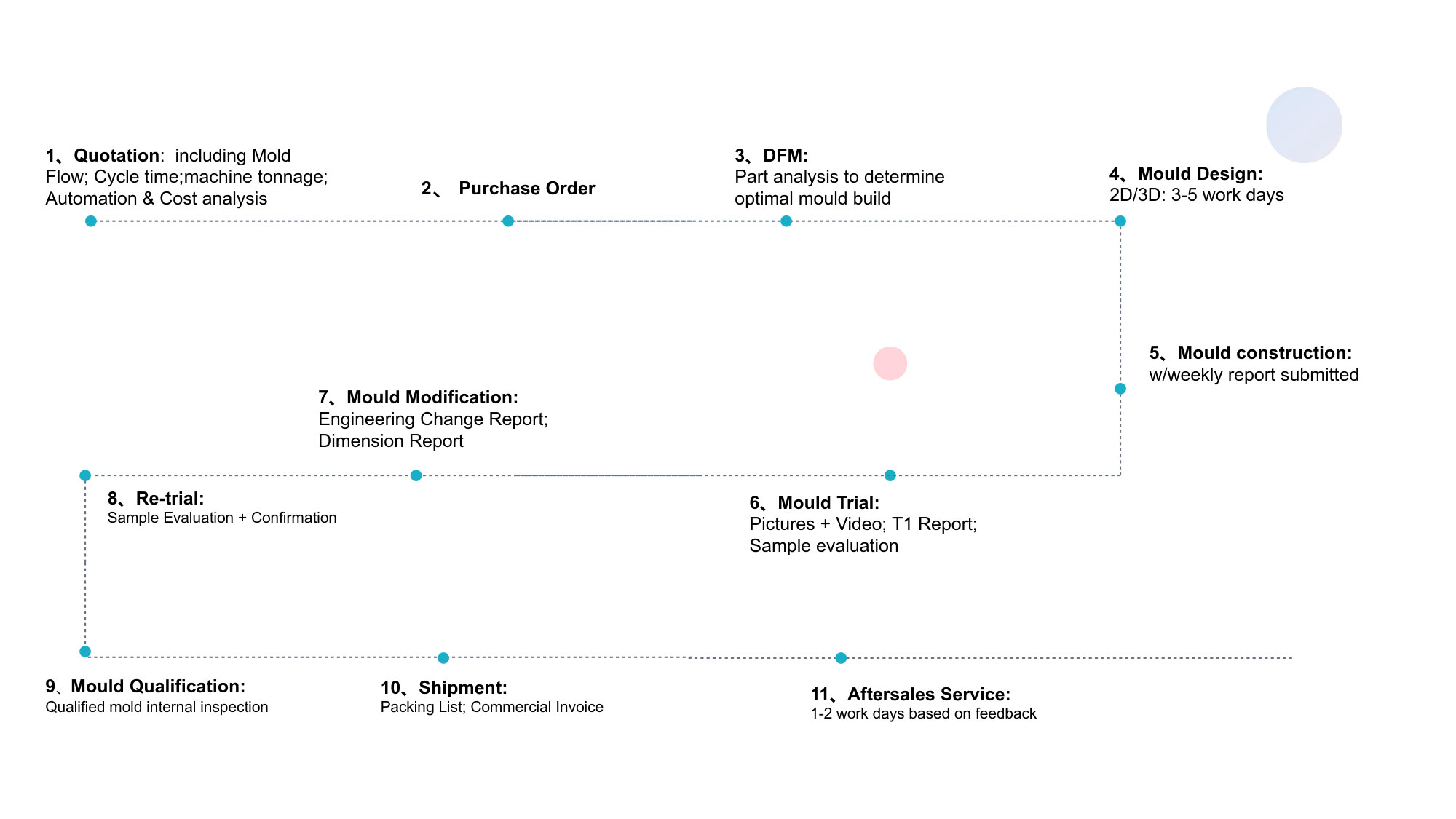
Our standard delivery process for the 8-cavity PCO 1810 mold follows this timeline:
Phase Activity Duration
DFM and Design MFA simulation, design review, customer approval 5–7 days
Material Procurement Steel ordering (inventory for standard grades), heat treatment 3–5 days
Rough Machining Milling, turning, drilling operations 5–7 days
Heat Treatment (if applicable) Vacuum hardening, tempering, hardness verification 2–3 days
Precision Machining 5-axis finishing, EDM (wire/sinker), grinding 7–10 days
Polishing and Surface Treatment Mirror polishing, texturing (if required), coating 3–5 days
Assembly Mold base assembly, hot runner installation, cooling hookup 2–3 days
Validation Trial molding, dimensional inspection, wear test 3–5 days
Packing and Shipment Corrosion protection, crating, shipping documentation 1–2 days
Total Standard 35–40 days
For urgent requirements, we offer a 25-day expedited option for standard 8-cavity PCO 1810 molds (subject to current shop loading). Accelerated delivery is achieved through 24/7 machining operations and priority queuing of material procurement, with all validation steps maintained.
Conclusion: Your Mold — Your Competitive Advantage
At Ansix Tech, we do not view molds as passive tools — we view them as active contributors to your production profitability. Every design decision, every material selection, and every process optimization is evaluated through the lens of your bottom line.
Here is what you can expect when you partner with Ansix Tech for your 8-cavity PCO 1810 PET preform mold project:
Lower cost per preform: Through lightweighting, cycle time reduction, and material waste elimination
Higher daily output: From optimized cooling and balanced cavity filling
Consistent quality: Eliminating batch-to-batch variation through networked process control
Reduced risk: Through transparent DFM, pre-delivery validation, and comprehensive warranties
Shorter time-to-market: Through collaborative design, in-house manufacturing, and rapid delivery capability
We invite you to experience the difference that 28 years of specialization brings. Whether you are launching a new product line, expanding existing capacity, or seeking to reduce production costs on an established platform, Ansix Tech has the technical capability, manufacturing capacity, and customer-focused commitment to deliver superior results.
Contact Information:
Ansix Tech — Preform Mold Division
Making molds that make money — not just parts.
Appendix A: Key Technical Specifications — 8-Cavity PCO 1810 PET Preform Mold
Parameter Specification
Cavity Count 8
Neck Finish PCO 1810 (28mm diameter)
Target Preform Weight 13–55 g (application dependent)
Mold Steel — Core/Cavity S136 stainless steel (48–52 HRC)
Mold Steel — Thread Inserts 2316 stainless steel
Mold Steel — Plates P20 pre-hardened (28–32 HRC), nickel-plated
Hot Runner Balanced manifold with individual valve gate per cavity
Gate Type Valve gate (shut-off), flush cut
Cooling Type Spiral conformal channels in each cavity insert + core cooling + neck ring cooling
Ejection Mechanism Automatic plate ejection with cam-roller thread split actuation
Mold Life (PET, virgin) 3 million shots minimum
Mold Life (PET, GF-reinforced) 1 million shots minimum
Mold Dimensions (approx.) 490 × 370 × 435 mm (weight approx. 810 kg for 22g preform variant)
Recommended Clamp Tonnage 220–300 tons
Estimated Cycle Time 13–30 seconds (depending on cooling configuration and post-mold cooling)
Applicable Materials PET (virgin or rPET up to 100%), GF-PET, barrier layer materials
Appendix B: Critical Parameters for PET Preform Injection Molding
Parameter Typical Range Impact on Quality
PET Drying Condition 150–170°C, 4–6 hours Prevents IV degradation, bubbles, brittleness
Residual Moisture < 50 ppm Prevents bubbling and opacity
Melt Temperature 260–290°C Affects clarity, IV retention, degradation
Mold Temperature 5–15°C (cooling water) Controls crystallinity and cycle time
Injection Speed Fill within 1.5–4 seconds Affects weld lines, orientation, surface quality
Holding Pressure 60–120 MPa Controls shrinkage and dimensional stability
Cooling Time 8–20 seconds Largest contributor to total cycle time
Back Pressure < 100 bar Minimizes shear heating and IV drop
Screw Rotation Speed Low (optimized for PET) Prevents shear degradation
Post-Mold Cooling (optional) 3–10 seconds external Reduces in-mold cooling by 30–40%
*Document prepared for [Customer Name] by Ansix Tech Engineering Team. Specifications subject to final design review. All numerical values based on production data from validated Ansix Tech projects using standard PET resin (IV 0.72–0.84 dL/g). Consult with Ansix Tech engineering for application-specific optimization.
Ansix Tech Co Ltd
If you have any plans related to 8-cavity PCO 1810 caliber PET preform mold , you can contact us at any time. We will turn your ideas into reality, let you realize your dreams, and obtain large orders from the market. Our contact information is info@ansixtech.com. Or contact our CTO, mail: stephen@ansixtech.com
#www.ansixtech.com #ansixtech.com #8-cavity PCO 1810 caliber PET preform mold #8-cavity PCO 1810 caliber PET preform mold moulds #8-cavity PCO 1810 caliber PET preform mold injection molding companies #8-cavity PCO 1810 caliber PET preform mold Canopy Mold injection mold companies #Ansix #Ansix moulds #Ansix china #Ansix tech china #Ansix tech company #Ansix facotry #8-cavity PCO 1810 caliber PET preform mold injection molding #8-cavity PCO 1810 caliber PET preform mold injection tools #8-cavity PCO 1810 caliber PET preform mold injection moulds #8-cavity PCO 1810 caliber PET preform mold plastic mould #8-cavity PCO 1810 caliber PET preform mold plastic tools #Ansix Tech #Ansix molds #Ansix injection molding #Ansix mold factory #injection molding 8-cavity PCO 1810 caliber PET preform mold #Ansix mold factory #8-cavity PCO 1810 caliber PET preform mold china #8-cavity PCO 1810 caliber PET preform mold molds #injection factory #8-cavity PCO 1810 caliber PET preform mold injection molding #8-cavity PCO 1810 caliber PET preform mold injection molding factory #injection molding company #8-cavity PCO 1810 caliber PET preform mold injection mold companies #8-cavity PCO 1810 caliber PET preform mold#8-cavity PCO 1810 caliber PET preform mold mold limited #Ansix mold china #Ansix companies #Ansix company China #8-cavity PCO 1810 caliber PET preform mold facotry #Ansix Tech #Ansix Tech mould #8-cavity PCO 1810 caliber PET preform mold injection moulding #injection moulding company #Ansix 8-cavity PCO 1810 caliber PET preform mold parts injection mold companies #medical injection molding companieschina #8-cavity PCO 1810 caliber PET preform mold china factory #Ansix moulding companies #Ansix molding company #8-cavity PCO 1810 caliber PET preform mold injection moulding facotry #Ansix Tech mold #8-cavity PCO 1810 caliber PET preform mold mould #8-cavity PCO 1810 caliber PET preform mold plastic injection molding #ansix plastic mold #Mold manufacturing #8-cavity PCO 1810 caliber PET preform mold parts manufacturing #8-cavity PCO 1810 caliber PET preform mold plastic parts factory #8-cavity PCO 1810 caliber PET preform mold injection parts mold #8-cavity PCO 1810 caliber PET preform mold PRECISION MANUFACTURING #8-cavity PCO 1810 caliber PET preform mold #China mold #8-cavity PCO 1810 caliber PET preform mold injection moulding china #8-cavity PCO 1810 caliber PET preform mold mould china #china precision mold #mold in china #8-cavity PCO 1810 caliber PET preform mold mold china #Precision molds #High-precision molds #8-cavity PCO 1810 caliber PET preform mold #Injection molds #8-cavity PCO 1810 caliber PET preform mold Factory #8-cavity PCO 1810 caliber PET preform mold Company #Super Large Injection Mold Factory #Large Tonnage Injection Molding Factory #8-cavity PCO 1810 caliber PET preform mold Company #8-cavity PCO 1810 caliber PET preform mold Factory #2800T Injection Molding Factory #3000 Ton Injection Molding #4500 Ton Injection Molding Factory #Large Mold Injection Molding #Large Plastic Mold Injection Molding Factory #Large Injection Mold Manufacturer #Plastic Mold Factory #Injection Mold #Plastic Mold